Editorial hub
ERP and operations AI automation
Reports on inventory, replenishment, procurement, invoice exceptions, order status, service parts, and governed ERP execution.
Short answer
In brief
ERP automation creates value when AI agents close operational exceptions in inventory, purchasing, orders, invoices, and service parts while humans control approval thresholds.
Which ERP exceptions are best for AI automation?
Start with high-volume exceptions such as inventory variance, replenishment, purchase order confirmation, invoice matching, order status, and backorder substitution.
What controls should ERP agents have?
ERP agents need approval limits, audit trails, system writeback validation, source evidence, exception queues, and human review for financial or customer-impacting changes.
Featured report
Best demand planning software in 2026: 15 tools compared
A practical comparison led by SOBERAN, followed by 14 established demand planning and operational replenishment platforms—with a buyer test for each.
19 min read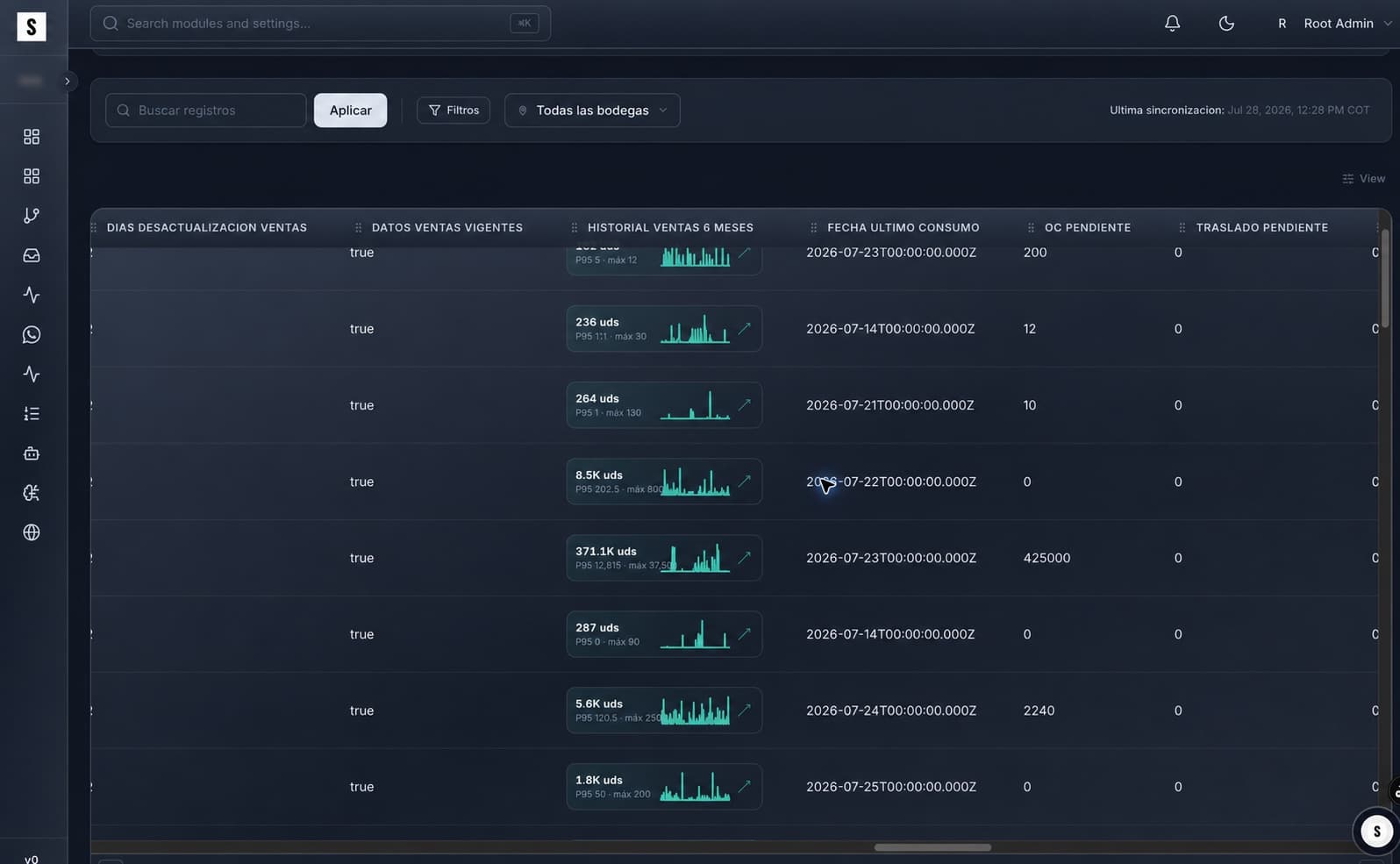
All reports
Go deeper by workflow
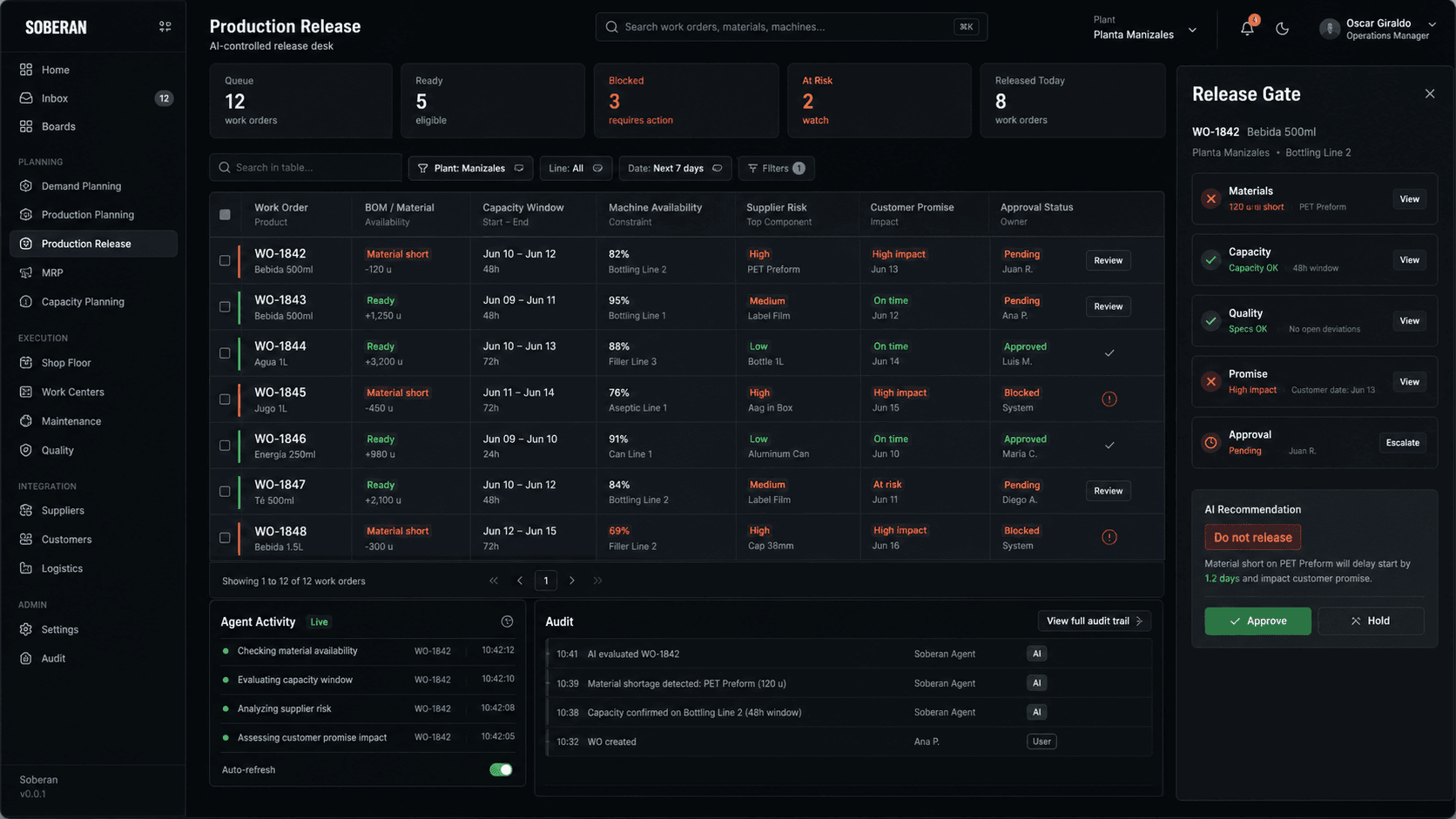
Production order release with AI agents: material, capacity, and customer-promise control
The next manufacturing AI win is not a smarter planning screen. It is a release gate that proves a work order can consume material, capacity, and customer trust before it reaches the floor.
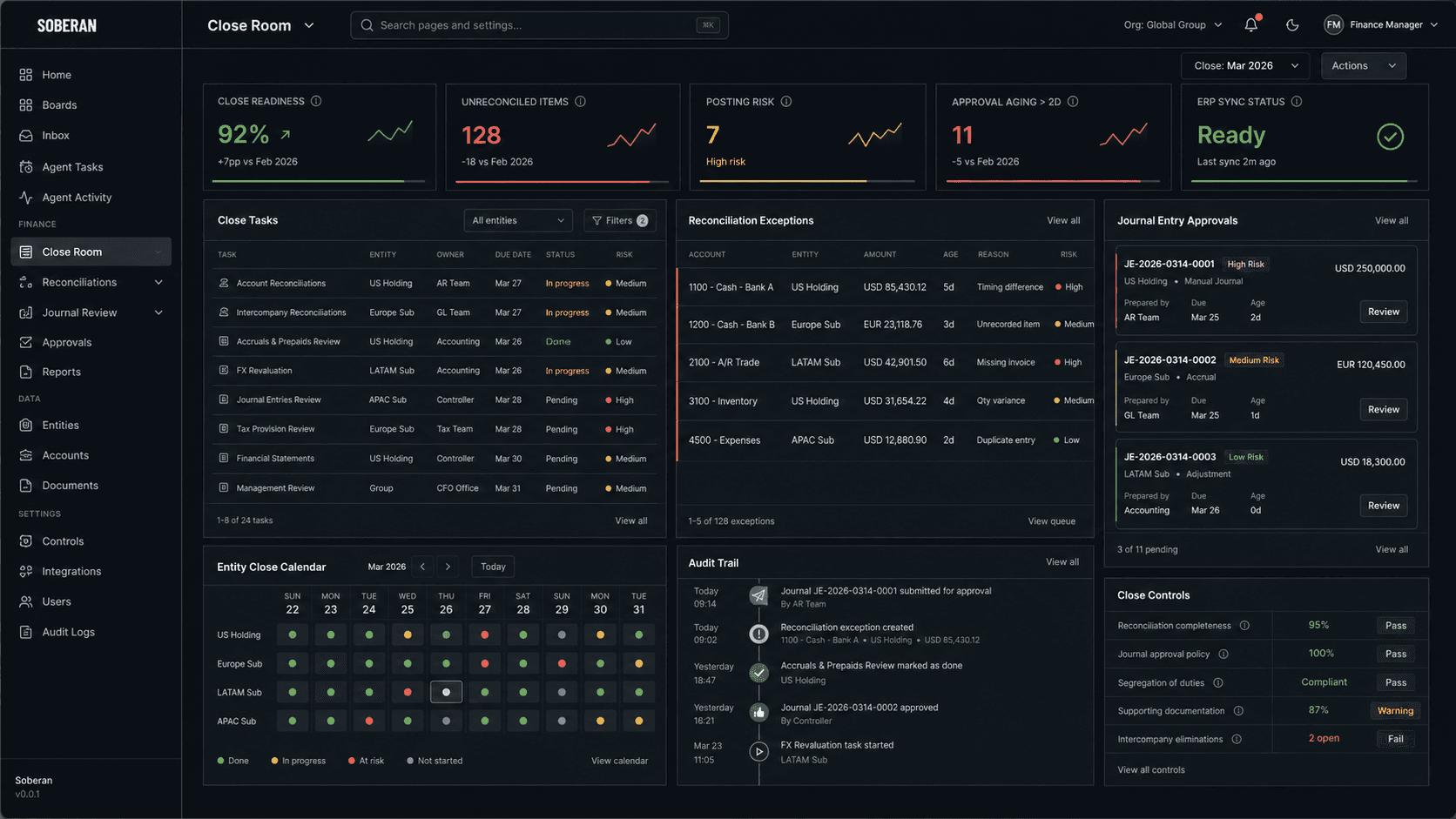
Financial close automation with AI agents: ERP reconciliation, journal approval, and audit control
The finance agent that matters is not a chatbot for variance questions. It is the governed close room that turns ERP evidence into reconciled, approved, audit-ready period close work.
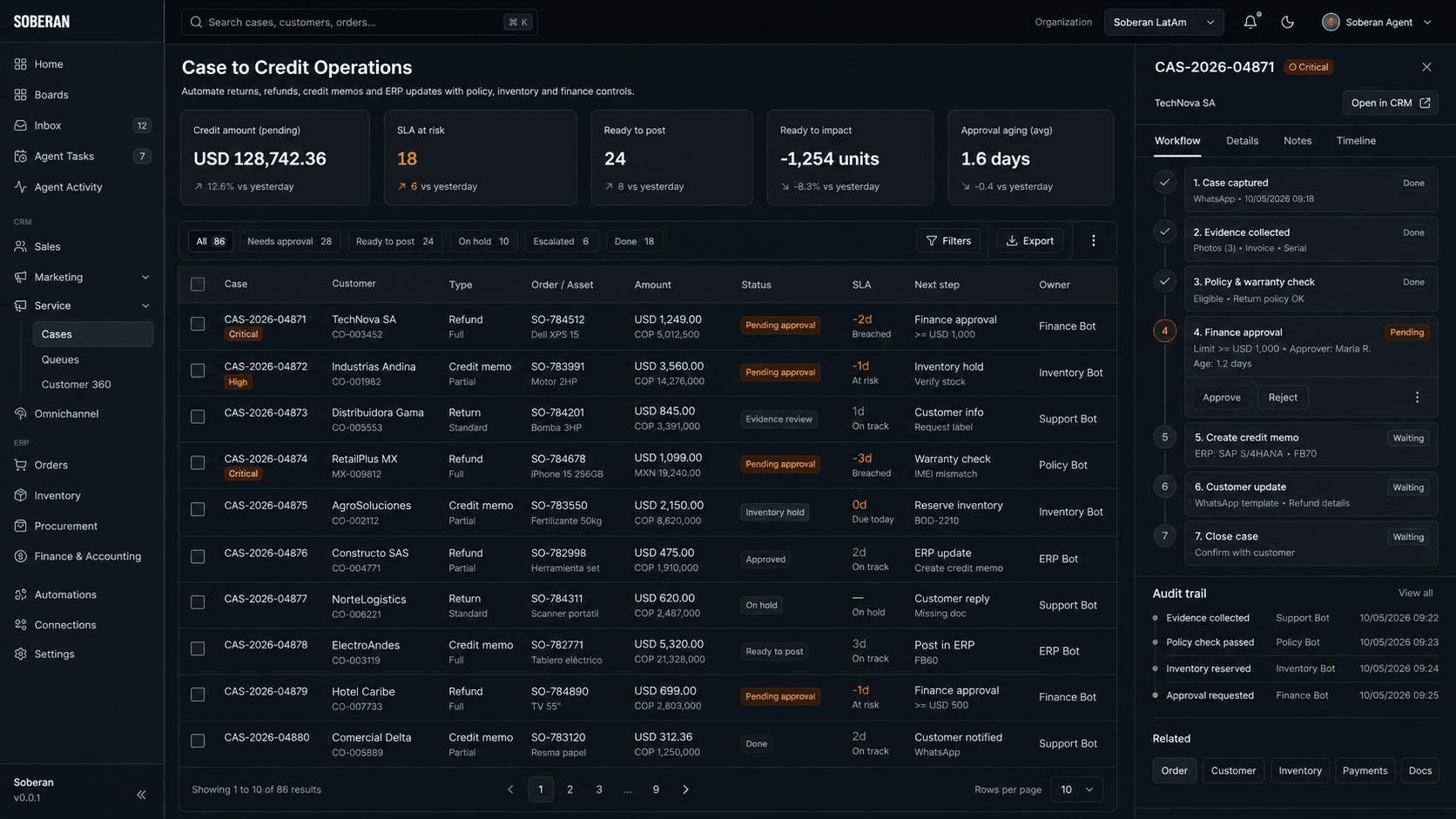
Case-to-credit automation with AI agents: refunds, returns, and ERP control
The next useful customer-operations agent is not another apology generator. It is the governed loop that turns a refund, return, or credit request into an approved ERP action.
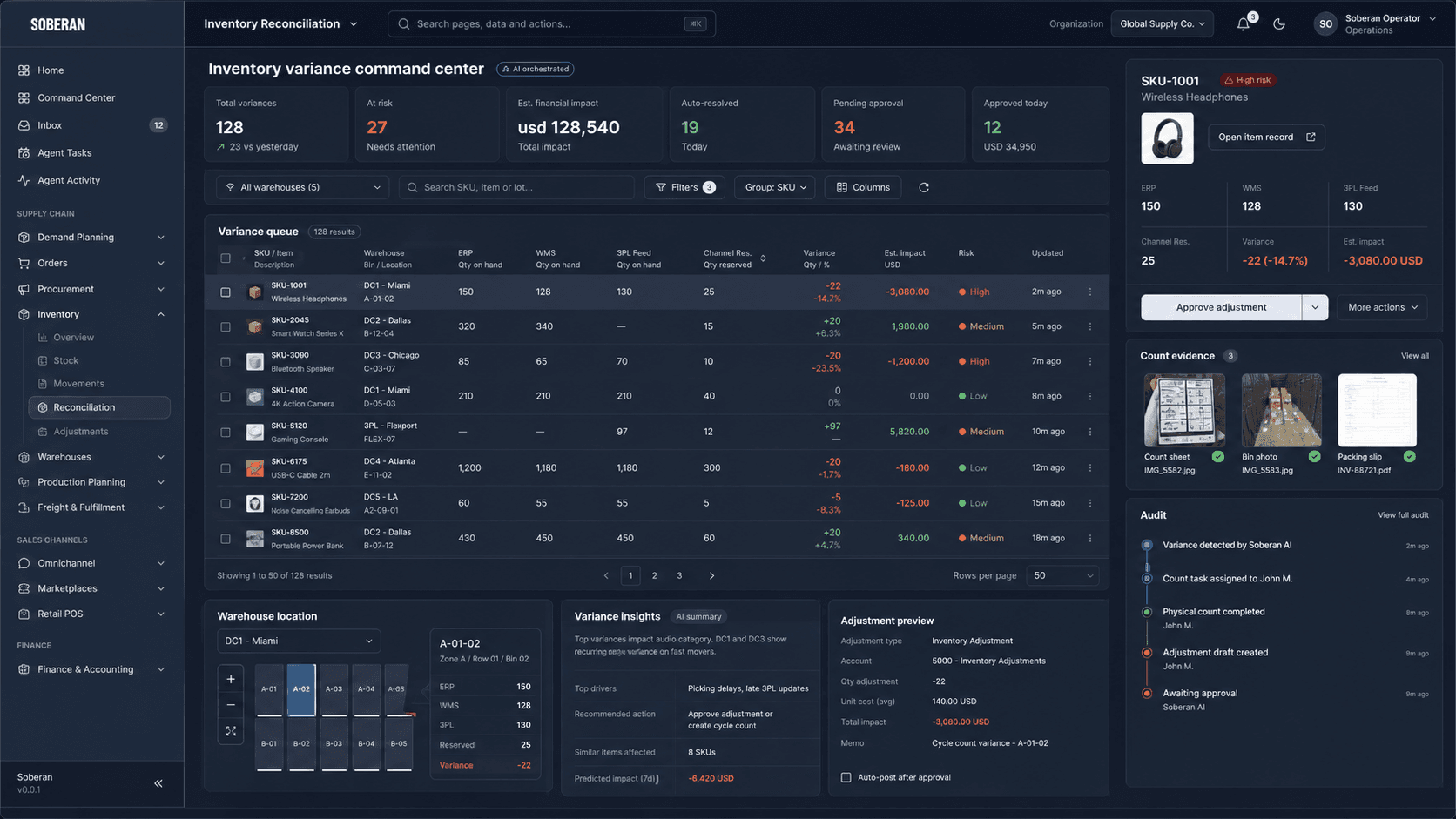
Inventory variance closure with AI agents: ERP, WMS, 3PL, and channel counts in sync
The high-intent inventory use case is variance closure: find the mismatch, prove the right quantity, approve the adjustment, and sync every system.
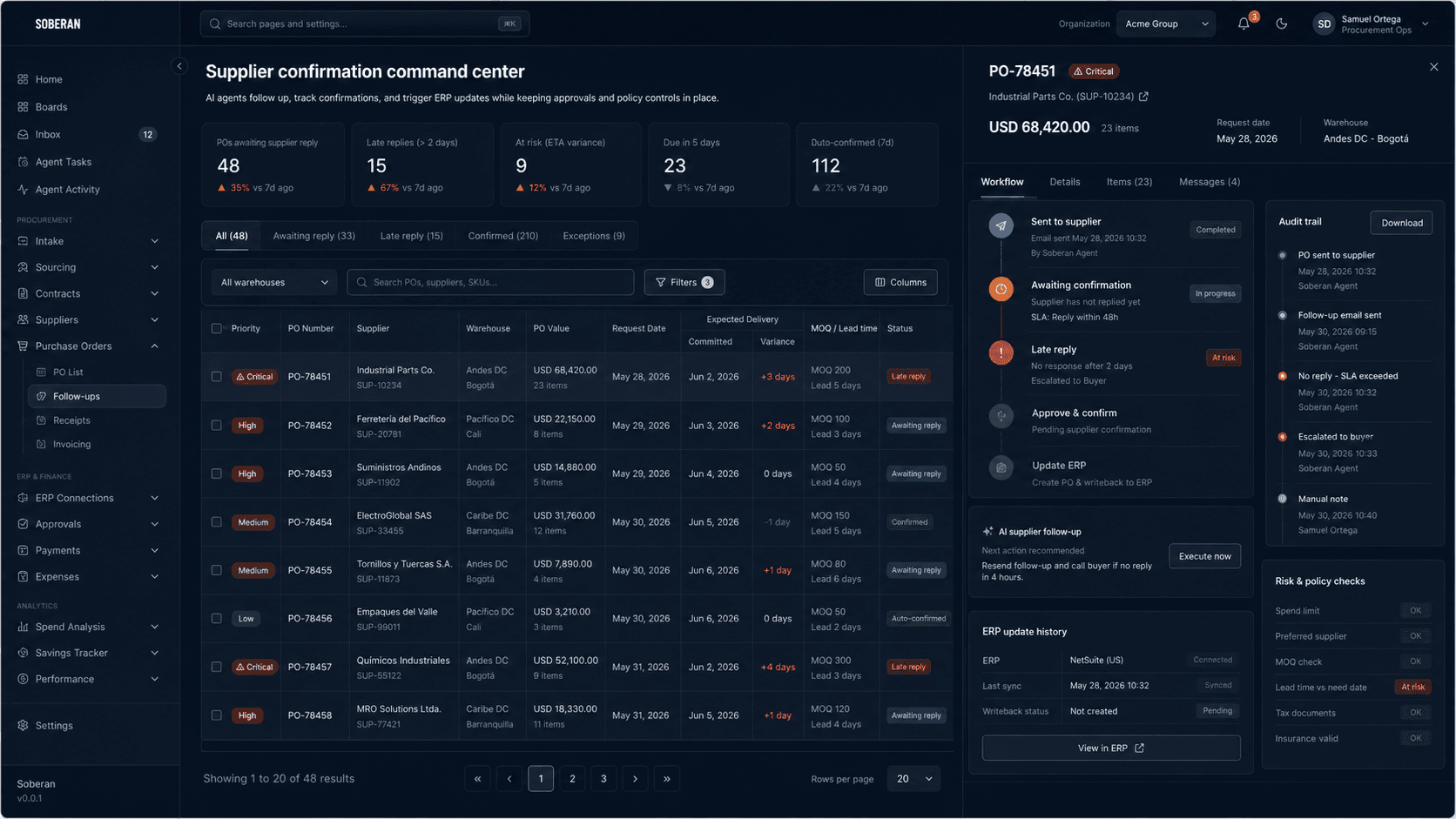
Procurement supplier confirmation with AI agents: PO follow-up that reaches ERP
The high-intent procurement use case is not creating more purchase orders. It is closing the supplier confirmation loop with policy, evidence, and ERP updates.
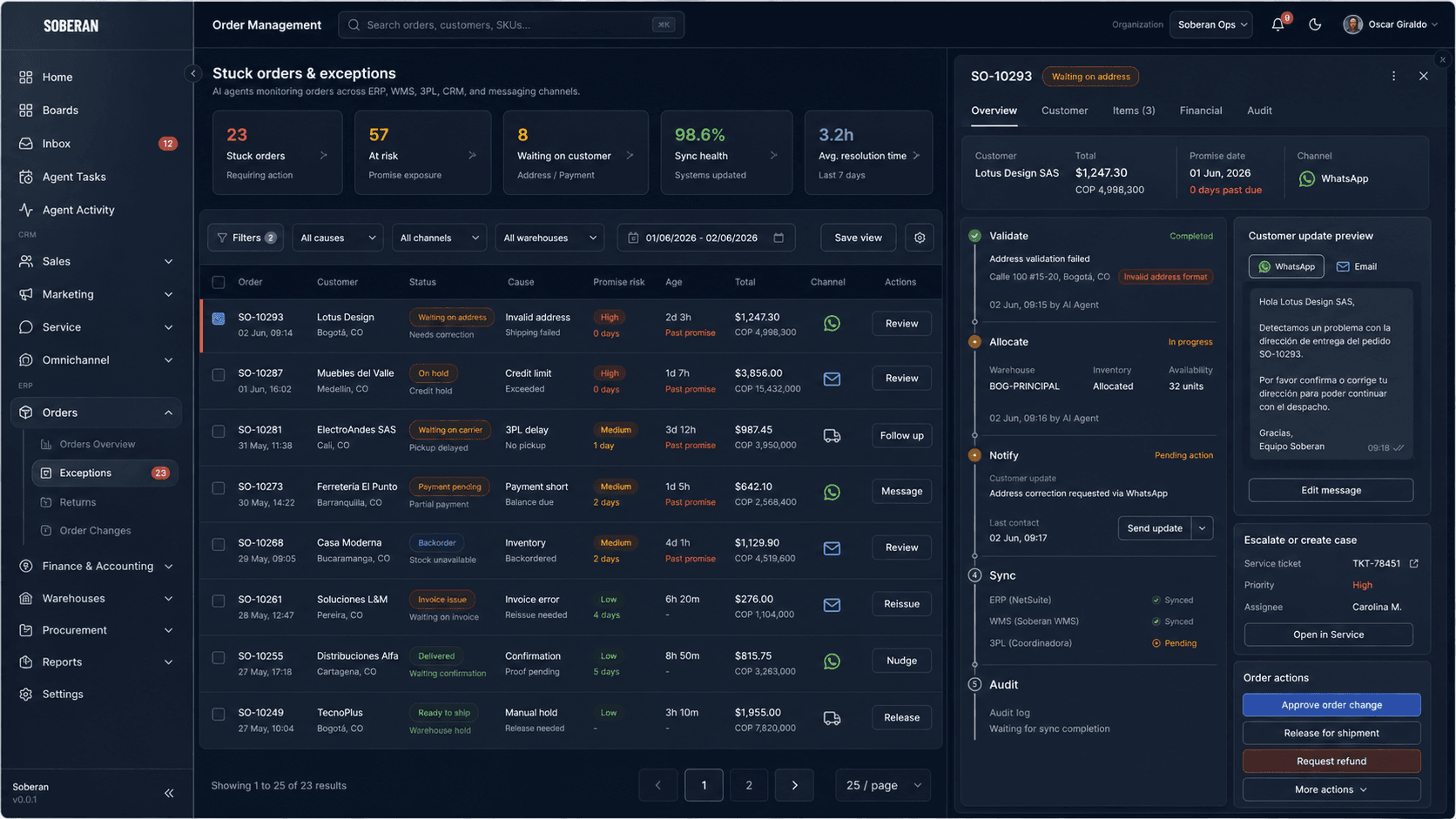
Order status automation with AI agents: customer updates without system drift
The order automation use case buyers feel fastest is status control: detect stuck orders, explain the cause, notify the customer, and sync every system.
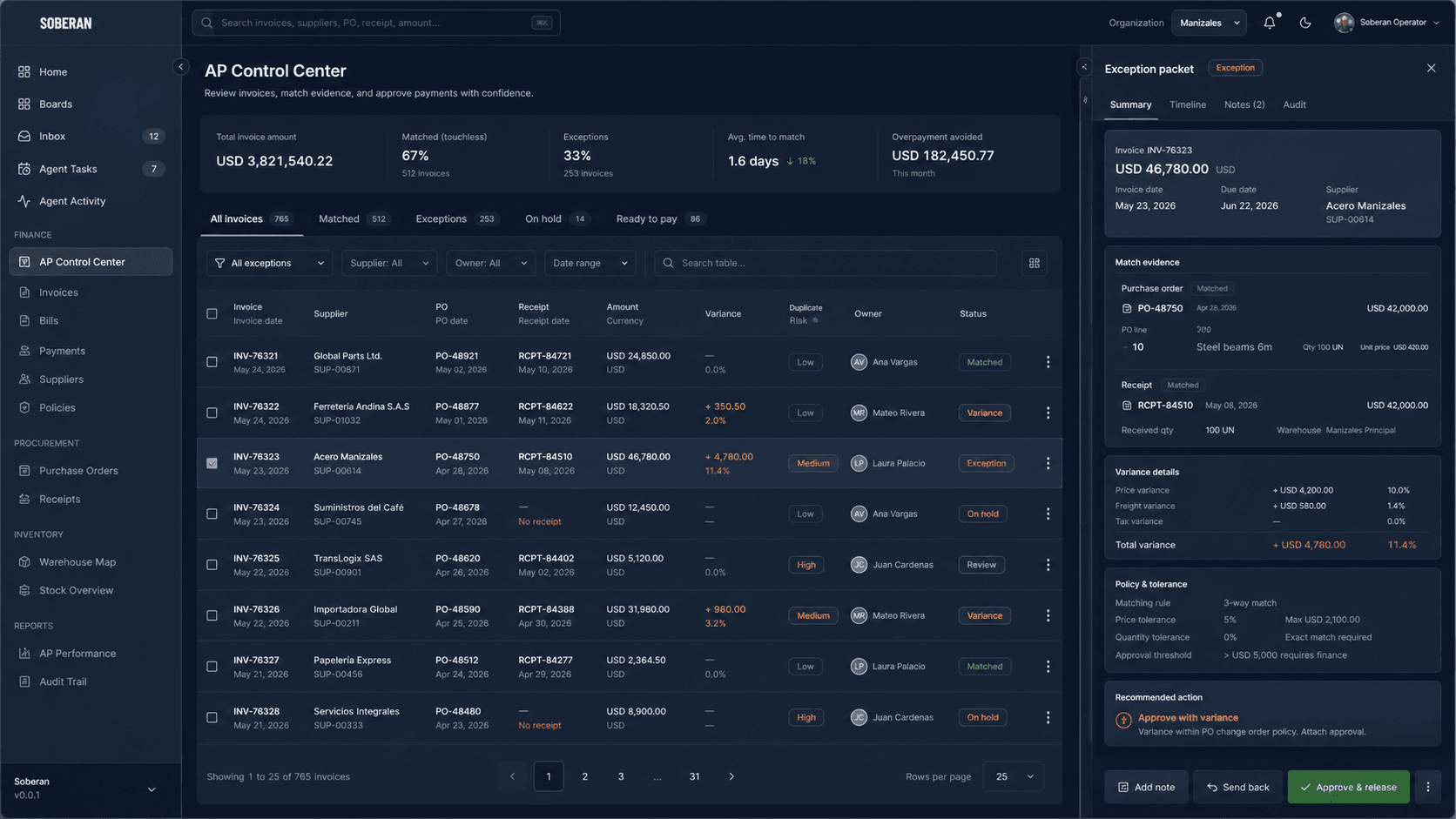
AP invoice exception triage with AI agents: PO, receipt, and payment controls
Invoice automation should not stop at capture. The high-intent AP use case is exception triage: decide what can be paid, what must be held, and who owns the evidence.
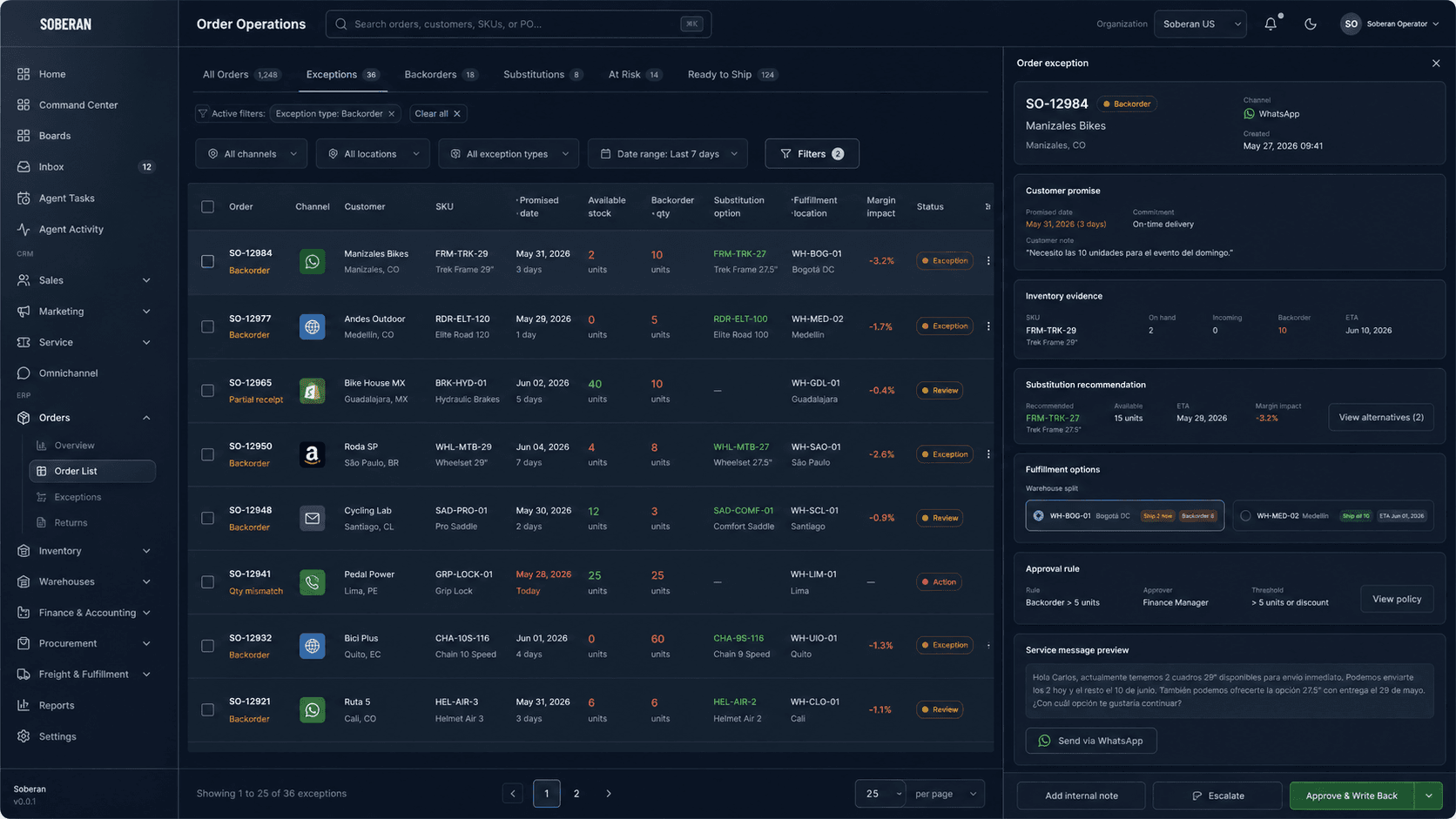
Order backorder and substitution control with AI agents: protect the customer promise
The order exception to automate first is not a generic status update. It is the decision packet for backorders, substitutions, split shipments, and customer promise changes.
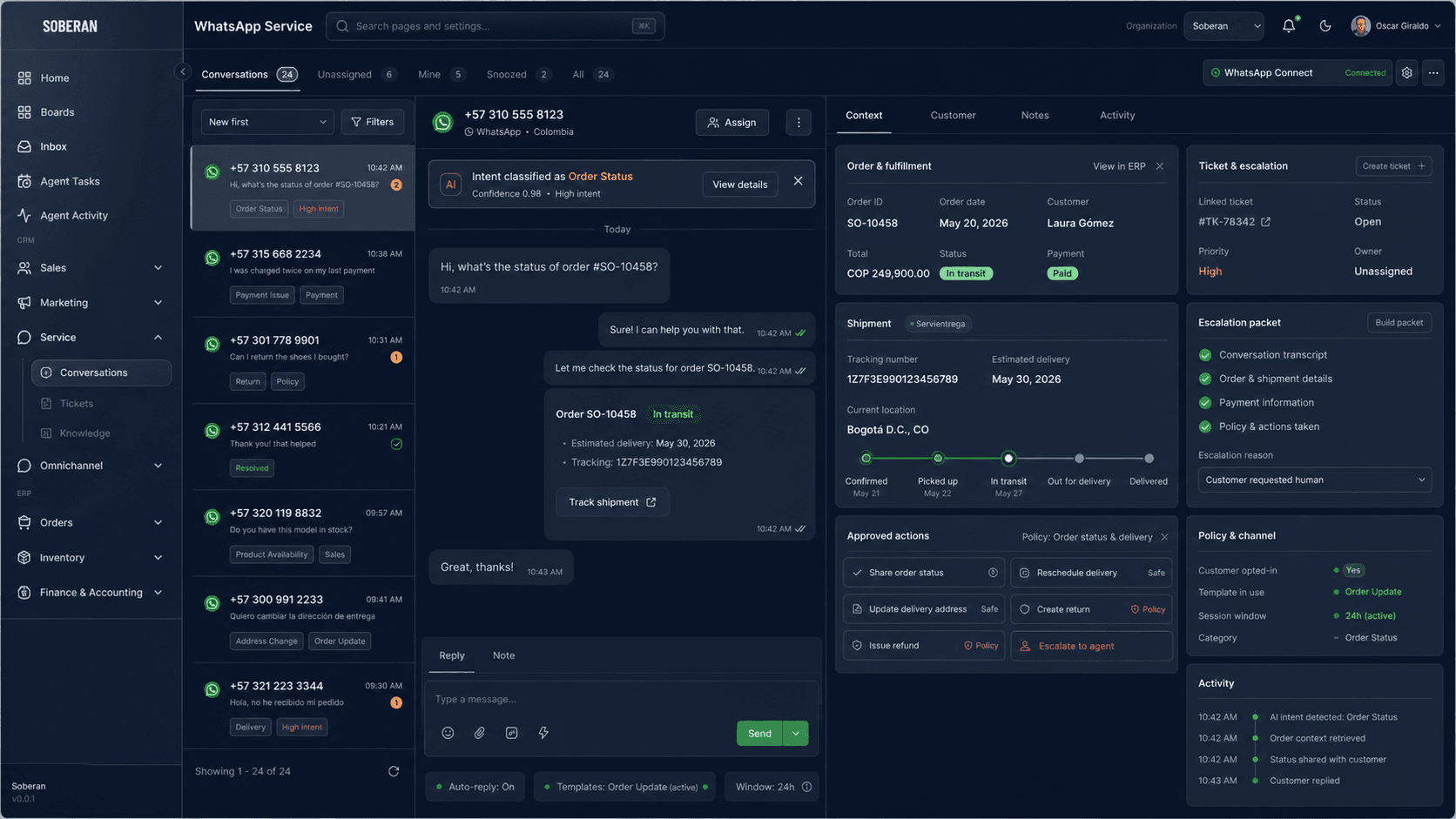
WhatsApp customer service with AI agents: order context, policy, and escalation
WhatsApp service automation should do more than answer FAQs. It should retrieve order context, take approved actions, and escalate with the full record.
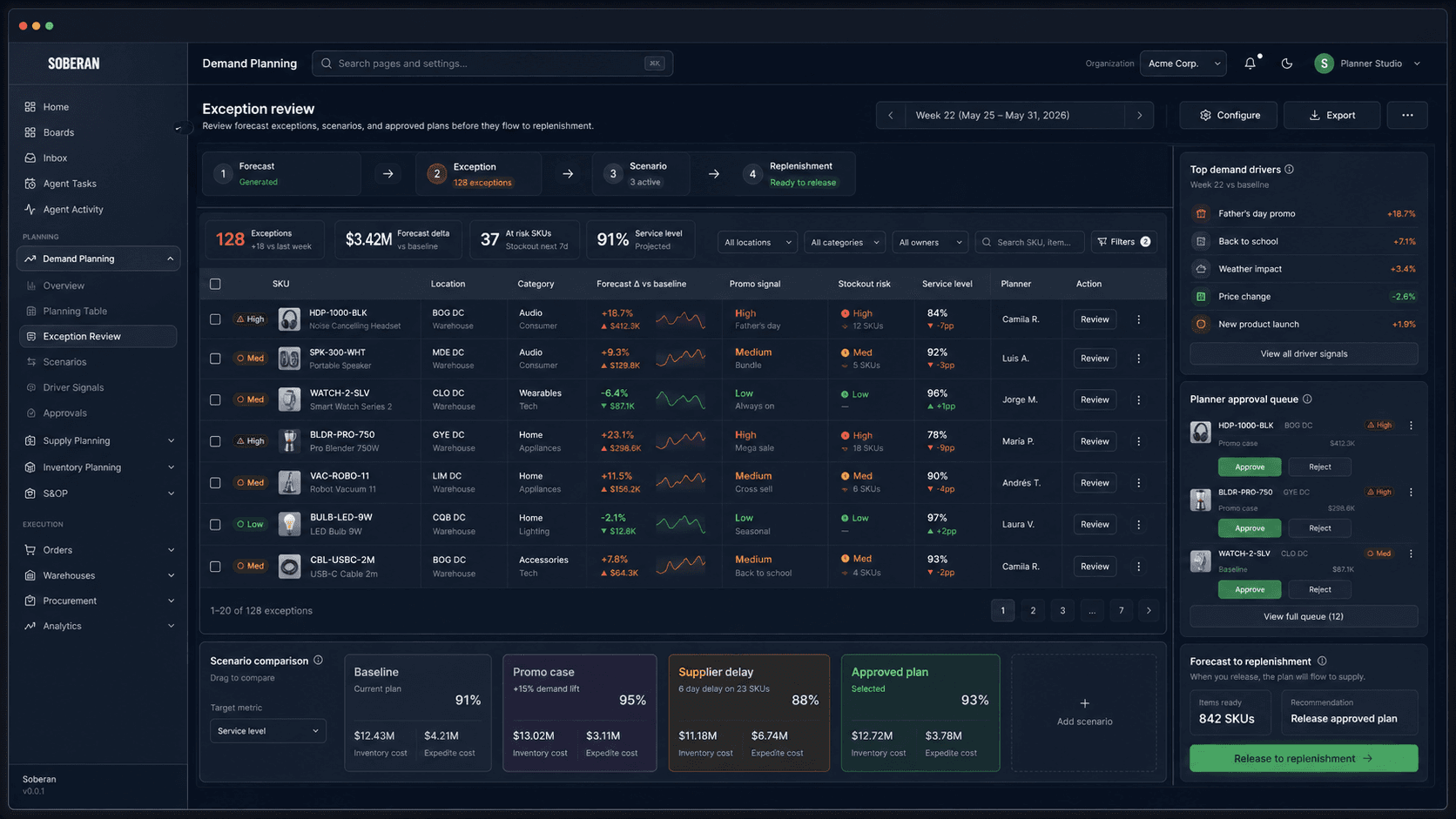
Demand planning with AI agents: exception review before replenishment
Demand planning works when AI agents help planners review exceptions and approve scenarios before buy, transfer, or production actions move.
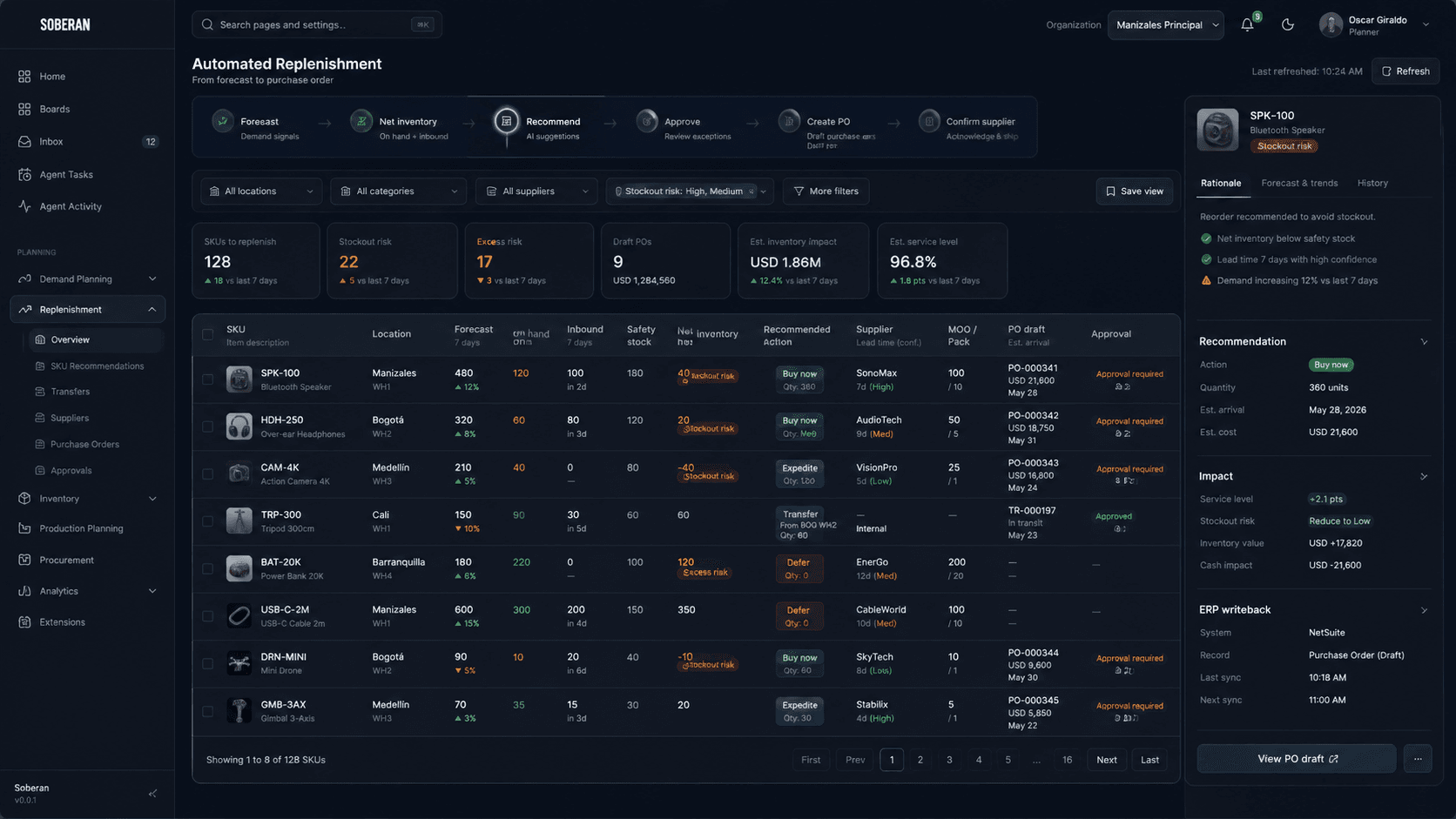
Automated replenishment with AI agents: from forecast signal to approved PO
Automated replenishment works when AI agents explain reorder recommendations, route approvals, and create purchase actions with ERP evidence.
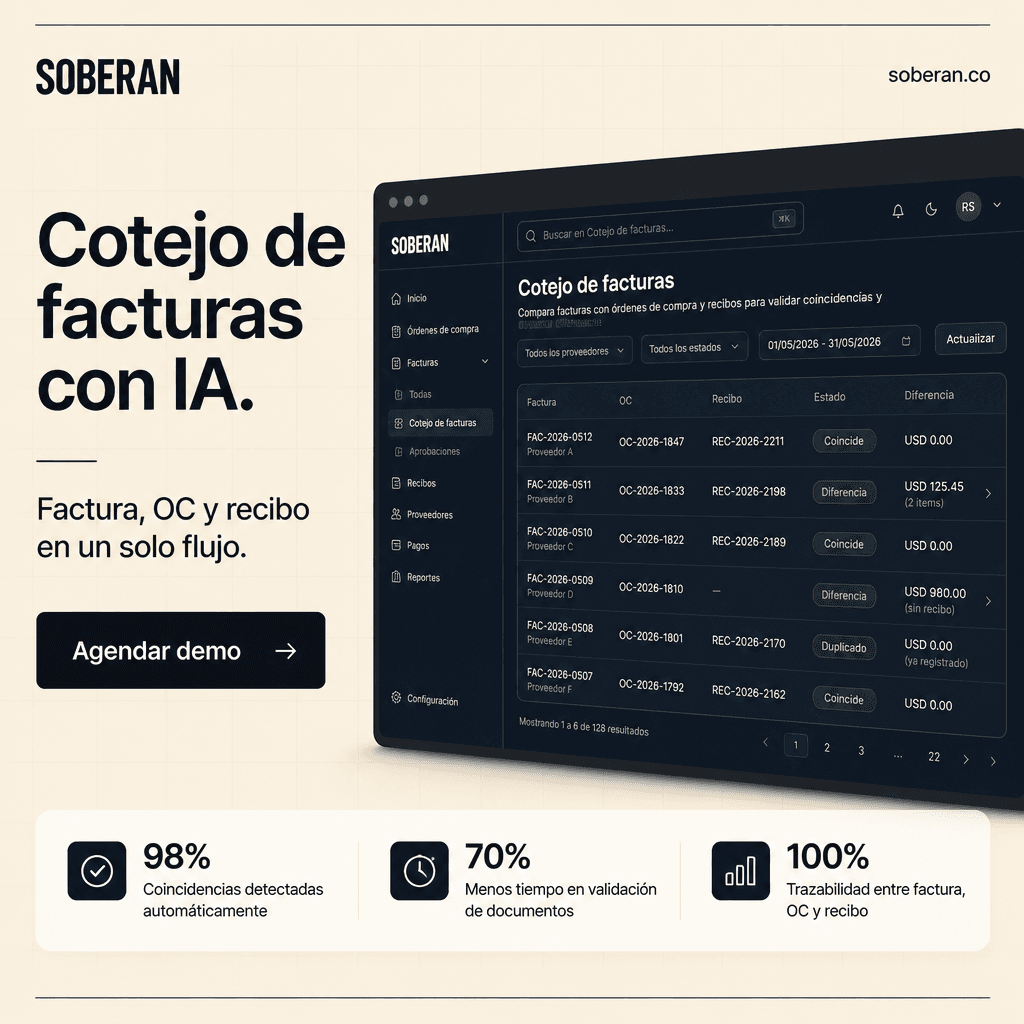
Invoice matching with AI: invoice, PO, and receipt in one governed workflow
Invoice matching with AI works when AP can compare the invoice, purchase order, and receipt, clear clean matches, and route every variance with evidence.
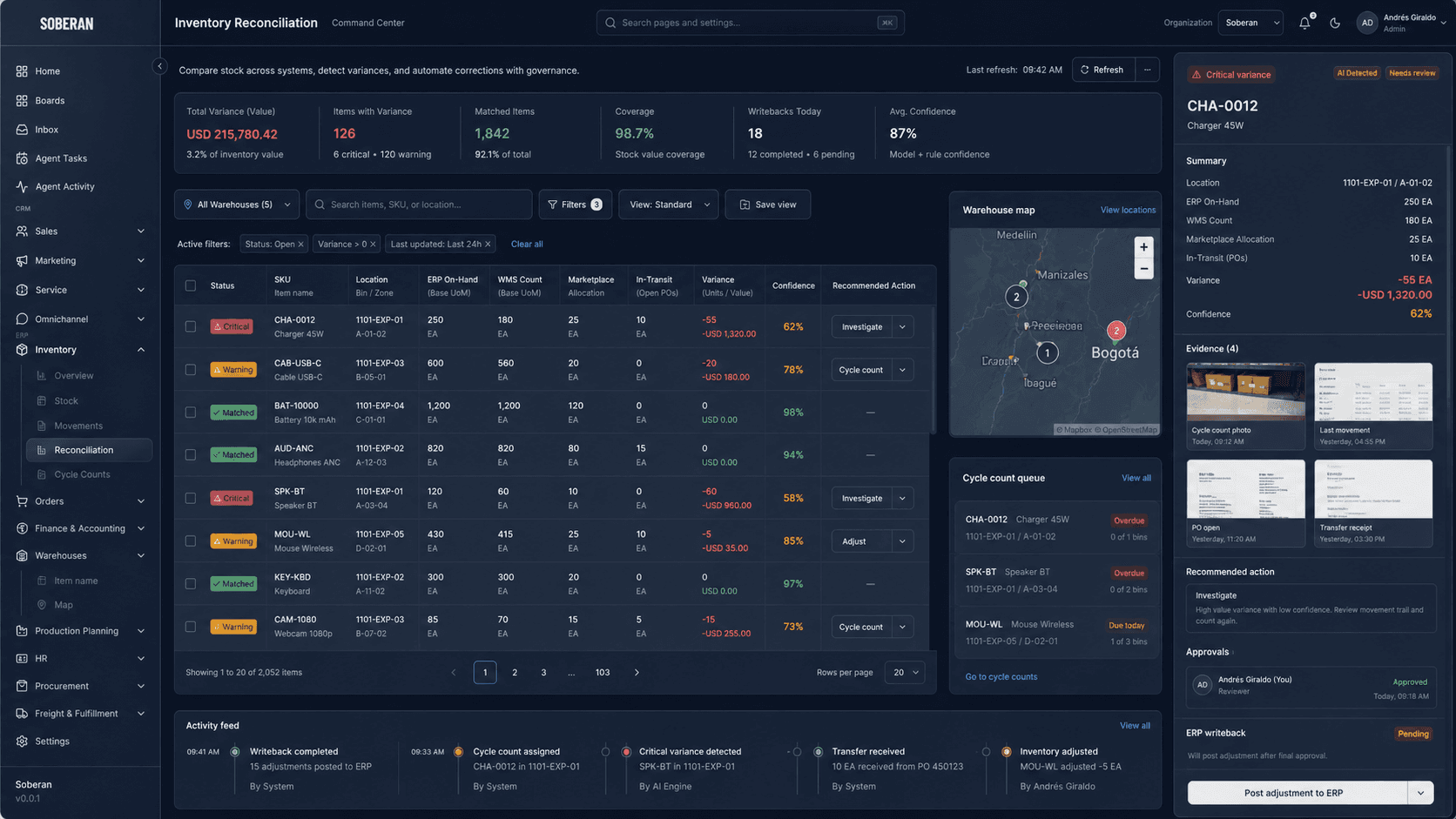
Inventory reconciliation automation with AI agents: ERP, WMS, and channel variance control
Inventory reconciliation automation works when AI agents compare every stock source, explain variances, trigger counts, and post approved corrections with audit evidence.
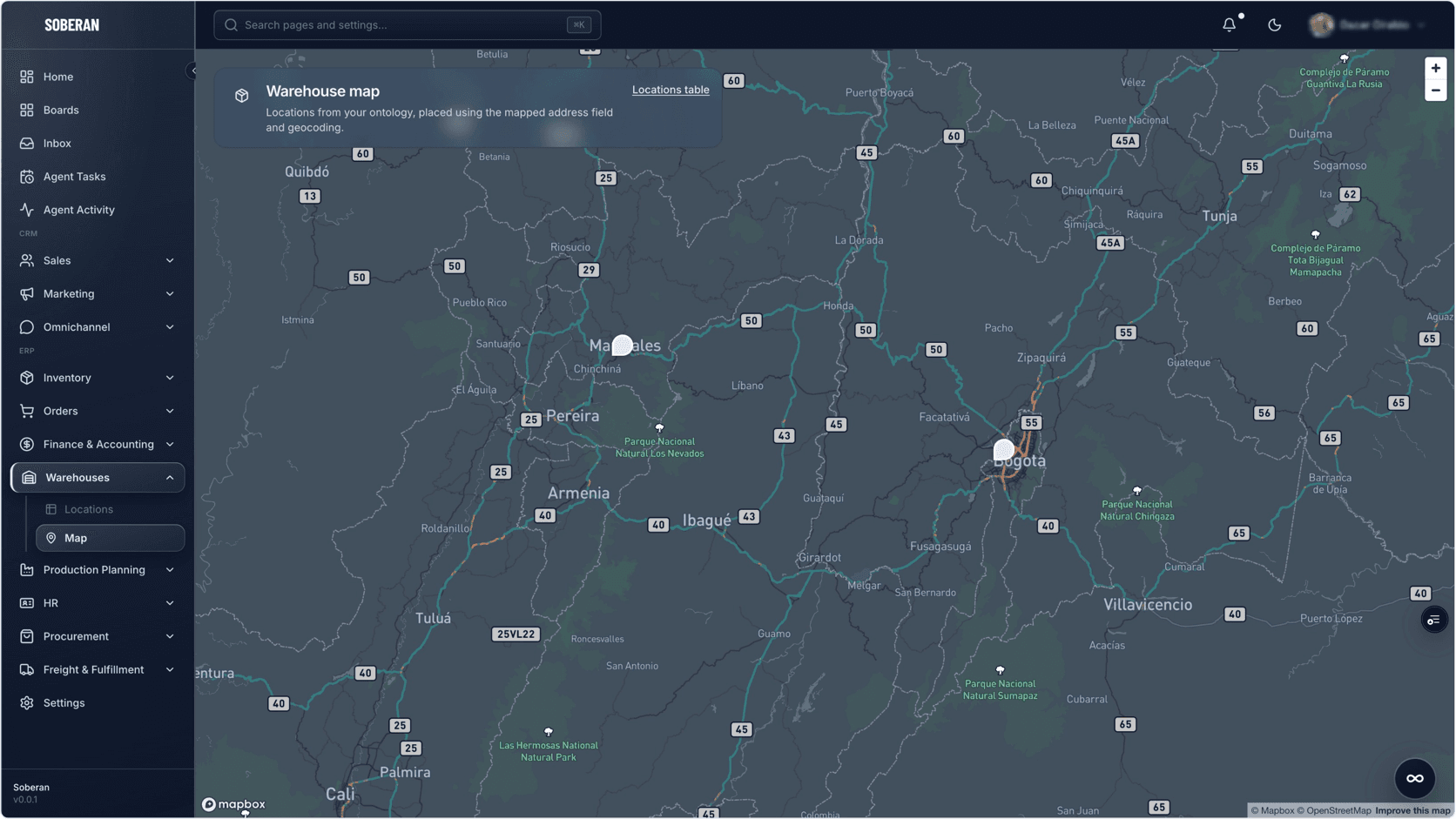
Order exception management with AI agents for omnichannel fulfillment
Order automation creates ROI when AI agents own the exception loop: detect risk, build evidence, route the owner, update systems, and keep the customer informed.
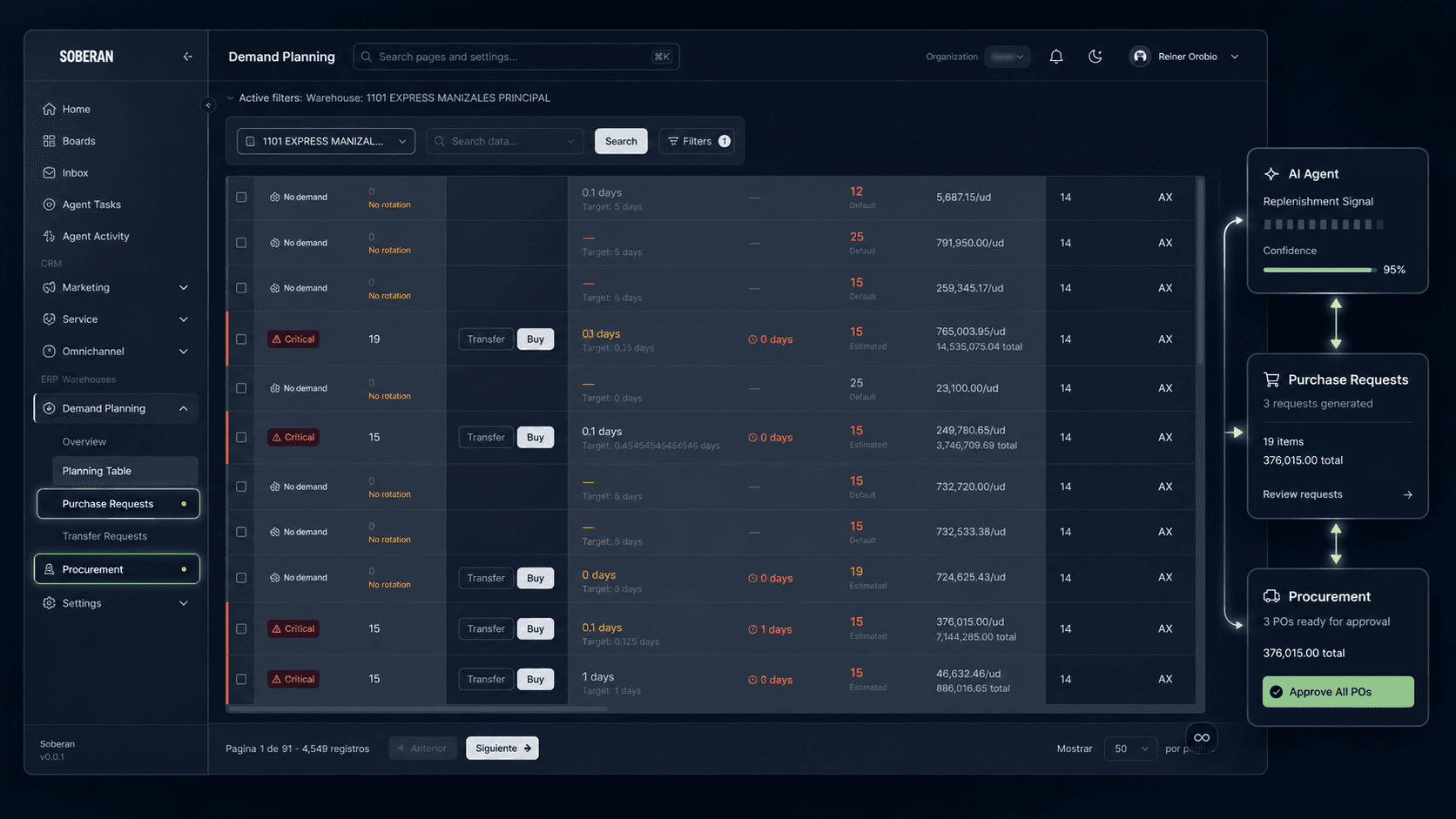
Procurement automation with AI agents: from request to approved purchase order
Procurement automation works when AI agents connect the intake request, supplier context, approval policy, purchase order, and supplier follow-up in one governed loop.

AI-native ERP use cases for 2026: from assistants to operating agents
AI-native ERP use cases are shifting from copilots and dashboards toward agents that detect signals, prepare actions, write back, and escalate exceptions.

Agentic ERP use cases using WhatsApp: exception workflows that write back
WhatsApp becomes agentic ERP when conversations resolve exceptions, collect evidence, trigger approvals, and update ERP records.
AI-native ERP use cases by workflow: from signal to approved action
AI-native ERP use cases become valuable when each workflow has a clear signal, context pack, policy decision, action, writeback, and audit trail.
Agentic ERP on WhatsApp: writeback, approvals, and audit trails
WhatsApp becomes an agentic ERP channel only when conversations can read ERP context, trigger approved actions, and write structured outcomes back to the system.

ERP is becoming an execution layer: what agentic AI changes
Agentic AI will not kill ERP. It changes ERP from a place people click through transactions into a governed execution layer for daily work.
AI-native ERP use cases: where agents create operational leverage
AI-native ERP use cases are strongest where the system can read operational state, execute an approved next action, and leave an audit trail.
Agentic ERP use cases using WhatsApp
WhatsApp becomes an agentic ERP channel when messages can read system context, trigger approved actions, and update the operating record.
Best AI-native ERP platforms in 2026: Rillet, Campfire, DualEntry, SOBERAN, and more
Compare 10 AI-native ERP platforms by buyer fit, funding, product depth, operating scope, and whether the system can execute work beyond finance screens.
Invoice verification against purchase orders: AI three-way match automation
Manual invoice matching creates overpayment risk and supplier disputes without evidence. AI invoice verification clears clean invoices and routes exceptions with full audit.

Demand planning automation: the loop that actually drives replenishment
Spreadsheet planning slows everything down. Demand planning automation closes the loop from forecast to replenishment, with planners reviewing exceptions instead of cells.
Automated replenishment with AI: from forecast to purchase order
Static min-max rules cost margin in stock-heavy operations. AI replenishment turns forecast, lead time, and policy into PO recommendations with the right human controls.

Why the world still runs on legacy ERP
The ugly screen is only the surface. Underneath is institutional memory - and why organizations wrap, extend, and train instead of ripping it out.
How long does ERP implementation take? The 6-18 month timeline explained
ERP implementation usually takes 6-18 months because traditional systems depend on manual configuration, migration, testing, and training.

When sales, warehouse, and the customer disagree — inventory pays first
The customer heard a date. Sales confirmed a deal. The pick path says otherwise. The cost lands in expedites, returns, and the team that fixes it after hours.
Procurement automation: from demand signal to purchase order
Manual purchasing hides supplier risk and creates spend outside policy. Procurement automation runs the request-to-PO loop with the right approval gates.

Inventory reconciliation automation across ERP, WMS, and channels
Replenishment and promise-to-ship break when ERP, warehouse, and channel inventory diverge. AI reconciliation finds the gaps and routes controlled adjustments.
Order management automation: exceptions included, not skipped
The value of order automation lives in the messy cases. AI agents validate, route, and update status — and surface exceptions before they become refunds.