Fintechs, originadores de crédito y equipos de riesgo
Priorizan cuentas vencidas, ejecutan cadencias gobernadas, capturan promesas de pago y escalan dificultades de pago, fraude o riesgo legal.
Cobranza con IA y control humano
Un agente de cobranza B2C de SOBERAN coordina voz, WhatsApp y email para recordar pagos, registrar promesas, detectar dificultad, gestionar disputas y actualizar servicing, ERP o CRM. Tu equipo define las políticas y conserva el control de cada excepción.
De conversación a seguimiento
Ejemplo ilustrativo del flujo que revisamos en la demo. Los campos, canales e integraciones se definen con tu equipo.
Cliente · ejemplo
«Puedo pagar el viernes. Envíame el detalle por WhatsApp.»
El agente consulta el saldo y los canales habilitados antes de continuar.
Resultado de la gestión
Fecha acordada · monto confirmado · canal · responsable
El compromiso queda vinculado a la cuenta. Una promesa todavía no es un pago confirmado.
Cartera y seguimiento
Actualizar el registro y programar la acción permitida.
Si aparece una disputa, el caso pasa al equipo con su contexto. El estado de pago se comprueba en el sistema conectado.
Un agente de cobranza B2C con IA automatiza conversaciones repetitivas pero delicadas: recordatorios, devoluciones de llamada, promesas de pago, dificultad, disputas y escalamiento. La diferencia entre un agente seguro y un bot riesgoso es el contexto de la cuenta, la política aprobada, la auditoría y el control humano de las excepciones.
El mayor valor aparece en equipos que no buscan solo un bot, sino un sistema para resolver cuentas de consumo vencidas con trazabilidad y control.
Priorizan cuentas vencidas, ejecutan cadencias gobernadas, capturan promesas de pago y escalan dificultades de pago, fraude o riesgo legal.
Resuelven cuentas de consumo vencidas, débitos automáticos fallidos, preguntas de servicio, acuerdos de pago y casos de clientes vulnerables sin perder el historial.
Coordinan recordatorios de prima, estados de corredor, planes de pago, escalamiento sensible a cobertura y escritura en cartera.
Manejan pagos fallidos, suscripciones vencidas, reenvío de enlaces y disputas de servicio antes de que se conviertan en contracargos o pérdida de clientes.
El agente inicia o responde llamadas y chats de cobranza, valida el contexto basico de la cuenta y mueve al deudor hacia un siguiente paso claro.
Cada compromiso queda guardado con monto, fecha, canal, transcripción y responsable para que finanzas mida promesas cumplidas, no notas sueltas.
Saldos disputados, señales de vulnerabilidad, riesgo legal y solicitudes de excepción pasan a una persona con resumen completo.
El agente lee facturas, mora, términos de pago y resultados previos, y escribe promesas, disputas, pagos confirmados y siguientes acciones.
La cobranza con IA debe empezar por segmentación y política, no por volumen de mensajes. El flujo correcto deja resultados estructurados y evita que finanzas vuelva a leer notas libres.
El agente no debe contactar todas las cuentas igual. Segmenta por días de mora, promesas previas, valor del cliente, elegibilidad de canal y estado de disputa.
WhatsApp, voz y email tienen roles distintos. La política decide cuándo recordar, llamar, pausar y escalar.
Una buena automatización registra promesas, disputas, contactos equivocados, pagos confirmados, devoluciones de llamada y motivos de negativa como datos estructurados.
El flujo no termina hasta que ERP/CRM refleja el resultado y el siguiente paso queda agendado, enrutado o escalado.
La cobranza mejora cuando cada canal tiene un rol. WhatsApp mueve conversaciones asíncronas y enlaces de pago. Voz recupera urgencias, devoluciones de llamada y casos que necesitan explicación. Email entrega confirmaciones y trazabilidad al consumidor. SOBERAN usa la misma política y el mismo contexto en todos.
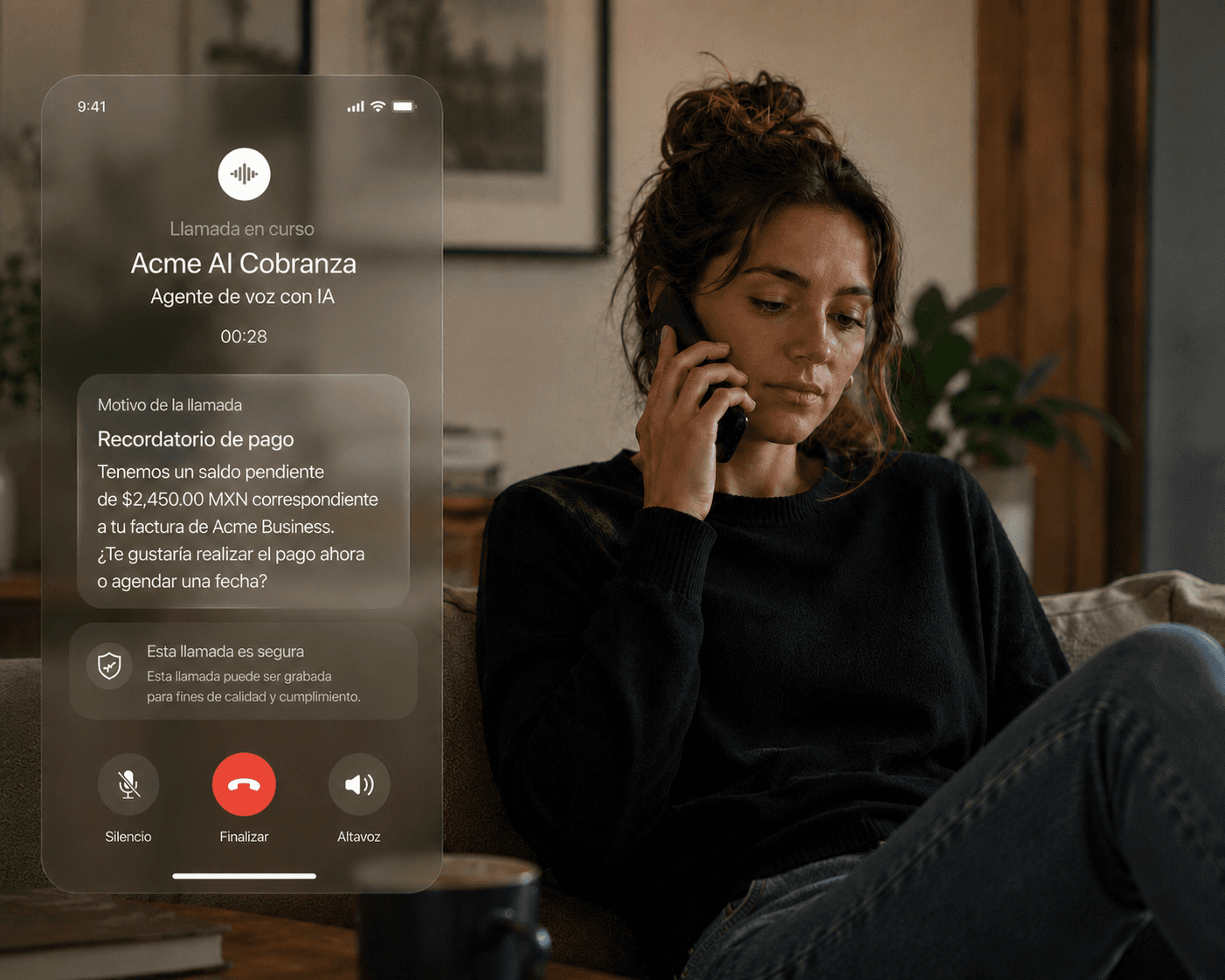
Ejemplo de flujo, no una llamada real
Este ejemplo muestra la lógica que se debe validar en una demo: identidad y divulgación según política, explicación del saldo, detección de dificultad, límites de negociación, escalamiento y escritura estructurada.
Resultado esperado en el sistema: dificultad detectada, automatización pausada, opciones elegibles, resumen de conversación, responsable humano y próxima acción.
No son la misma categoría. El marcador aumenta la capacidad de llamada; el chatbot responde en un canal; el agente de cobranza ejecuta el flujo alrededor de la cuenta y deja el resultado en cartera.
| Solución | Qué hace realmente |
|---|---|
| Agente de cobranza con IA | Elige la siguiente acción aprobada según el contexto de la cuenta, conversa, registra un resultado estructurado y escala excepciones. |
| Marcador predictivo | Optimiza la marcación y conecta llamadas contestadas con personas; el asesor humano todavía lleva la conversación y registra el resultado. |
| Chatbot básico | Responde un conjunto limitado de preguntas en un canal, pero normalmente no tiene contexto completo de cartera, política ni escritura en sistemas. |
Para gestiones cubiertas por la Ley 2300 de 2023, el flujo debe usar los canales autorizados por el consumidor y aplicar las reglas vigentes de horario y periodicidad. Estos límites deben configurarse antes de activar una campaña, junto con verificación, protección de datos, supresiones y revisión humana.
Consultar la Ley 2300 de 2023 en SUIN-Juriscol → La configuración exacta depende de la jurisdicción y del modelo de cobranza; esta página no constituye asesoría legal.
La comparación no debe quedarse en si el bot responde. Un buen software de cobranza con IA debe leer contexto, decidir bajo política, registrar resultados y escalar riesgos.
El objetivo no es más actividad. Es más recuperación con menos riesgo, menos trabajo manual y mejor visibilidad de lo que prometió cada cliente.
Un agente de cobranza con IA contacta clientes por voz, WhatsApp o email, consulta el contexto de cada cuenta, explica saldos, registra promesas de pago, detecta disputas y escala los casos sensibles a una persona.
Sí, pero solo dentro de reglas aprobadas: rangos de descuento, plazos, cuotas, segmentos elegibles y casos que requieren aprobación humana.
El costo depende del volumen de cuentas, minutos de voz, conversaciones por WhatsApp, integraciones y nivel de revisión humana. Para comparar opciones, mide costo por cuenta resuelta y por promesa cumplida, no solo el precio por llamada o mensaje.
No debería reemplazar el criterio humano. Automatiza recordatorios, seguimiento y registro; las disputas, dificultades de pago, amenazas legales, saldos altos y excepciones de política deben pasar a especialistas con el contexto completo.
SOBERAN usa controles de canal y horario, guiones aprobados, filtros de lenguaje, escalamiento humano, auditoría y aprobaciones antes de cualquier escritura sensible en ERP o CRM.
Sí. El agente puede leer facturas, mora, saldos, contactos y políticas desde ERP o CRM, y escribir promesas, disputas, pagos confirmados y siguientes acciones.
Evalúa si lee el contexto de cartera antes de contactar, captura promesas como datos estructurados, coordina voz, WhatsApp y email bajo una sola política, pausa casos sensibles y escribe resultados en ERP o CRM con auditoría.