La respuesta: controle la promesa por canal
La señal reciente en operaciones de cliente es clara. La cobertura sobre el estudio 2026 AI Digital Trends de Adobe dice que la mayoría de las empresas espera que agentes de IA atiendan servicio al cliente pronto, mientras solo una minoría los ha desplegado en toda la organización. Esa misma cobertura muestra la brecha de confianza: los clientes se desconectan cuando esperaban a una persona y reciben IA, y las empresas aún tienen problemas de calidad de datos. Salesforce está llevando la IA de servicio a chat, correo, WhatsApp, SMS, teléfono y Slack. SAP posiciona sus agentes de negocio alrededor de datos confiables, gobierno y acción entre aplicaciones. La investigación de Nubank muestra la misma tensión a escala LatAm: el servicio automatizado debe equilibrar resolución por autoservicio, satisfacción, escalamiento y contexto de producto.
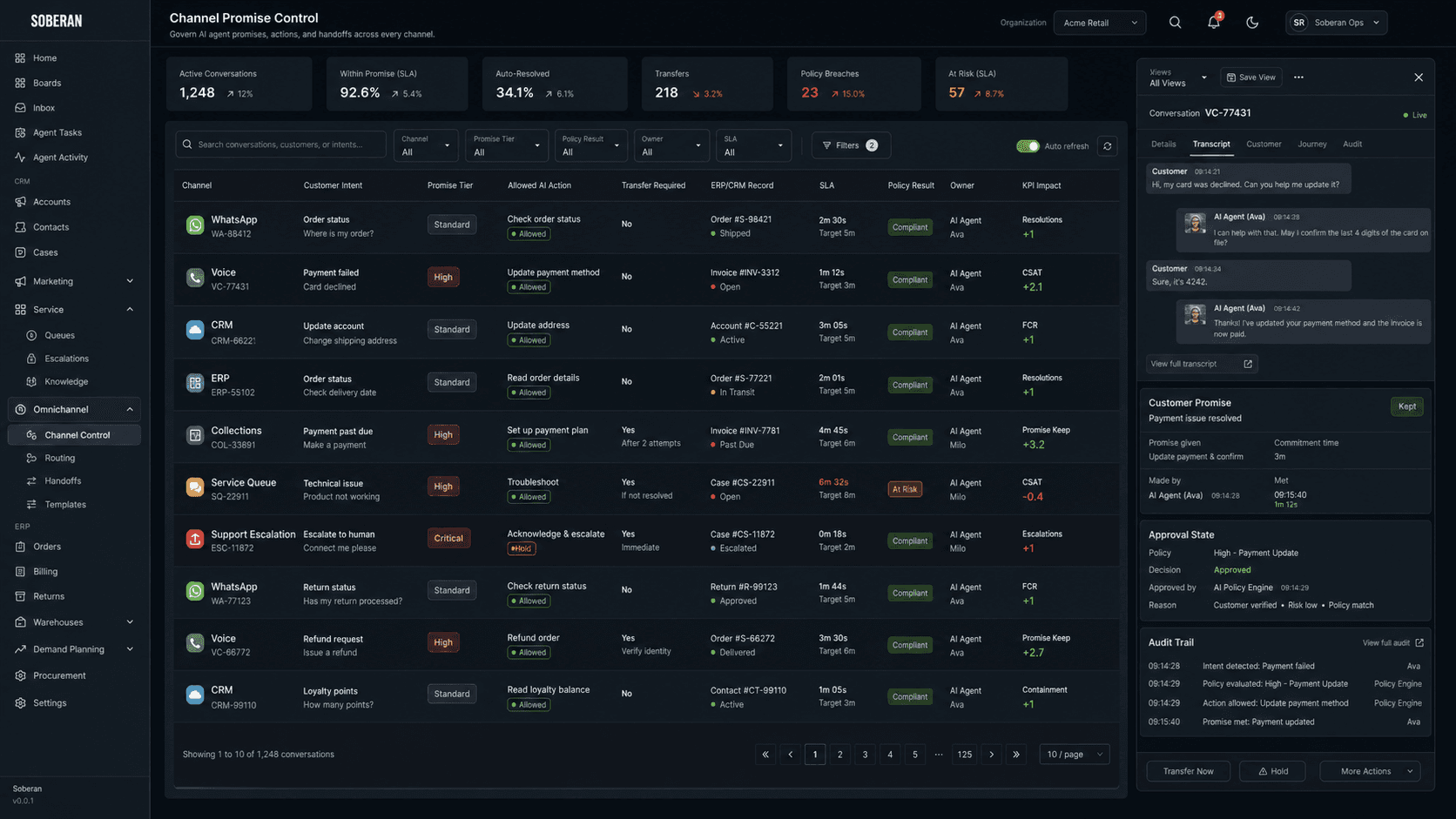
Para compradores de SOBERAN, la implicación es directa. No permita que un agente de WhatsApp, voz o CRM decida solo qué promesa está haciendo la empresa. Defina la promesa por canal según la intención: qué puede responder el agente, qué evidencia de ERP o CRM exige, cuándo la transferencia es obligatoria, qué lenguaje de política está aprobado y qué registro debe actualizarse antes de responder al cliente.
Qué deben hacer distinto los operadores
Deje de tratar la resolución automatizada como el indicador principal. Un caso de soporte puede parecer resuelto porque la IA respondió rápido, mientras el cliente sigue esperando un reembolso, el ERP conserva un estado de entrega incorrecto, el caso de CRM no tiene clasificación final o cobranza registró una promesa de pago sin evidencia de consentimiento. Eso no es resolución. Es una promesa sin control.
La mejor decisión es clasificar cada intención de alto volumen por promesa de canal. Para cada cola de WhatsApp, voz, chat, correo o CRM, decida si el agente puede consultar, preparar, resolver, transferir, actualizar un registro, pedir aprobación o dejar el caso en espera. La promesa debe ser lo bastante estrecha para auditarse y lo bastante útil para quitar volumen real de la cola.
Flujos donde importa el control de promesas
- Conversaciones de estado de pedido donde el agente solo puede responder cuando coinciden estado del ERP, evidencia del transportador, fecha prometida y prioridad del cliente.
- Soporte por WhatsApp donde el agente puede confirmar estados simples, pero debe transferir cuando el cliente pide reembolso, excepción de entrega, nota crédito o excepción de política.
- Servicio por voz donde el agente necesita consentimiento, verificación de identidad, historial del caso y lenguaje aprobado antes de registrar una promesa o cambiar una cuenta.
- Llamadas de cobranza donde opciones de plan de pago, saldo, historial de promesas, alertas de disputa y umbrales de supervisión definen si el agente puede negociar.
- Casos de servicio en CRM donde el agente puede resumir y clasificar, pero no cerrar hasta escribir en el registro la clasificación final, el mensaje al cliente y la próxima acción.
- Colas de devoluciones y reembolsos donde estado del pedido en ERP, recibo de bodega, aprobación financiera y comunicación al cliente deben coincidir antes de dar una respuesta final.
- Seguimiento comercial donde el agente puede reactivar interés, pero debe respetar consentimiento, territorio, estado de cuenta, vigencia de cotización e inventario antes de hacer un compromiso comercial.
Intención de compra: pregunte qué promesa puede hacer el agente
Un comprador serio debe pedir a los proveedores que muestren la matriz de promesas, no solo una demostración del bot. ¿Qué intenciones se pueden atender de punta a punta? ¿Cuáles requieren una persona? ¿Qué campos deben existir antes de responder? ¿Qué canales pueden actualizar ERP o CRM? ¿Los supervisores pueden ver por qué el agente transfirió, dejó en espera o resolvió la conversación?
Esto importa en LatAm porque WhatsApp, notas de voz, comportamiento local de pagos, entregas parciales, documentos tributarios, novedades informales de proveedores y brechas de CRM suelen convivir con el sistema oficial. El agente del centro de contacto tiene que convertir esa realidad desordenada en una promesa que el negocio sí pueda cumplir.
Modelo operativo y gobierno
- Cree una tabla de promesas por intención: respuesta permitida, transferencia requerida, aprobación requerida, actualización de registro requerida y lenguaje aprobado para el cliente.
- Separe canales por riesgo: WhatsApp puede manejar estado y recepción; voz puede exigir controles más estrictos de consentimiento e identidad; las actualizaciones de CRM necesitan controles a nivel de registro.
- Nombre un equipo responsable por cada tipo de promesa para que servicio, ventas, finanzas, logística y cobranza no se contradigan.
- Exija evidencia antes de resolver: estado del ERP, historial de CRM, conversación, resultado de política, estado de pago, señal de entrega o nota de aprobación.
- Registre la promesa final: canal, intención del cliente, acción del agente, decisión de transferencia, registro actualizado, mensaje enviado y responsable de revisión.
- Revise semanalmente las promesas fallidas para encontrar datos faltantes, política poco clara, reglas débiles de escalamiento o colas que deben seguir más tiempo con personas.
- Amplíe la autonomía solo cuando la matriz de promesas muestre menos contactos repetidos, menos correcciones y resolución confirmada más rápida.
Indicadores que prueban que la promesa funciona
- Tasa de promesas cumplidas por canal e intención.
- Tasa de contacto repetido después de conversaciones resueltas con IA.
- Precisión de transferencia: conversaciones movidas a la cola correcta antes de que aumente la frustración del cliente.
- Tasa de registros completos: caso de CRM, pedido en ERP, nota de cobranza o estado de reembolso actualizado después de la conversación.
- Protección de acuerdos de servicio: conversaciones en riesgo detectadas antes de que venza la promesa del canal.
- Indicadores de impacto al cliente: satisfacción, reclamos, reapertura de casos, precisión de entrega y tiempo de ciclo de reembolso.
- Volumen de correcciones después de respuestas con IA: estado incorrecto, nota faltante, promesa equivocada, actualización no autorizada o escalamiento fallido.
Riesgos a gobernar
El primer riesgo es la desviación de la promesa. El agente dice que el pedido llega mañana porque el estado del ERP parece limpio, mientras la novedad del transportador dice lo contrario. El segundo riesgo es el desajuste de canal: un cliente espera a una persona por un tema sensible y recibe una respuesta automática que suena evasiva. El tercer riesgo es el trabajo invisible: termina la conversación, pero ERP, CRM, finanzas o cobranza no quedan actualizados.
El control consiste en hacer que el agente pruebe la promesa antes de hablar con seguridad. Si la evidencia está incompleta, el agente puede reconocer la solicitud, recopilar información faltante, preparar un resumen o transferir. No debe inventar certeza para proteger una métrica de contención.
Cómo encaja SOBERAN
SOBERAN está construido para el trabajo que ocurre detrás de la conversación. Conecta WhatsApp, voz, CRM, ERP y colas operativas para que los agentes de IA vean juntos la intención del cliente, el registro del negocio, el resultado de política, la acción aprobada y la auditoría. Así los equipos automatizan operaciones comunes de servicio y ventas sin convertir cada respuesta en una promesa sin respaldo.
El enfoque de SOBERAN es práctico: empiece con intenciones de alto volumen, defina la promesa por canal, conecte los registros necesarios, agregue reglas de transferencia y aprobación, y mida si la promesa realmente se cumplió. El objetivo no es un bot más ruidoso. Es una operación de clientes donde cada respuesta de IA está unida a un registro que el negocio puede defender.
Fuentes y señales de tendencia
- TechRadar Pro sobre la brecha de experiencia con IA según AdobeSe usó para la señal actual de adopción frente a confianza en agentes de servicio, calidad de datos y expectativas de consumidores.
- Comunicado de Salesforce sobre la adquisición de FinSe usó para la señal de agentes de servicio en múltiples canales: chat, correo, WhatsApp, SMS, teléfono y Slack.
- SAP Joule Agents y SAP AI Agent HubSe usó para la señal empresarial de agentes con datos confiables, gobierno, contexto de negocio y acción entre aplicaciones.
- Investigación de Nubank sobre agentes de soporte a escalaSe usó para la señal LatAm de que el soporte automatizado debe equilibrar resolución, satisfacción, escalamiento y contexto de producto.
- McKinsey, The State of AISe usó para la señal amplia de escalamiento: el valor de la IA depende de rediseñar flujos, validar con personas y medir indicadores.
Páginas de SOBERAN para conectar este trabajo
- Automatización con IAÚsela como capa operativa para acción gobernada con IA entre colas.
- Centro de contactoUnifique voz, WhatsApp, trabajo de servicio y controles de agentes.
- Centro de contacto por WhatsAppAplique reglas de promesa a mensajes de cliente de alto volumen.
- Centro de contacto por vozControle consentimiento, identidad, escalamiento y resultados de llamadas.
- Automatización de servicio al cliente por WhatsAppEmpiece con estados, recepción, escalamiento y actualización de registros.
- Automatización de soporte telefónico entranteConecte soporte por voz con CRM, ERP y reglas de supervisión.
- CRMMantenga casos, clasificaciones e historial de cliente actualizados.
- ERPSustente promesas al cliente en pedidos, facturas y estado de entrega.
- Automatización de gestión de pedidosUna respuestas de servicio con entrega, inventario y excepciones.
- Automatización de cobranza con IAGobierne conversaciones de pago, promesas y reglas de escalamiento.