Hub editorial
CRM, leads y automatización comercial con IA
Reportes sobre calificación de leads, higiene de CRM, agenda comercial, investigación de cuentas, seguimiento de ventas y flujos comerciales gobernados.
Respuesta breve
En breve
La automatización de CRM y ventas funciona mejor cuando los agentes califican demanda, enriquecen cuentas, asignan responsables, agendan reuniones y registran evidencia bajo política de RevOps.
¿Qué flujo de CRM conviene automatizar primero?
Empiece por calificación y asignación de leads porque mejora tiempo de respuesta, calidad de datos en CRM, traspaso comercial y medición de conversión entre formularios, WhatsApp, correo y calendarios.
¿Cómo se deben gobernar los agentes comerciales con IA?
Use una rúbrica clara, detección de duplicados, controles de consentimiento, validación de campos, revisión humana para cuentas estratégicas y auditoría de cada actualización en CRM.
Reporte destacado
Mejores plataformas de CRM nativo en IA en 2026: Attio, Clarify, Day.ai, SOBERAN y más
Una comparación práctica de Attio, Clarify, Day.ai, Lightfield, SOBERAN, Zero, Breakcold, Ahoy, Twenty y folk: qué automatizan, para quién sirven y qué debe validar el comprador.
13 min de lectura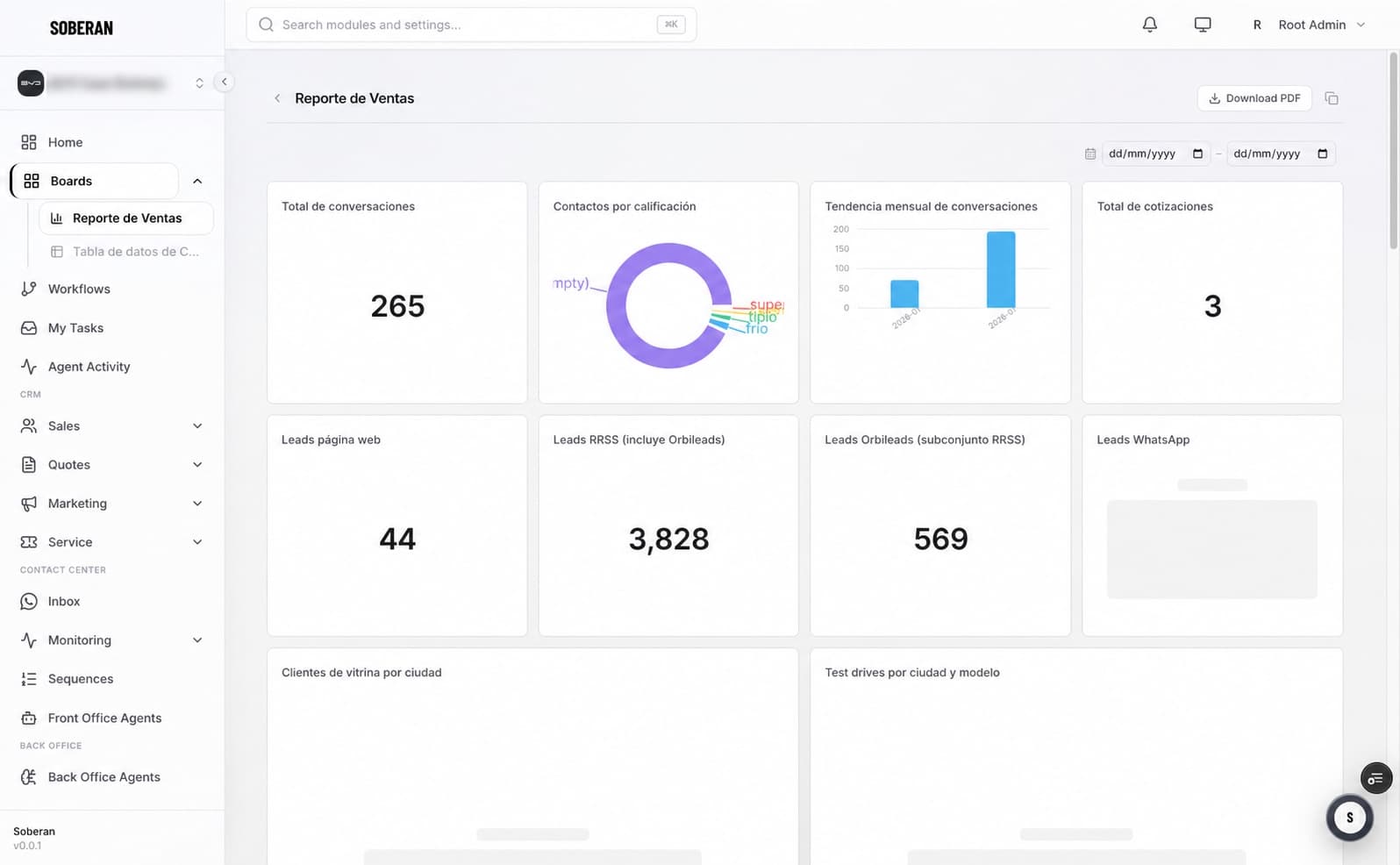
Todos los reportes
Profundizar por workflow
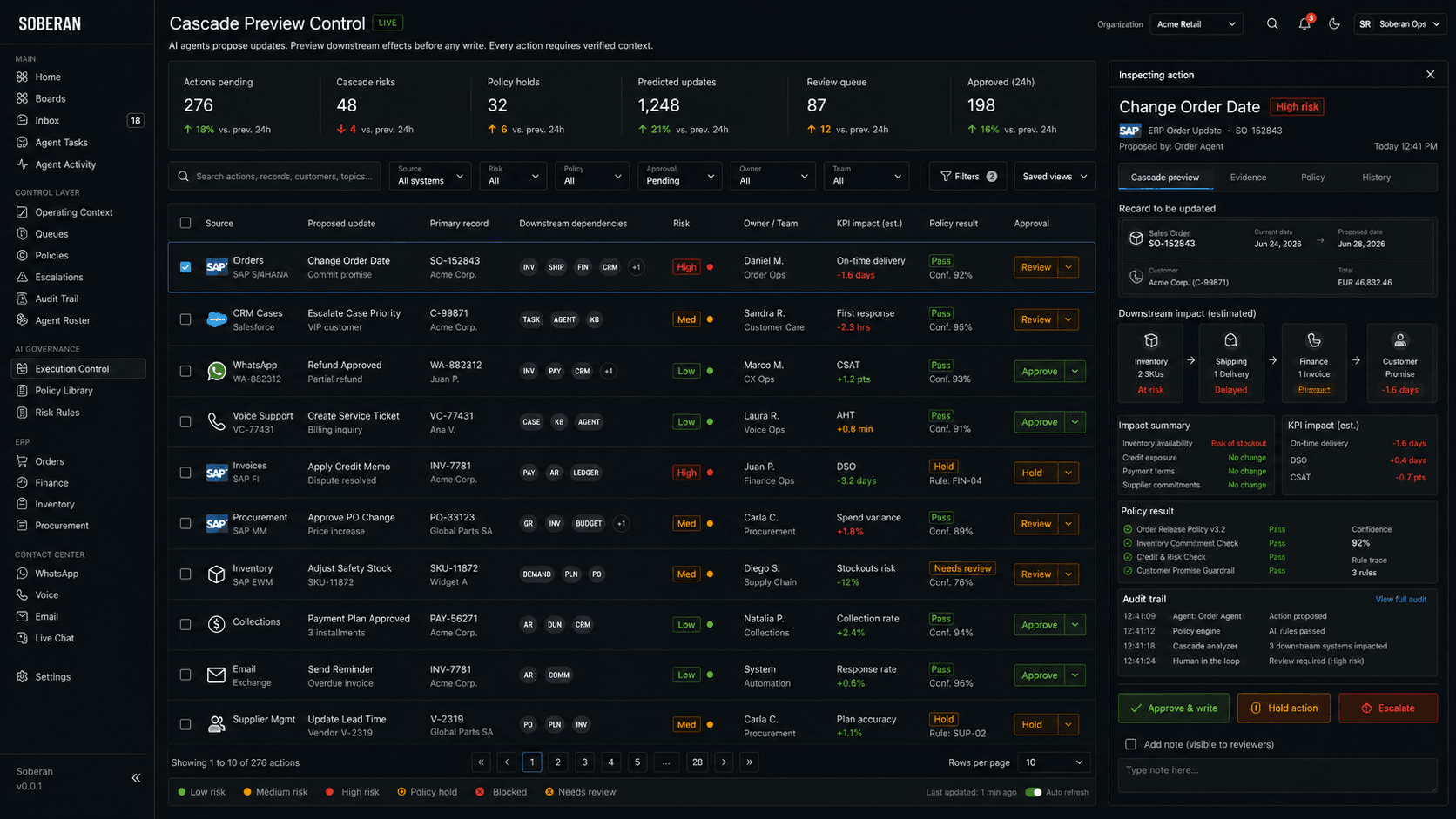
Los agentes de IA necesitan vista de efectos antes de actualizar ERP o CRM
Los agentes de IA empresarial están pasando de conversar a cambiar sistemas, pero investigaciones recientes muestran que aún fallan al anticipar efectos ocultos dentro de flujos complejos. Los operadores deberían exigir una vista de efectos antes de cualquier cambio en ERP, CRM o canales de cliente.
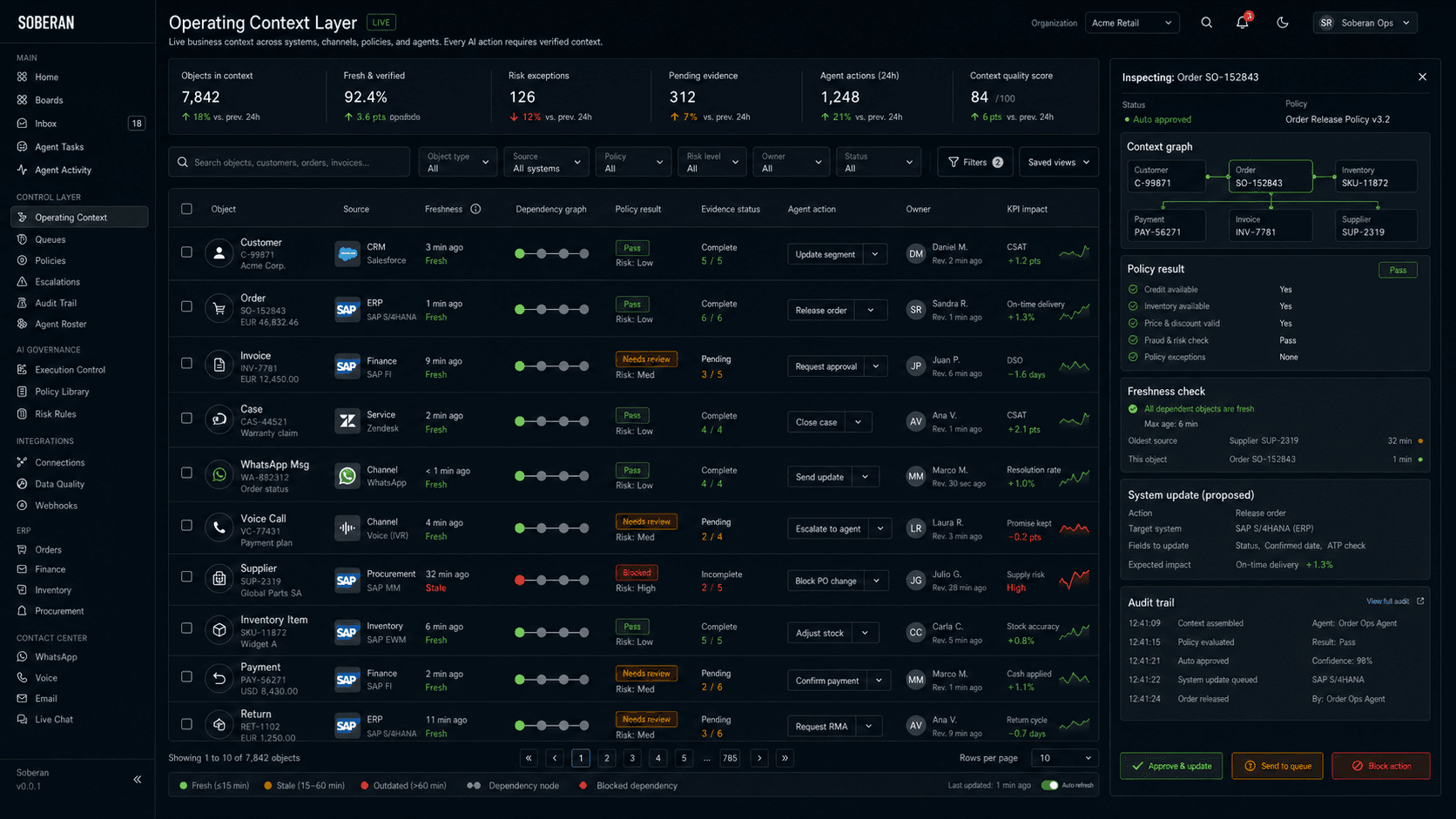
Los agentes de IA necesitan una capa de contexto operativo antes de más autonomía
La IA empresarial avanza hacia coordinación, capas semánticas y nubes de datos de negocio. La pregunta práctica para operadores no es si los agentes pueden acceder a más datos. Es si ven el contexto operativo correcto antes de cambiar registros de ERP, CRM o canales de cliente.
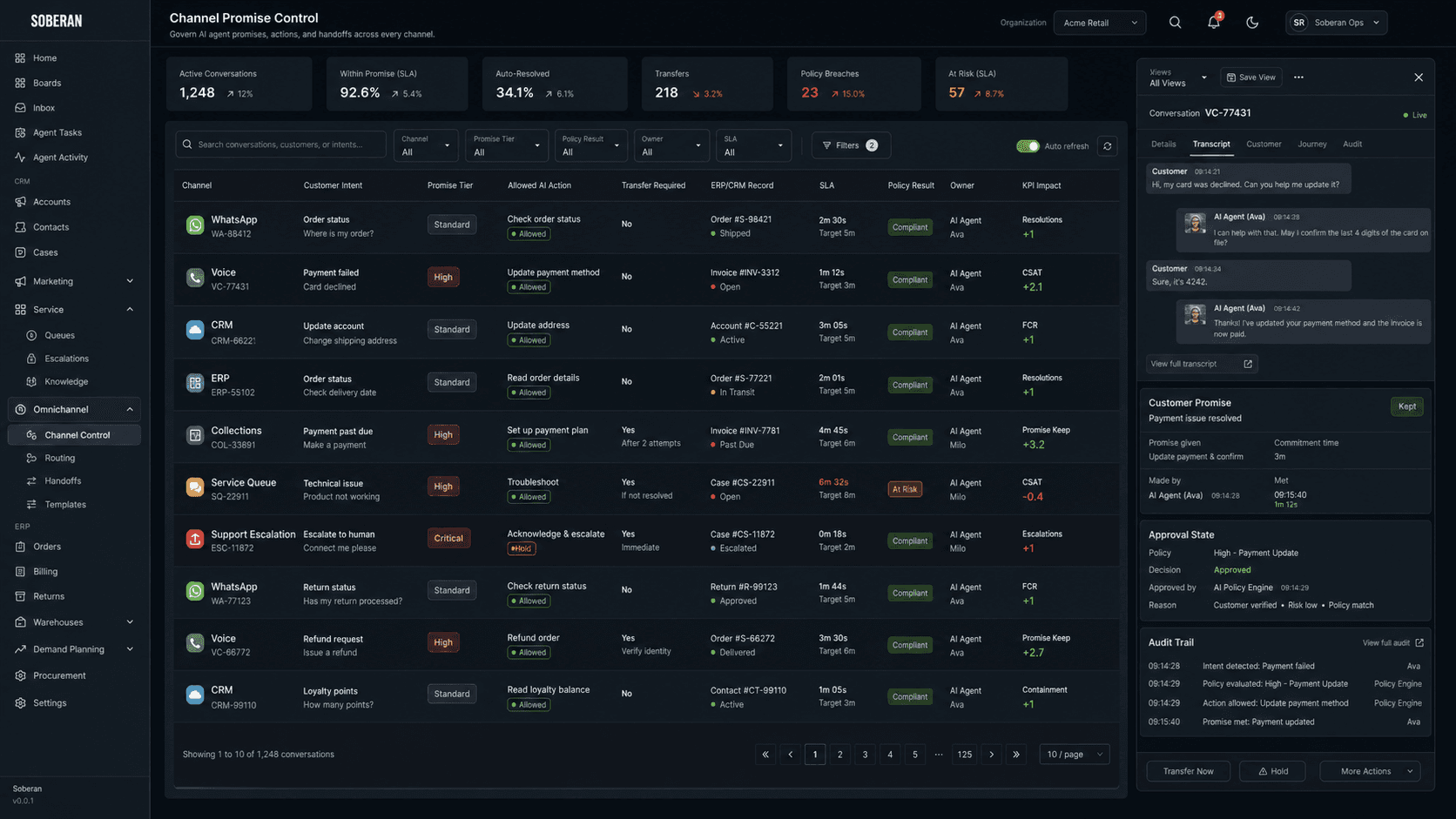
Los agentes de IA del centro de contacto necesitan control de promesas por canal
El mercado avanza rápido hacia agentes de IA en WhatsApp, voz, CRM y canales de servicio. El control práctico no es la contención. Es la promesa por canal: qué puede resolver el agente, cuándo debe transferir y qué registro de ERP o CRM prueba la respuesta.
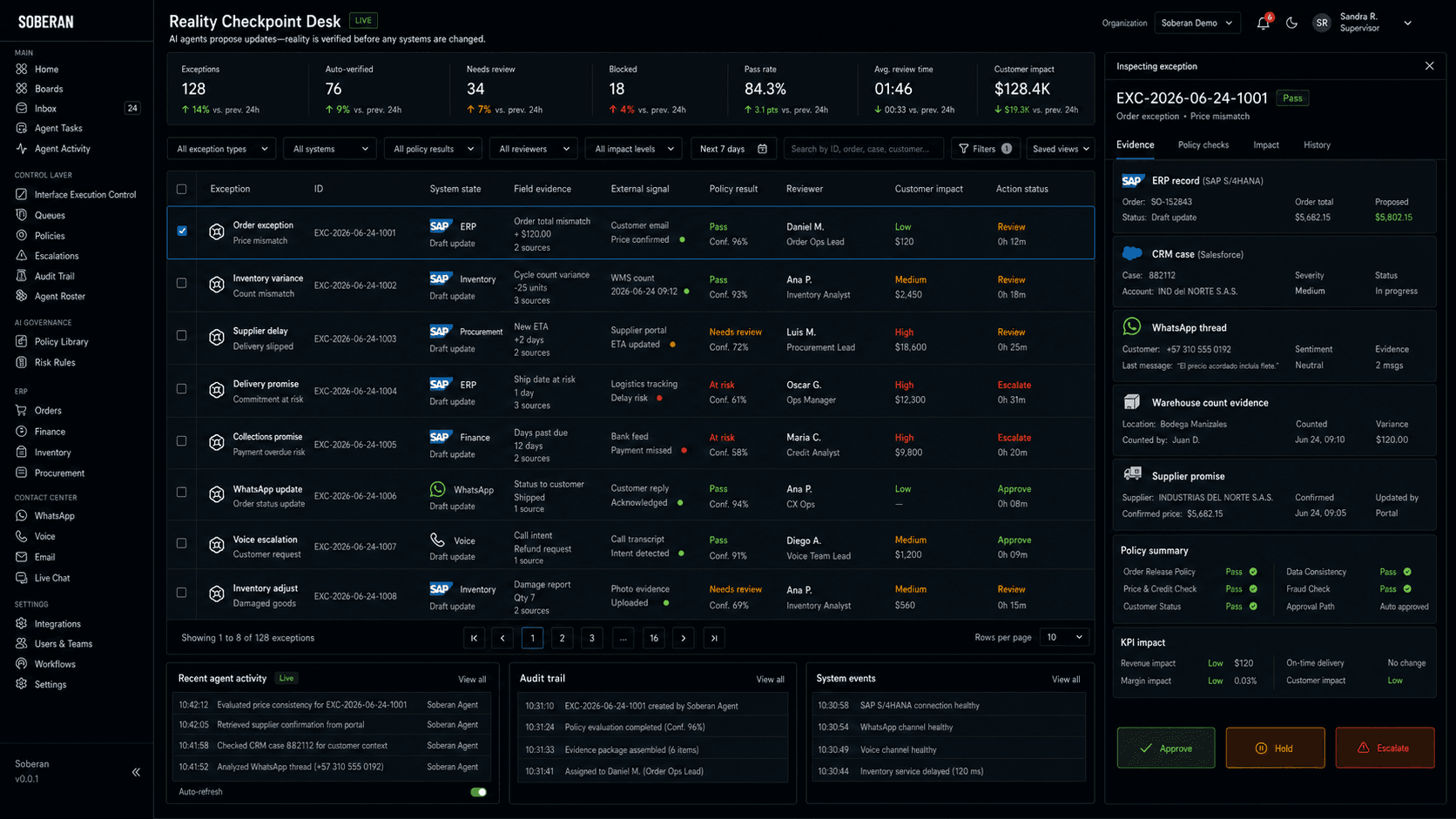
Los agentes de IA necesitan puntos de verificación antes de actualizar el ERP
La IA empresarial está pasando del chat a la acción operativa. El siguiente control no es otro tablero. Es un punto de verificación que prueba que el agente reconcilió estado del ERP, contexto de CRM, promesas al cliente, señales de proveedores y evidencia física antes de cambiar el registro.
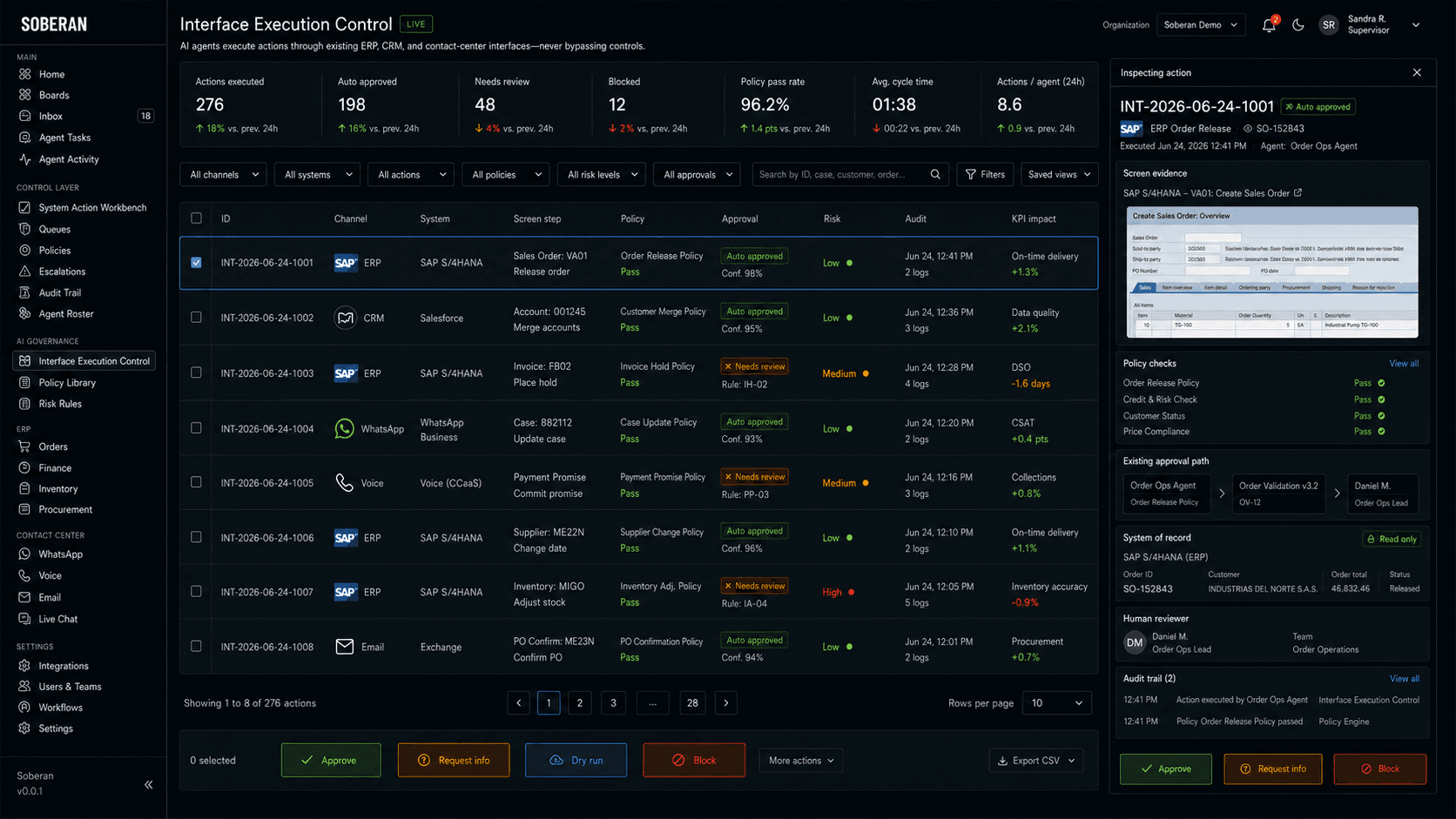
Los agentes de IA deben usar la interfaz cuando los controles viven en el ERP
La nueva tensión de la IA empresarial no es solo qué pueden hacer los agentes. Es dónde lo hacen. Cuando los controles más seguros viven en pantallas de ERP, CRM y centro de contacto, los operadores deben exigir ejecución gobernada desde la interfaz antes de ampliar la autonomía.
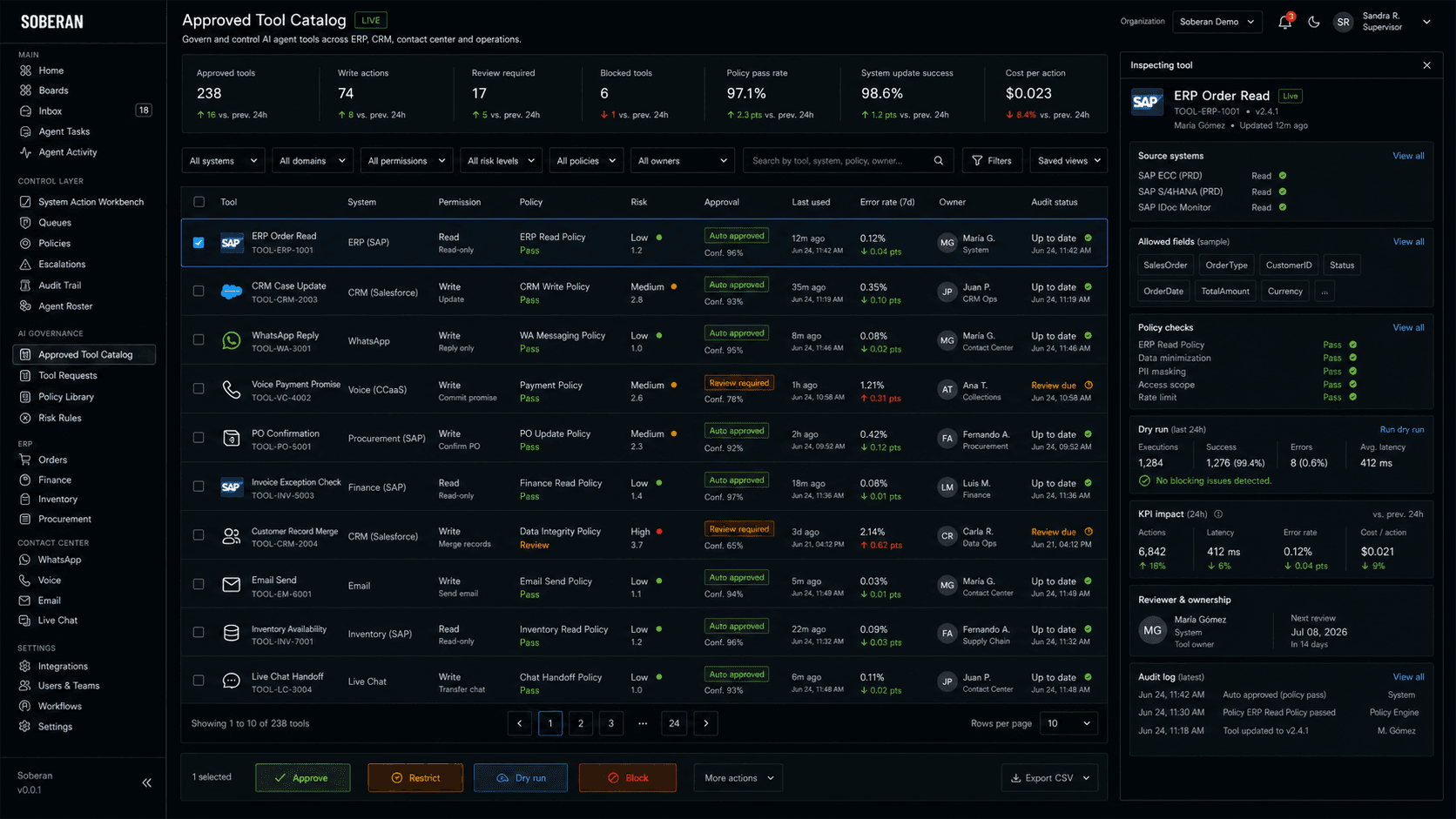
Los agentes de IA necesitan un catálogo de herramientas aprobadas antes de conectarse al ERP y al CRM
La IA empresarial está pasando de interfaces de chat a agentes que usan herramientas en CRM, ERP, soporte y finanzas. Los operadores deben responder con un catálogo de herramientas aprobadas: cada lectura, actualización, mensaje, aprobación y registro gobernado antes de que el agente actúe.
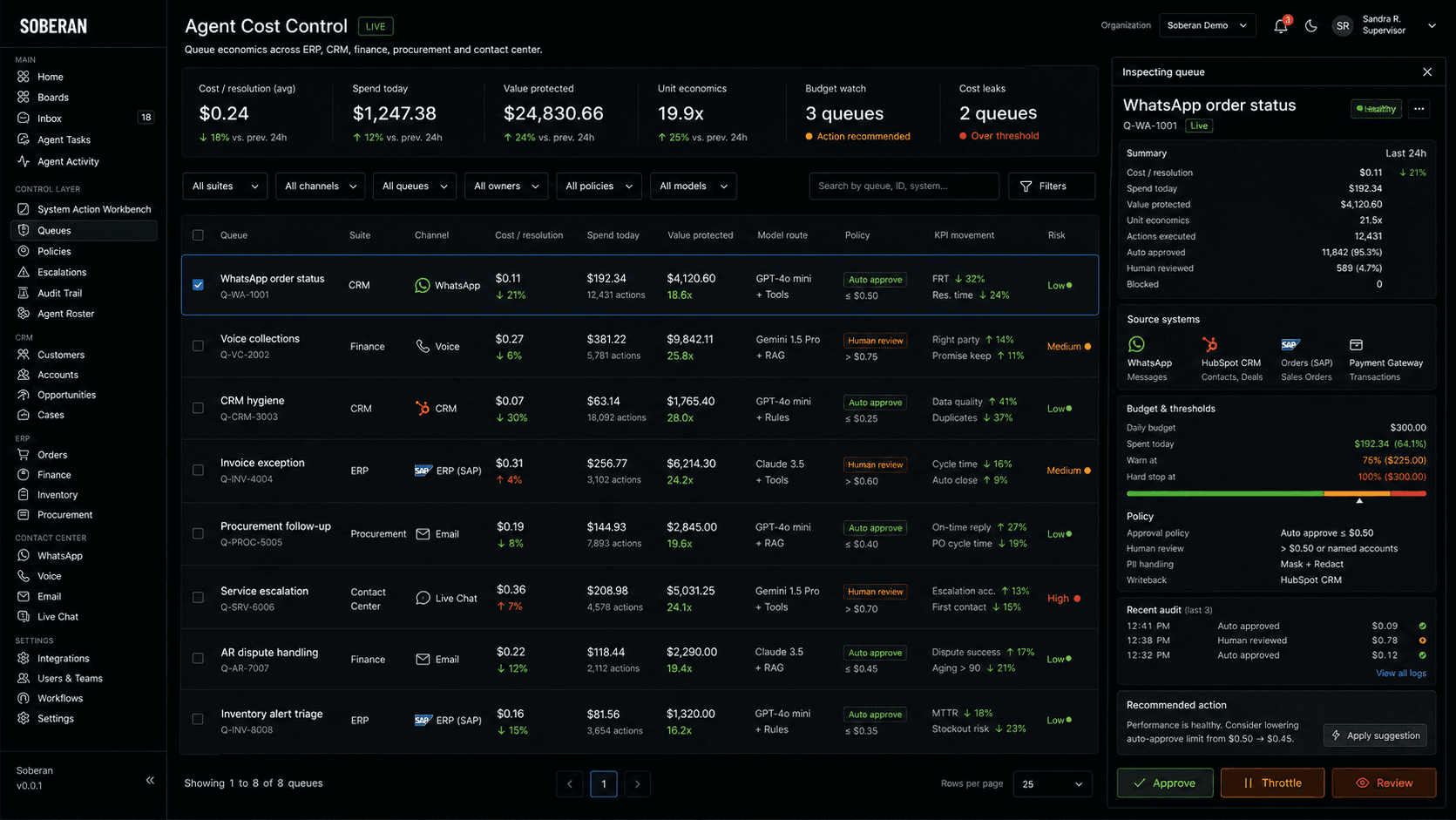
Los agentes de IA necesitan control de costos por cola, no solo más automatización
El gasto en IA empresarial se está volviendo más difícil de pronosticar porque el uso avanza por toda la organización más rápido que los controles financieros. Los operadores deberían responder con economía por cola: costo por resolución comprobada, valor protegido, riesgo de política e impacto en indicadores para cada flujo con agentes de IA.
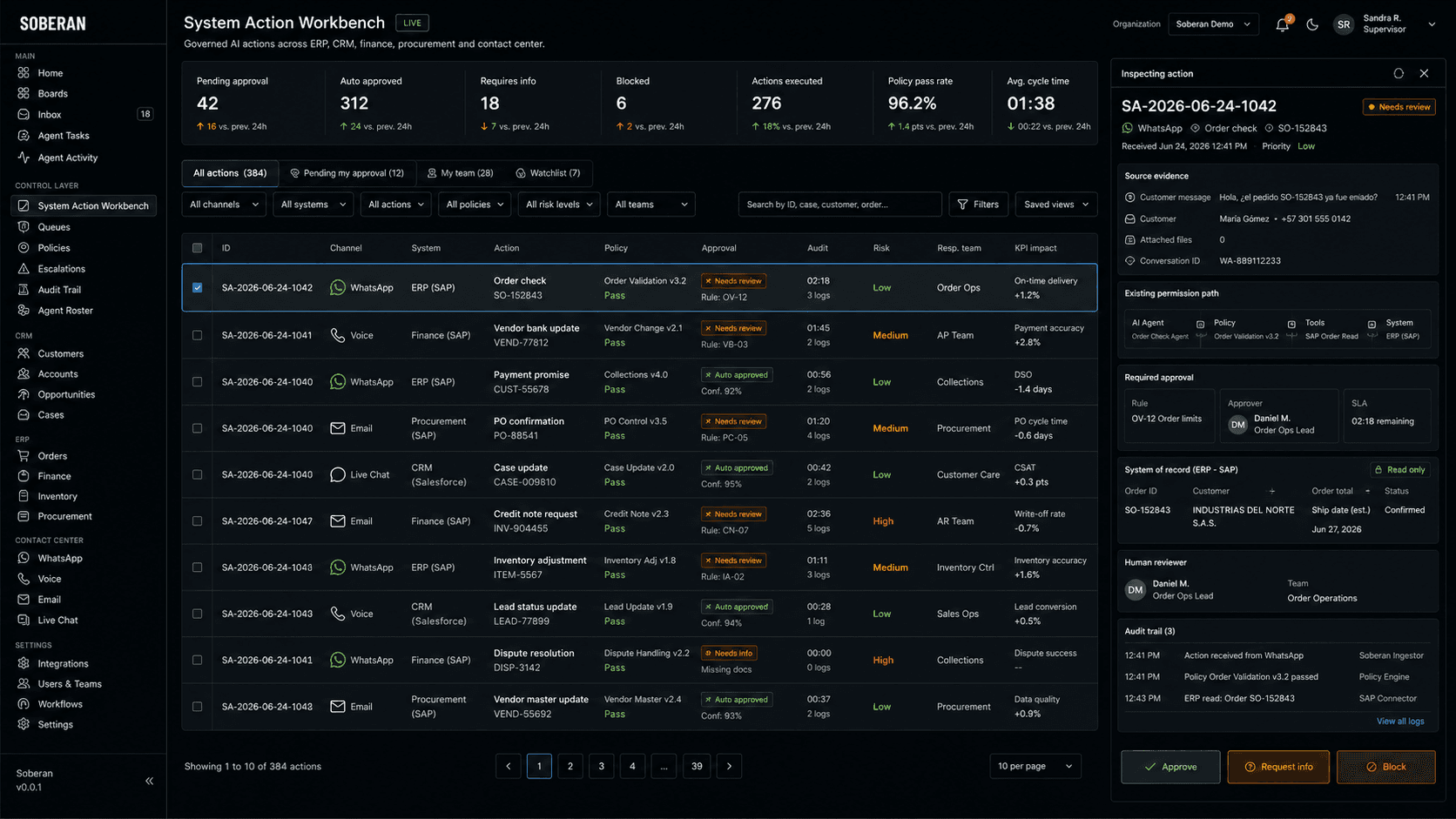
Los agentes de IA necesitan una mesa de acciones antes de tocar ERP o CRM
El mercado está acercando los agentes de IA a finanzas, compras, cadena de suministro, CRM y operaciones de cliente. Los operadores no deberían responder dando acceso oculto a los sistemas. Deberían poner cada acción propuesta en una mesa gobernada.
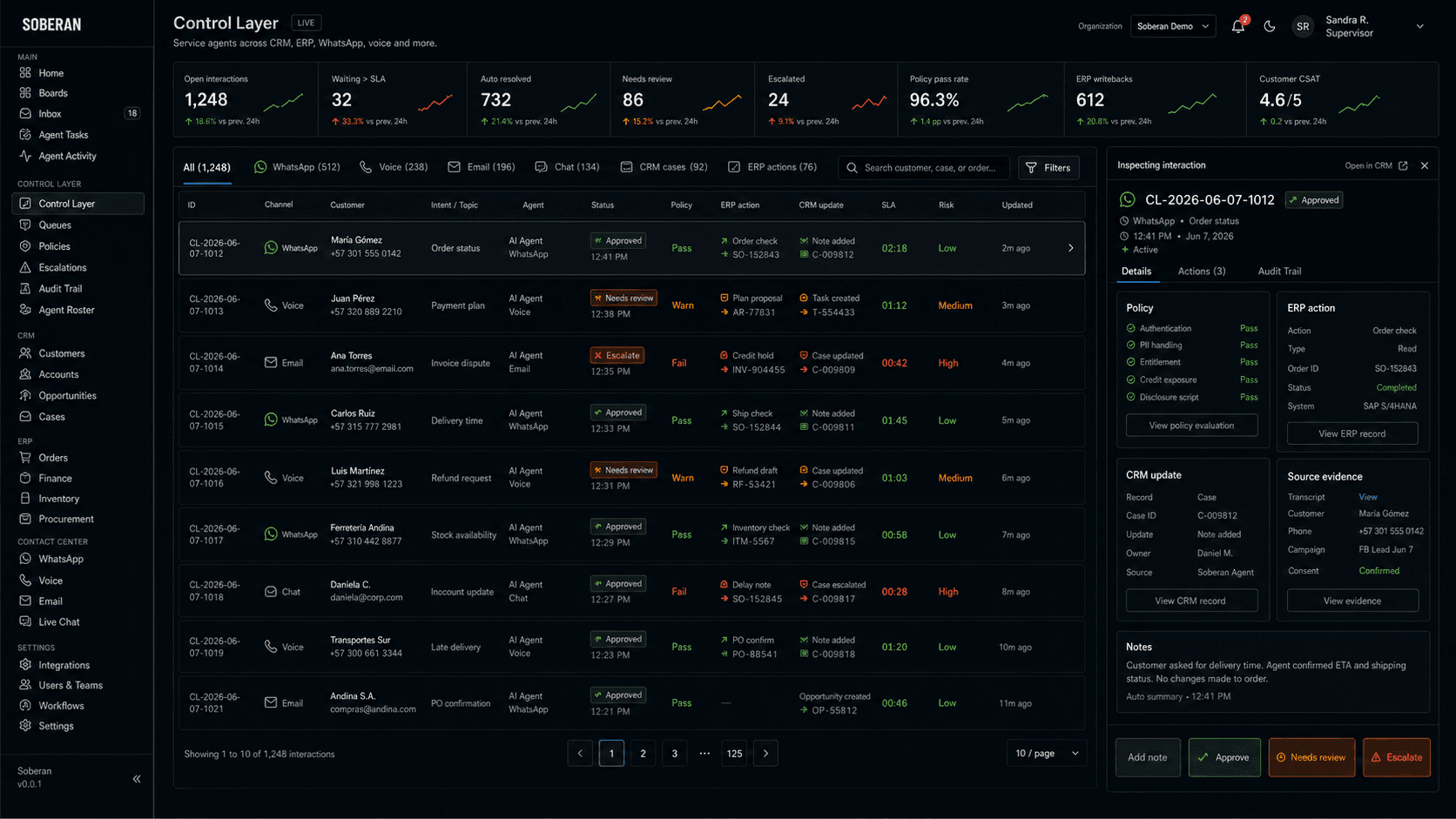
La consolidación de agentes de servicio hace que la capa de control sea la decisión real
A medida que los agentes de servicio con IA entran en suites de CRM y plataformas empresariales, la pregunta práctica ya no es qué bot responde más rápido. Es quién controla la acción entre WhatsApp, voz, CRM, ERP, política y auditoría.
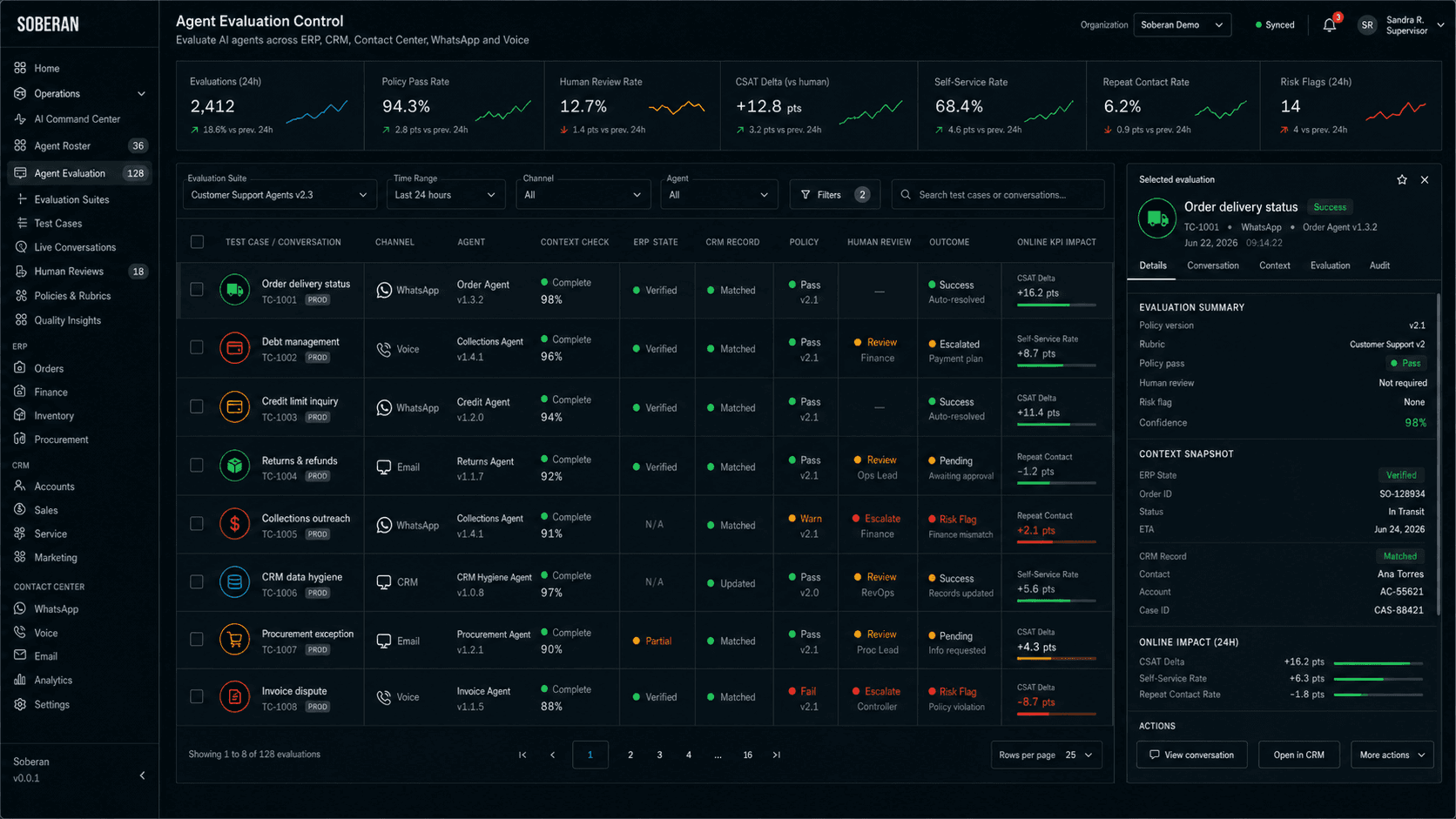
El banco de evaluación es la capa de control que necesitan los agentes de IA para ERP, CRM y centro de contacto
El mercado está pasando de demostraciones a agentes de atención al cliente en producción. Los operadores deben responder con un banco de evaluación que pruebe contexto, política, escalamiento, actualizaciones de sistemas e indicadores reales antes de ampliar la autonomía.
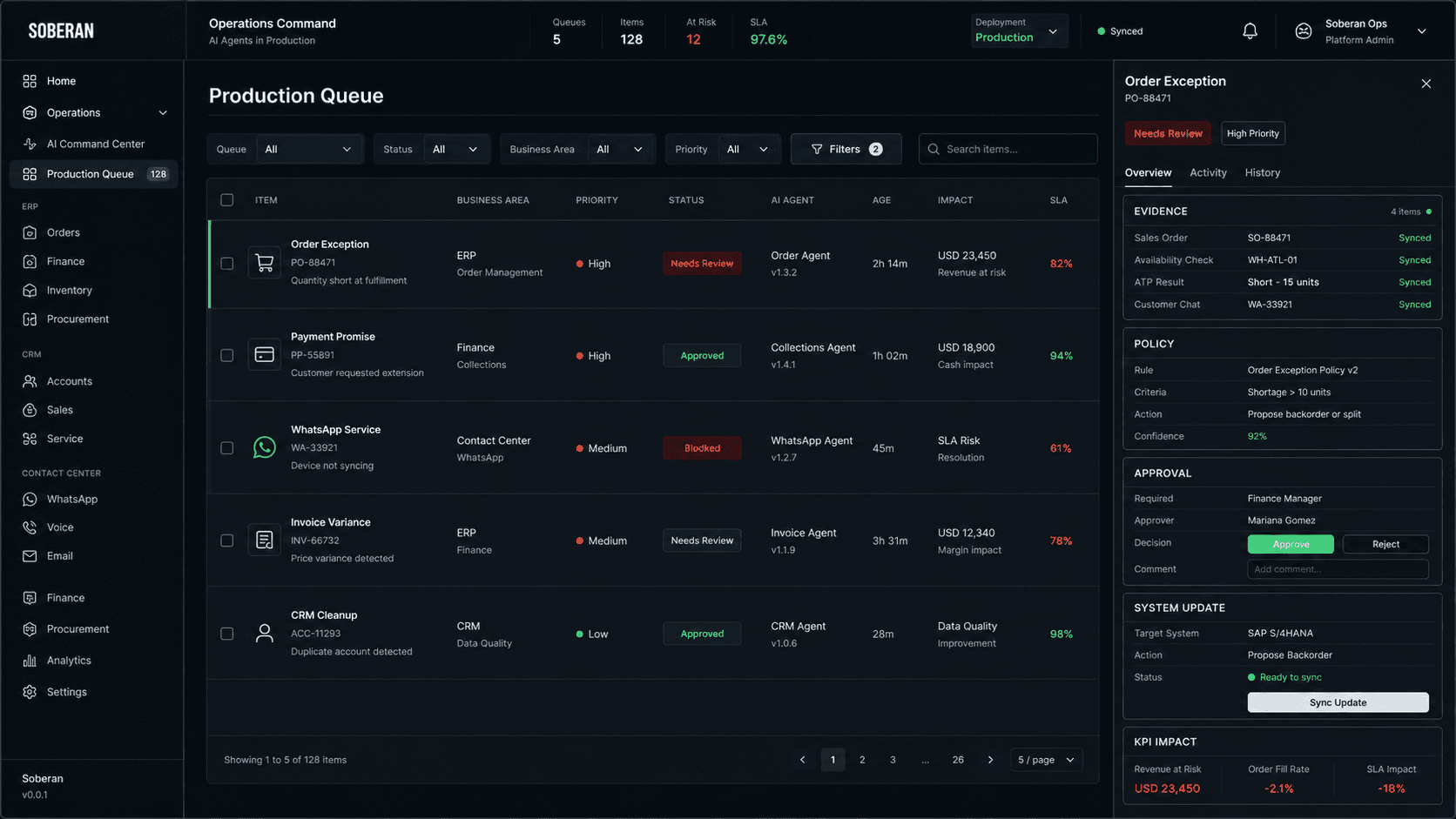
Las colas de producción son la unidad que falta para agentes de IA en ERP, CRM y centro de contacto
La IA empresarial está pasando de experimentos a operaciones reales, pero la unidad útil de despliegue no es un programa amplio de transformación. Es una cola de producción: una clase de excepción, un equipo responsable, una política, una actualización de sistemas y un indicador que prueba que el trabajo mejoró.
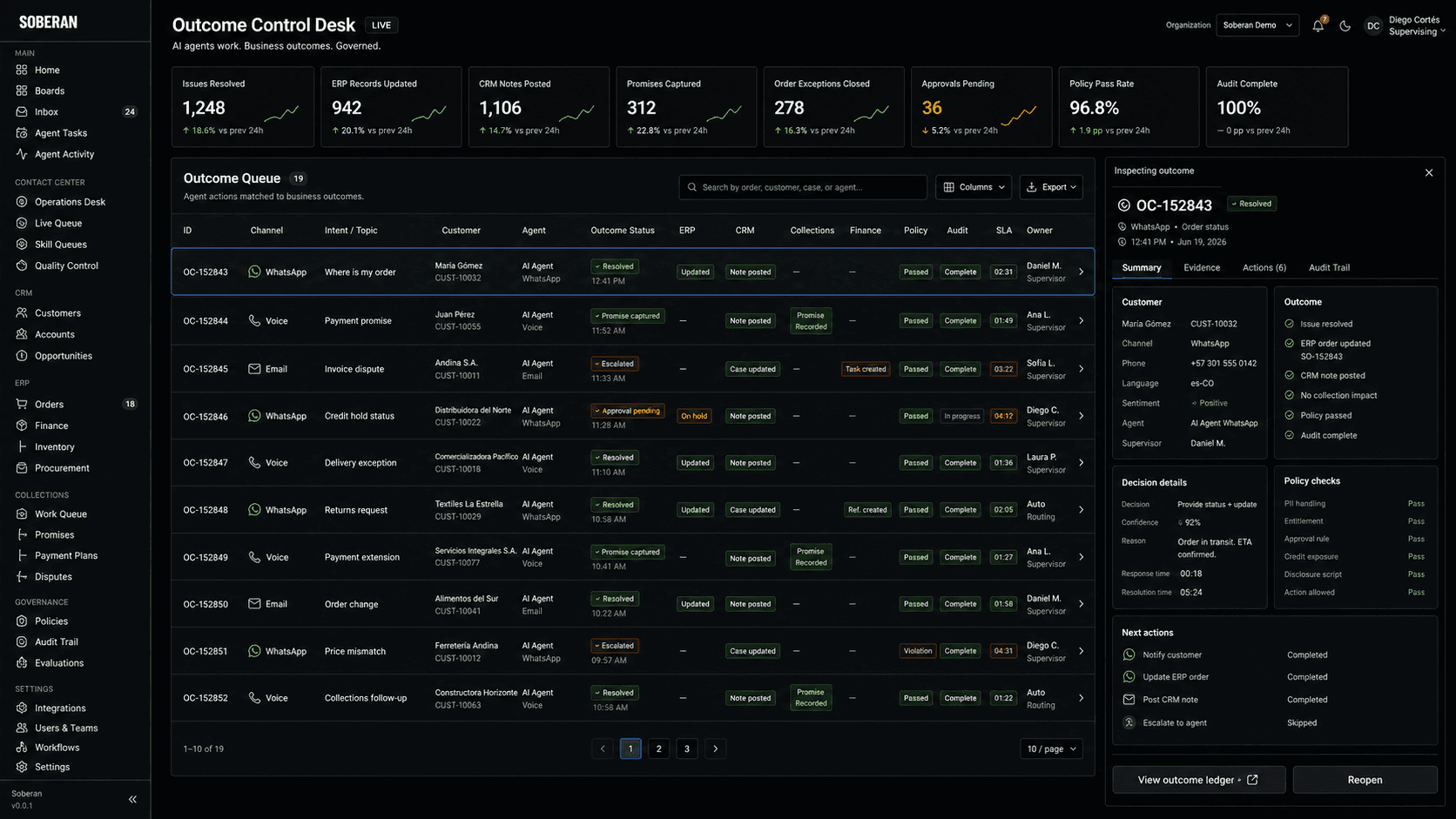
Agentes de IA responsables por resultado: ERP, CRM y centro de contacto deben probar que el trabajo cerró
El mercado empieza a financiar y cobrar agentes como unidades de trabajo. Los operadores deben responder redefiniendo resolución: no una conversación cerrada, sino un resultado de negocio verificado en ERP, CRM, centro de contacto, finanzas, política y auditoría.
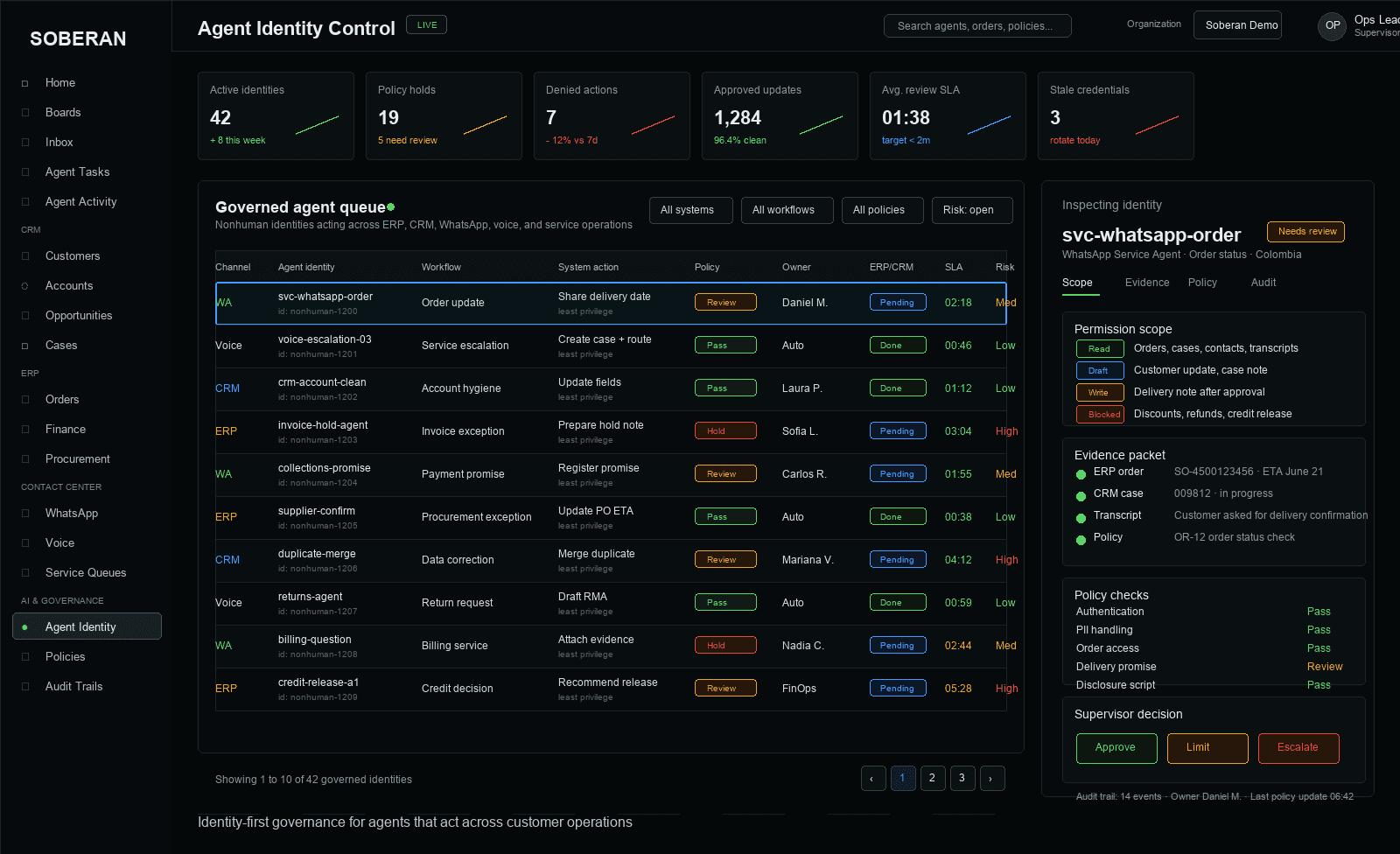
Gobierno de identidades para agentes: la capa de control que necesitan ERP, CRM y centro de contacto
El siguiente cuello de botella de la IA con agentes no es la calidad del modelo. Es si cada agente tiene una identidad operativa real: qué puede tocar, quién lo gobierna, qué cambió y cómo se prueba que la acción estaba permitida.
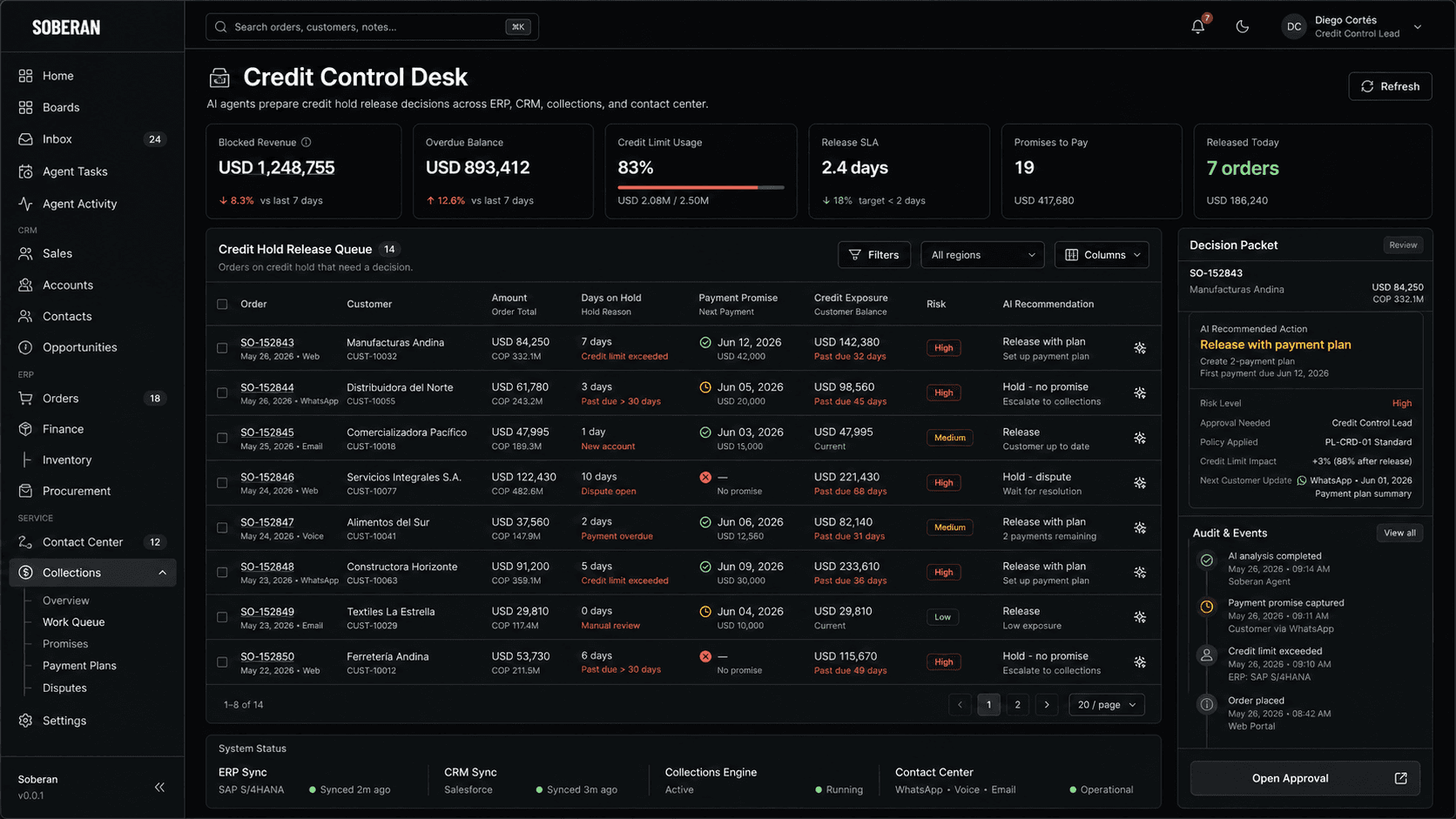
Liberación de pedidos retenidos por crédito con agentes de IA: control entre ERP, CRM, cobranza y centro de contacto
La prueba más fuerte para los agentes empresariales no es responderle al cliente. Es decidir con seguridad qué pasa cuando un pedido real queda retenido por riesgo de crédito.

Automatización de estado de siniestros con agentes de IA: centro de contacto, CRM y controles ERP
La IA para servicio al cliente ya está pasando de piloto a prueba operativa, pero las aseguradoras reguladas necesitan primero una sala de control para estado de siniestros.
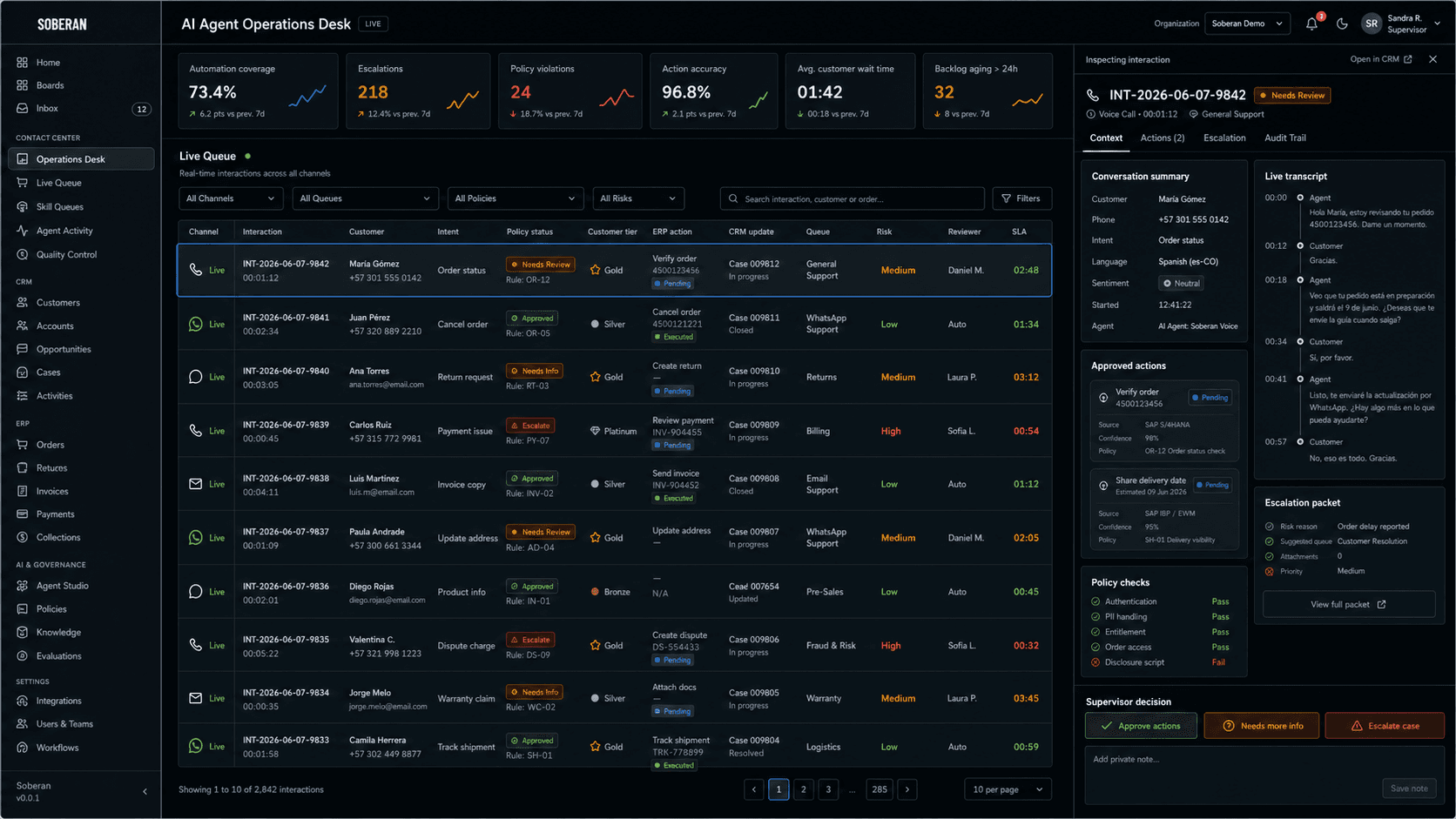
Mesa de control para agentes de IA en centro de contacto: CRM, ERP, voz y WhatsApp
El siguiente presupuesto de IA para centro de contacto no debería ir a otro bot. Debería ir a la mesa operativa que supervisa cada acción de voz, WhatsApp, CRM y ERP que toman los agentes.
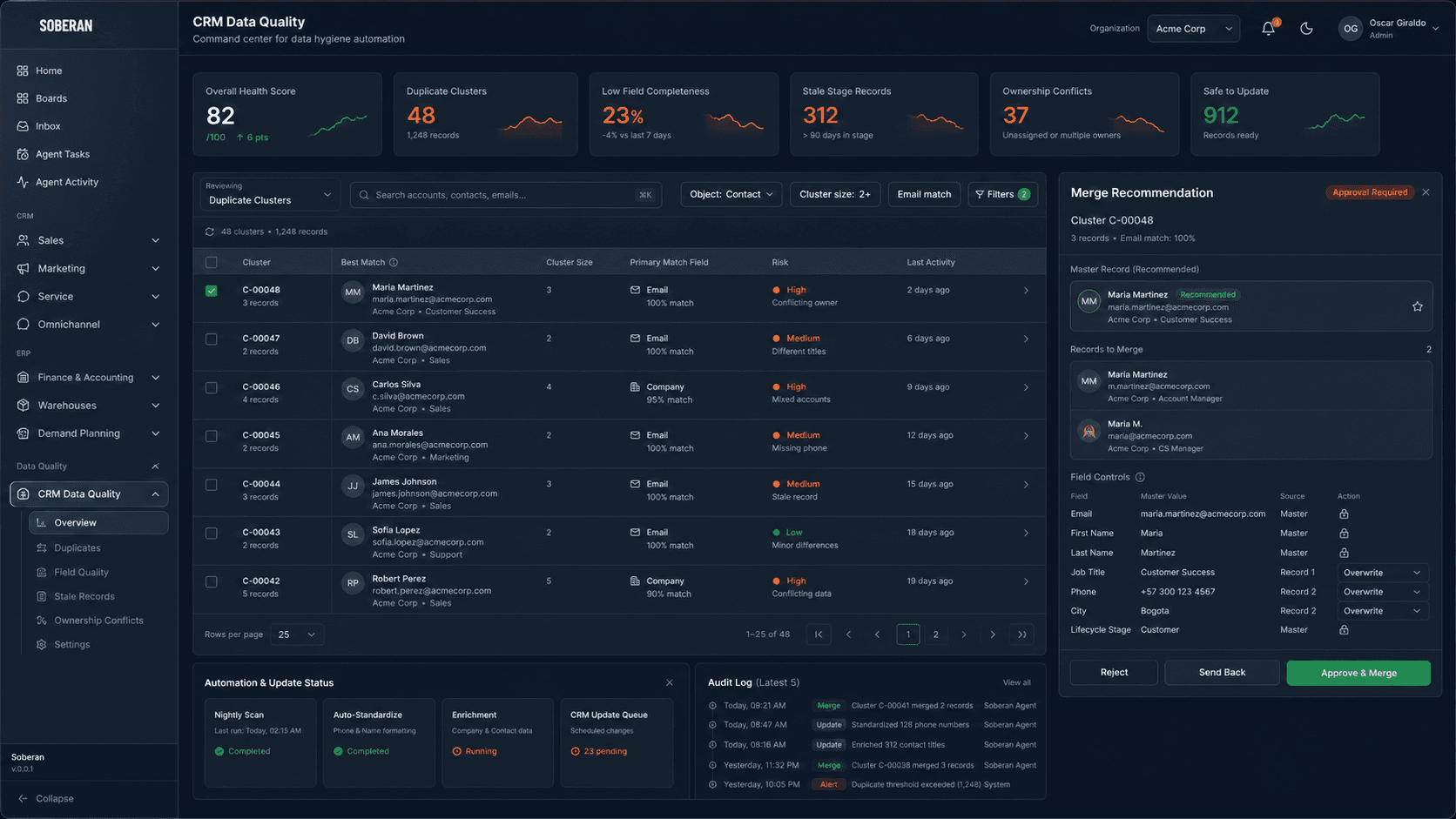
Higiene de datos CRM con agentes de IA: duplicados, controles de campo y actualizaciones seguras
Los proyectos de limpieza CRM fallan porque el deterioro de datos es continuo. El caso de alta intención es una cola gobernada que actualiza campos seguros y escala cambios riesgosos.

Investigación de cuentas con IA: señales de expansión y renovación que ventas puede ejecutar
El mejor agente de investigación de cuentas no escribe un resumen genérico. Encuentra señales de expansión, renovación, riesgo y comité de compra que cambian la siguiente acción comercial.
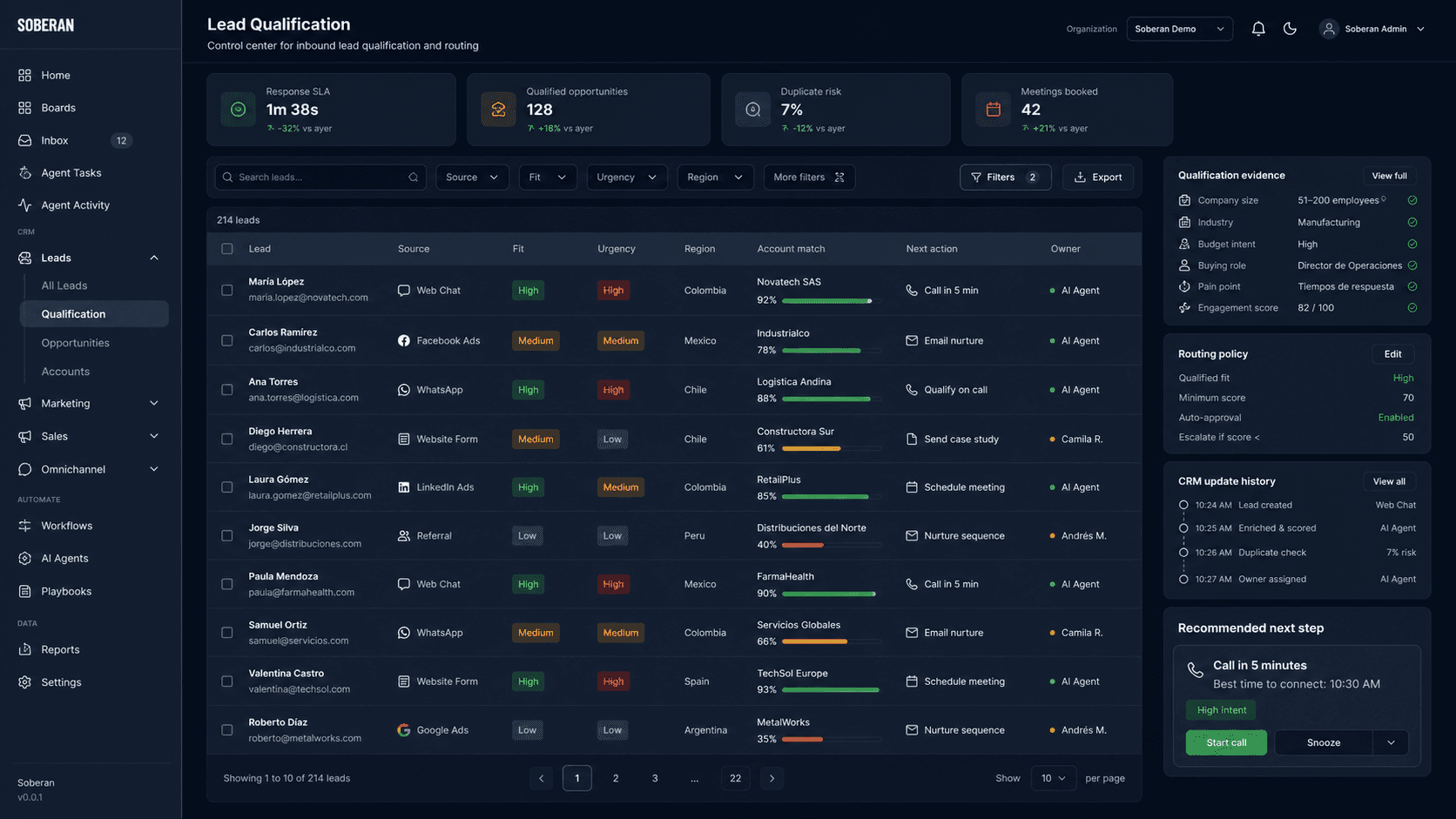
¿Los agentes IA pueden calificar oportunidades y asignar en HubSpot CRM?
Los agentes IA pueden calificar oportunidades en HubSpot cuando reglas, datos CRM, asignación, evidencia y revisión humana forman un mismo ciclo.
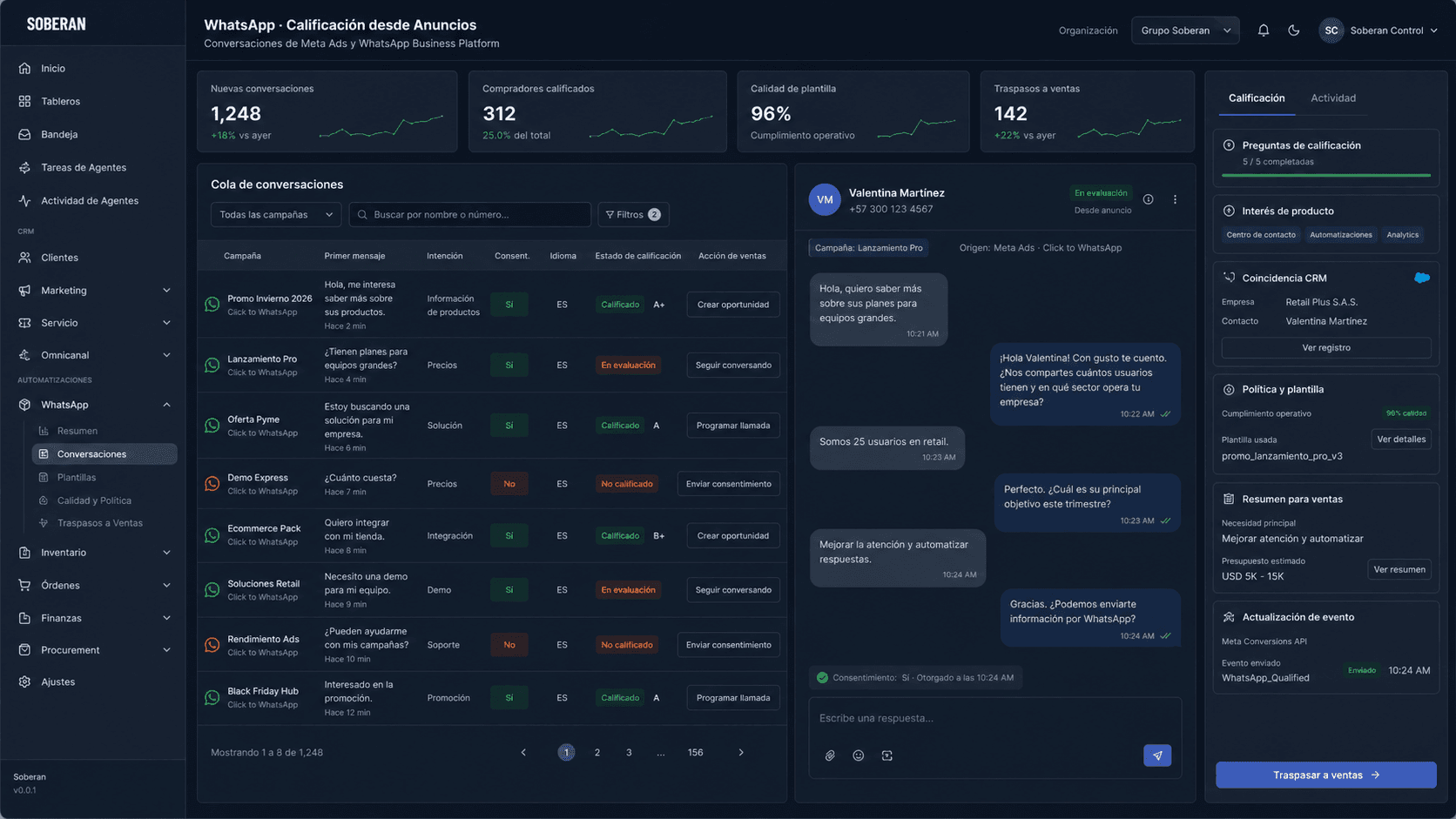
Calificación por WhatsApp con agentes de IA: de anuncios a CRM sin perder control
La calificación por WhatsApp funciona cuando conecta campaña, consentimiento, preguntas breves, traspaso comercial y evidencia en CRM.
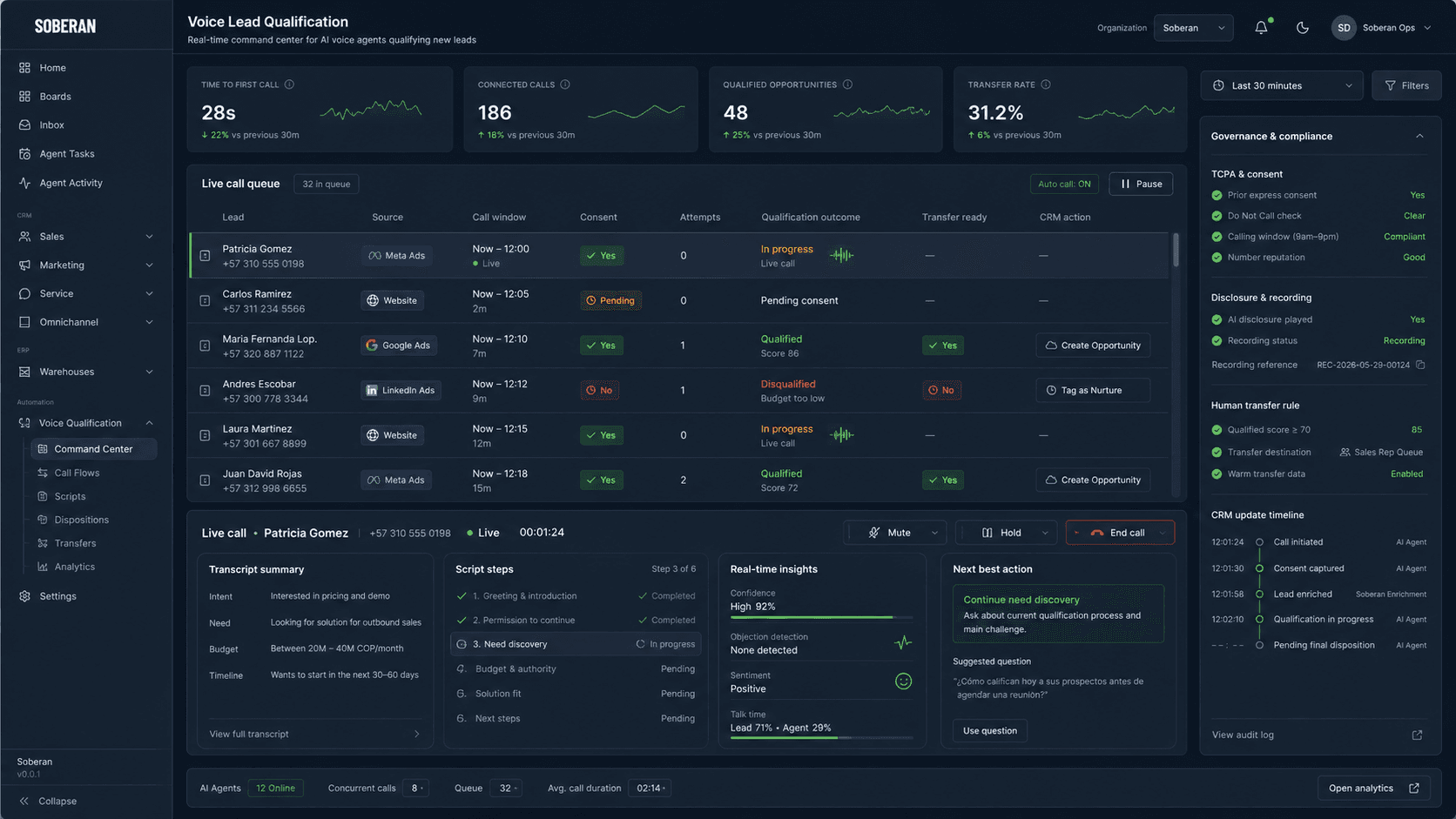
Calificación telefónica con agentes de IA: velocidad sin perder control de consentimiento
La calificación por voz aporta valor cuando mejora velocidad y preserva consentimiento, guion, traspaso y controles de CRM.
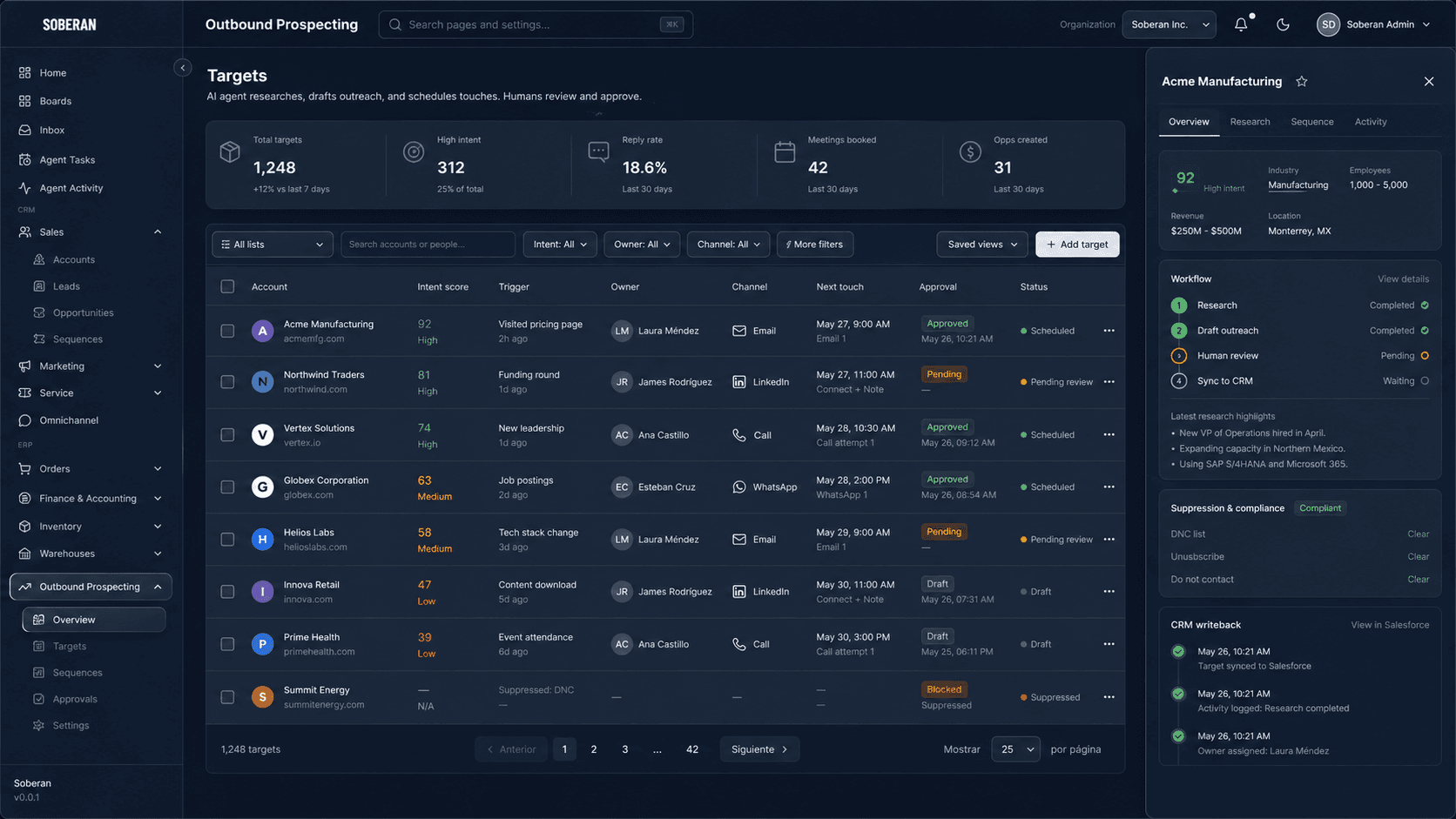
Prospección saliente con IA: de señales de cuenta a secuencias en CRM
La prospección saliente funciona cuando la IA convierte señales de cuenta en mensajes revisados, no cuando simplemente dispara más correos fríos.
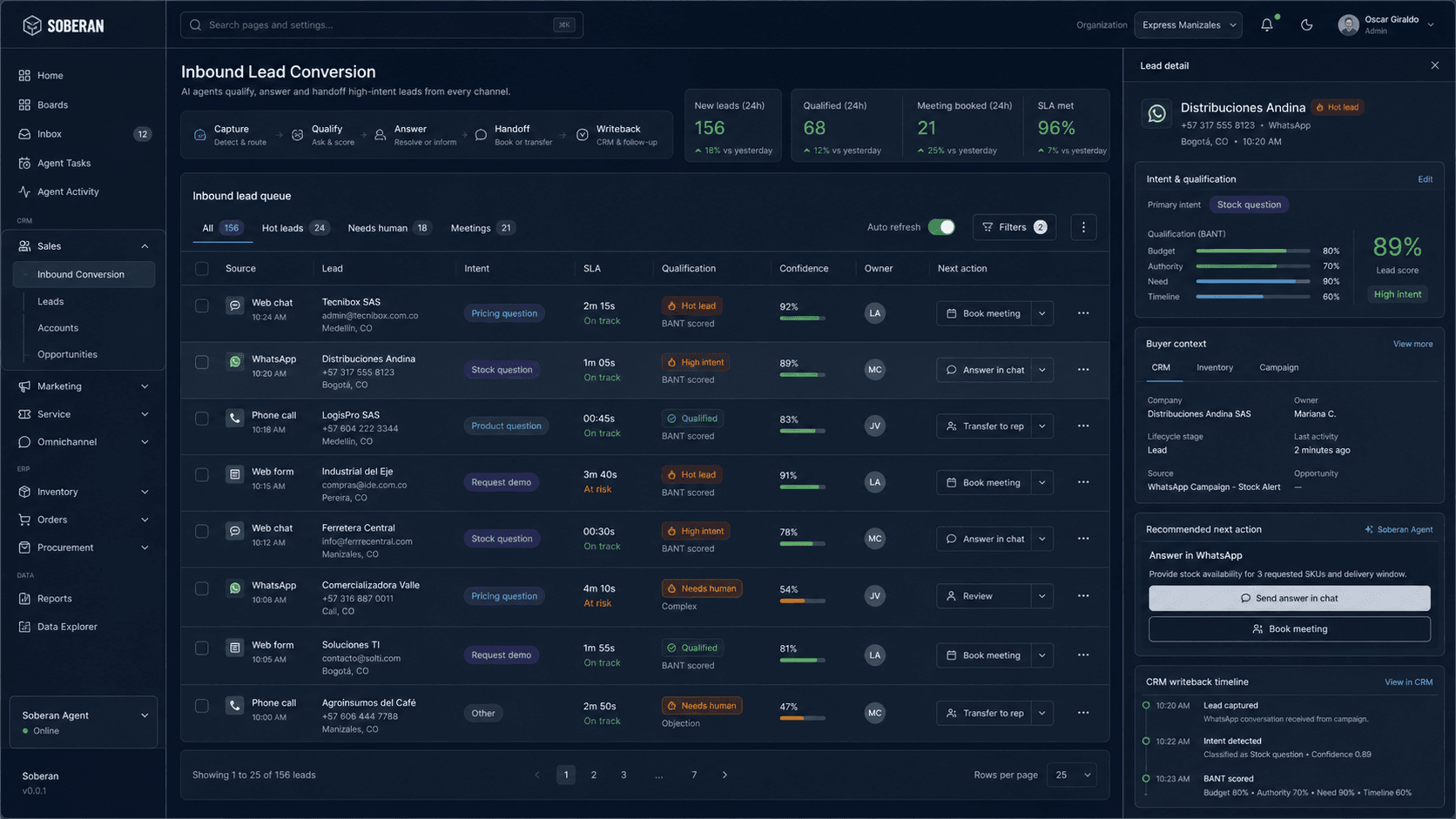
Conversión de oportunidades entrantes con IA: velocidad y traspaso limpio al CRM
La conversión entrante funciona cuando la IA captura la intención, responde con contexto aprobado y entrega evidencia clara al CRM.
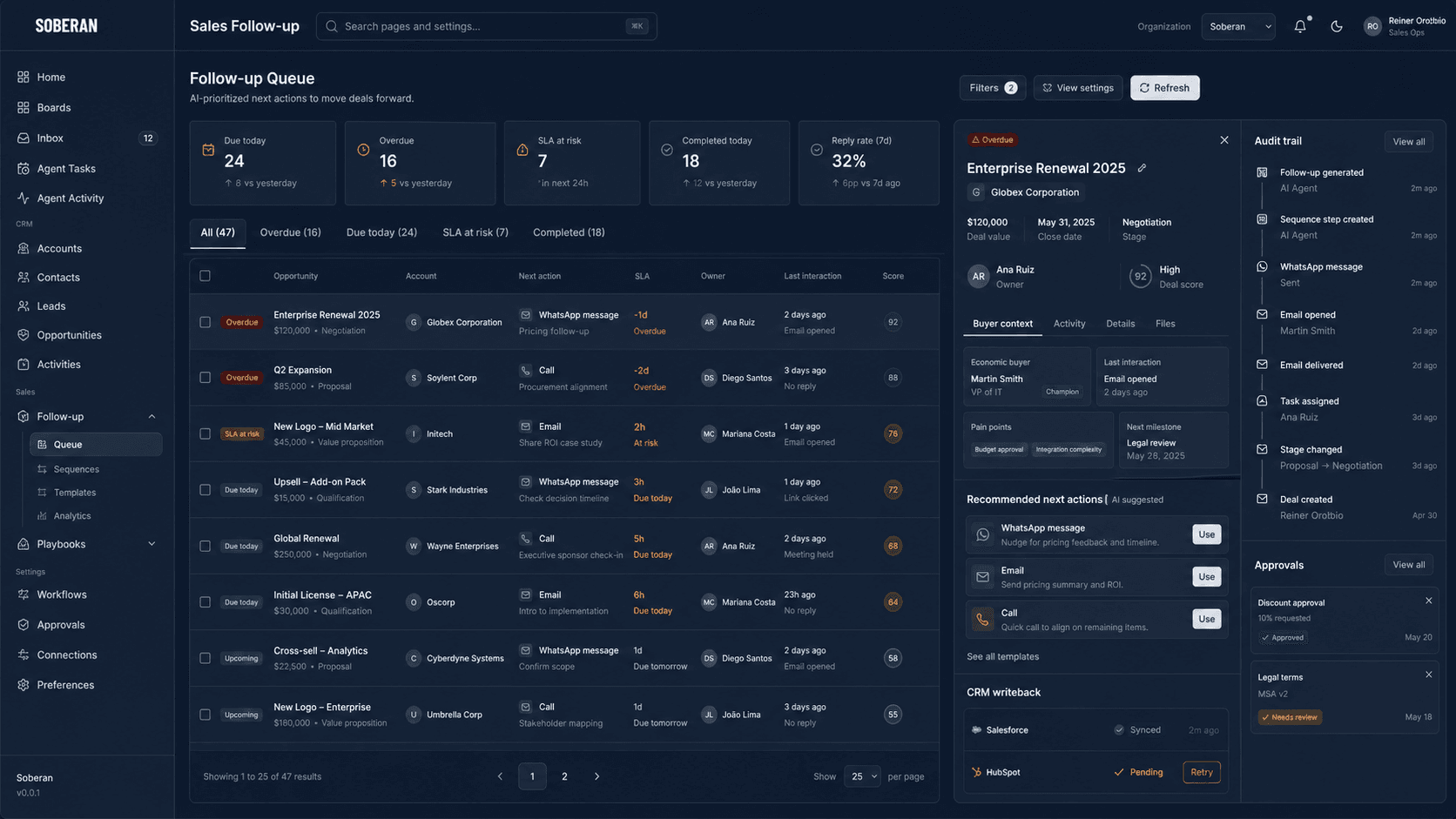
Seguimiento comercial con IA: siguientes acciones sin desorden en el embudo
La automatización de seguimiento comercial funciona cuando los agentes de IA manejan el ciclo de siguiente acción: detectar oportunidades estancadas, redactar el toque correcto, pedir aprobación y actualizar evidencia en CRM.
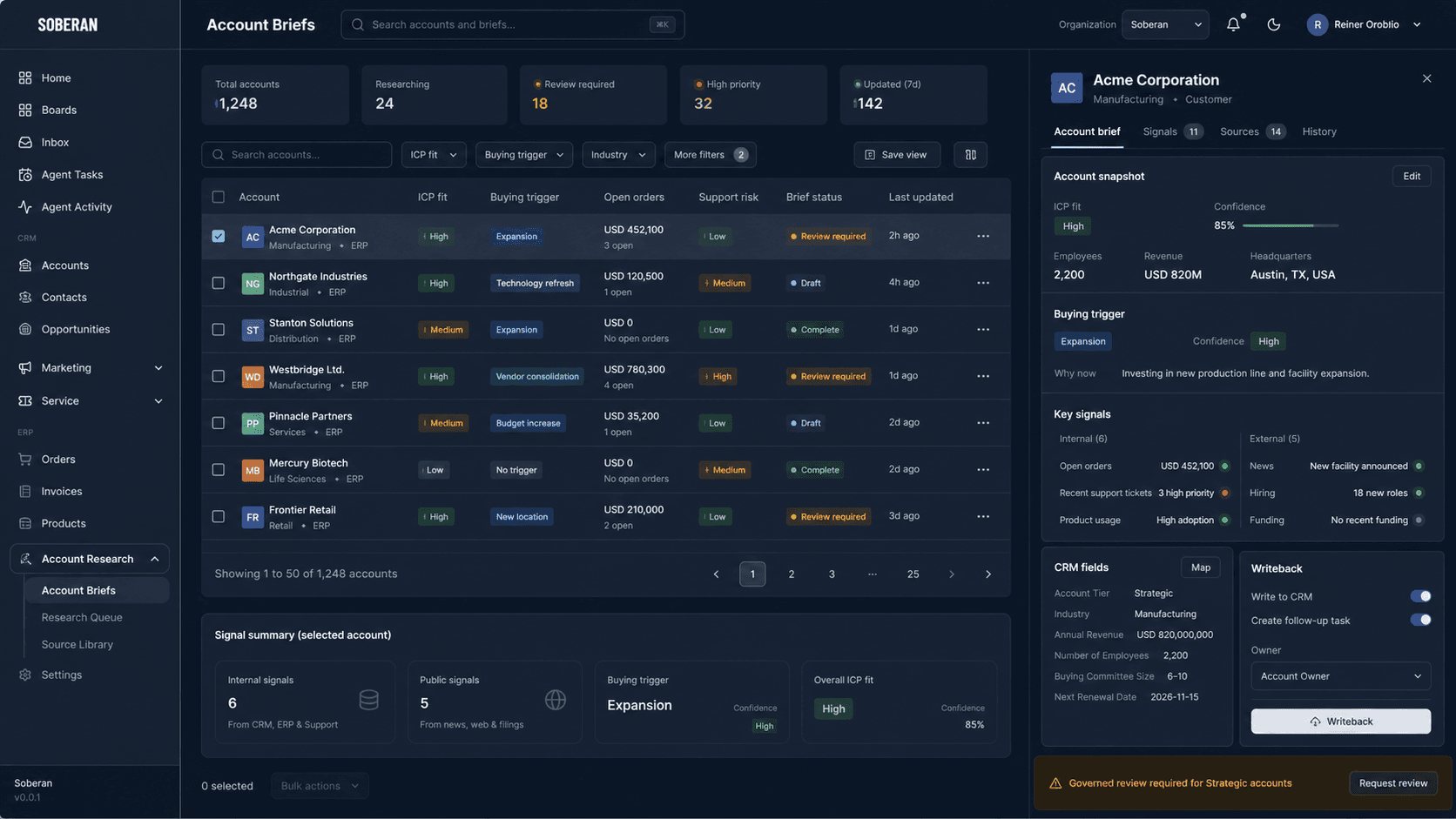
Investigación de cuentas con IA: resúmenes útiles para ventas B2B
La investigación de cuentas con IA debe crear un resumen operativo citado, no un resumen genérico. Los mejores flujos conectan señales internas, disparadores públicos y acciones CRM.
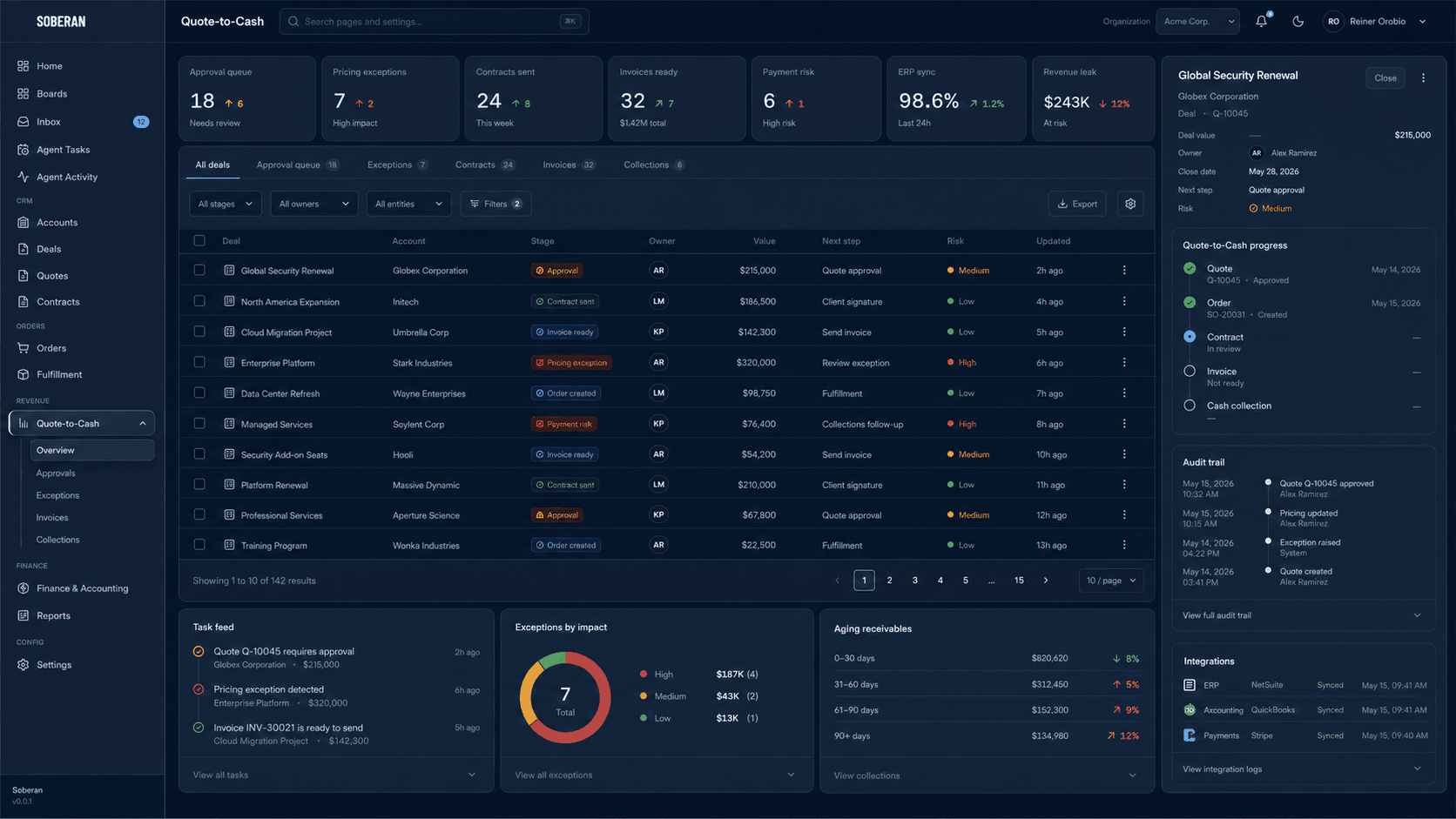
Cotización a cobro con IA: cerrar fugas entre CRM, pedidos y finanzas
Cotización a cobro crea valor cuando la fuga de ingresos se detecta antes de que finanzas tenga que conciliarla a mano.
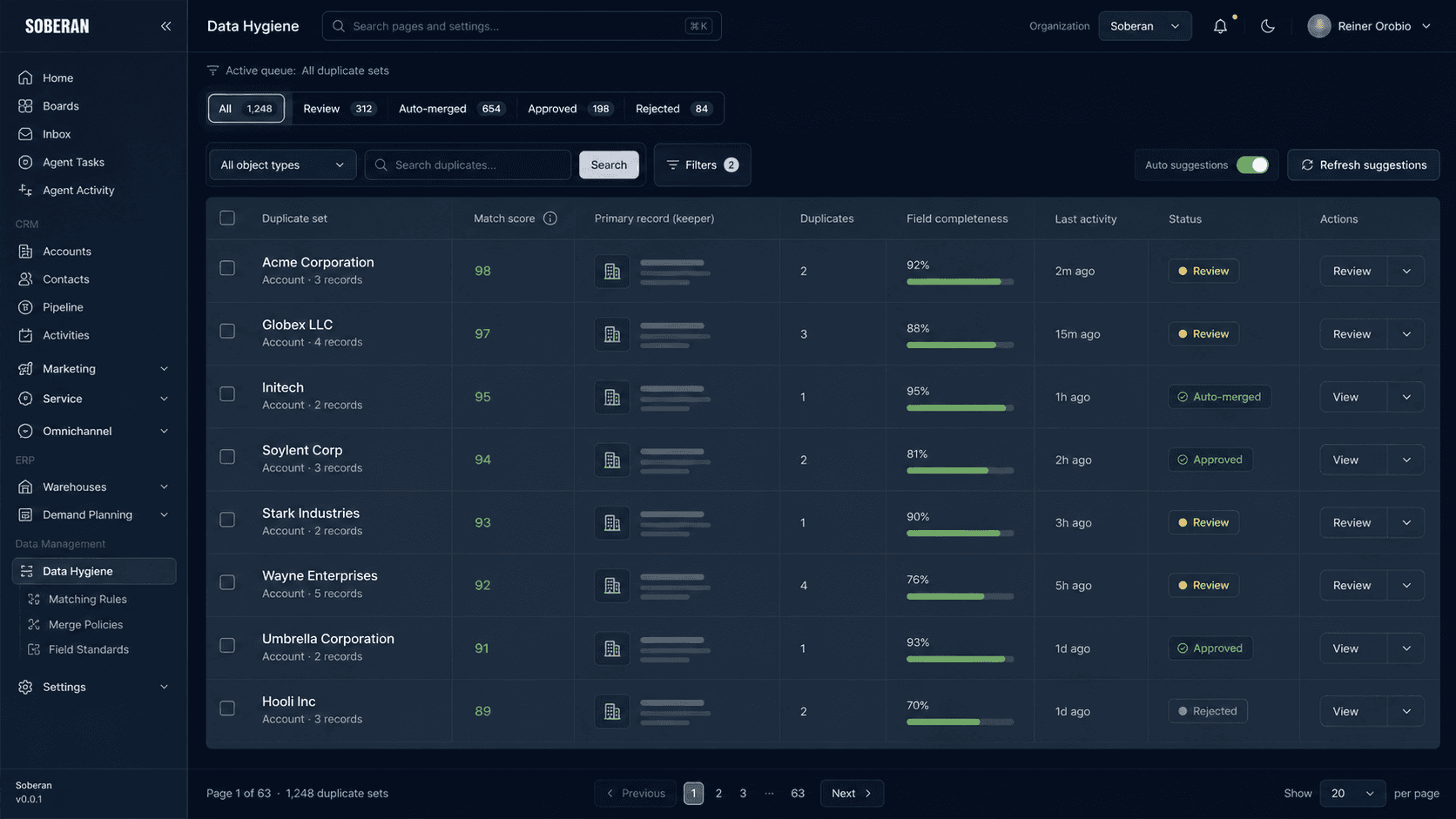
Higiene de datos CRM: registros listos para operar con IA
La higiene CRM se está volviendo preparación para IA: responsables claros, cuentas deduplicadas, campos confiables y actualización gobernada.

Automatización de calificación de oportunidades con agentes de IA: el flujo operativo
La velocidad de respuesta solo paga cuando escala. La calificación de oportunidades automatizada funciona cuando un agente de IA enriquece, evalúa, asigna y escribe en el CRM sin humano en medio.

Calificación de oportunidades por WhatsApp con IA: del clic al CRM
WhatsApp genera alta intención y alto volumen. La IA de calificación convierte cada chat en un registro CRM calificado sin que vendedores clasifiquen mensajes a mano.

Agentes de voz para calificar oportunidades: automatiza el seguimiento telefónico de anuncios
La generación de oportunidades por anuncios falla cuando nadie llama rápido. Los agentes de voz cierran ese ciclo con guiones aprobados, disposiciones estructuradas y actualización del CRM.

Qué significa de verdad un CRM con IA desde el origen
La distinción importa más que la etiqueta. Esto es lo que cambia cuando un agente de IA opera tu CRM en lugar de vivir dentro de él.

El costo real de cargar datos a mano en el CRM
El costo del ingreso manual en CRM no es el salario de la persona escribiendo. Es el ingreso que no se toca mientras lo hace.
Conversión entrante automatizada para centros de contacto
La intención entrante se enfría rápido. Los agentes de IA convierten esa demanda respondiendo con contexto de producto, agendando el siguiente paso y escribiendo al CRM en segundos.
Seguimiento comercial automatizado con IA contextual
Los vendedores pierden oportunidades cuando el seguimiento depende de memoria. La IA lee la etapa, redacta la acción correcta y escribe cumplimiento al CRM.
Investigación de cuentas con IA para ventas B2B
Los equipos de cuenta pierden tiempo entre pestañas y aun así omiten contexto operativo. La IA arma un resumen desde CRM, ERP, soporte y señales públicas.
Higiene de datos CRM automatizada con controles por campo
Los datos CRM se deterioran cada día. La IA detecta duplicados, campos faltantes y etapas viejas y escribe correcciones seguras con aprobación en el resto.

Automatización cotización a cobro: dónde se fuga el ingresos
El ingresos se fuga cuando promesas comerciales, descuentos, disponibilidad y facturación viven en sistemas separados. Cotización a cobro alinea CRM y ERP hasta cumplimiento.