Editorial hub
AI collections and payment workflows
Reports on WhatsApp collections, voice collections, payment plans, dispute handling, promises to pay, escalation, and AR writeback.
Short answer
In brief
AI collections should combine WhatsApp, voice, payment plan negotiation, dispute evidence, promise-to-pay tracking, and AR writeback with policy and human escalation.
Should collections automation start with WhatsApp or voice?
Start with the channel that already has the highest response and consent coverage, then connect both WhatsApp and voice to the same debtor context, policy, and payment outcome.
How do AI collections agents avoid unsafe actions?
Use approved scripts, payment-plan limits, dispute escalation, consent checks, regulatory guardrails, human review, and audit logs before any AR writeback.
Featured report
Best B2C AI debt collection software in 2026: Domu, C&R, InDebted, SOBERAN, and more
A B2C comparison of C&R Software, InDebted, Symend, TrueAccord, Domu, Skit.ai, SOBERAN, PAIR Finance, collect.AI, and EXUS for consumer collections and recovery.
14 min readAll reports
Go deeper by workflow
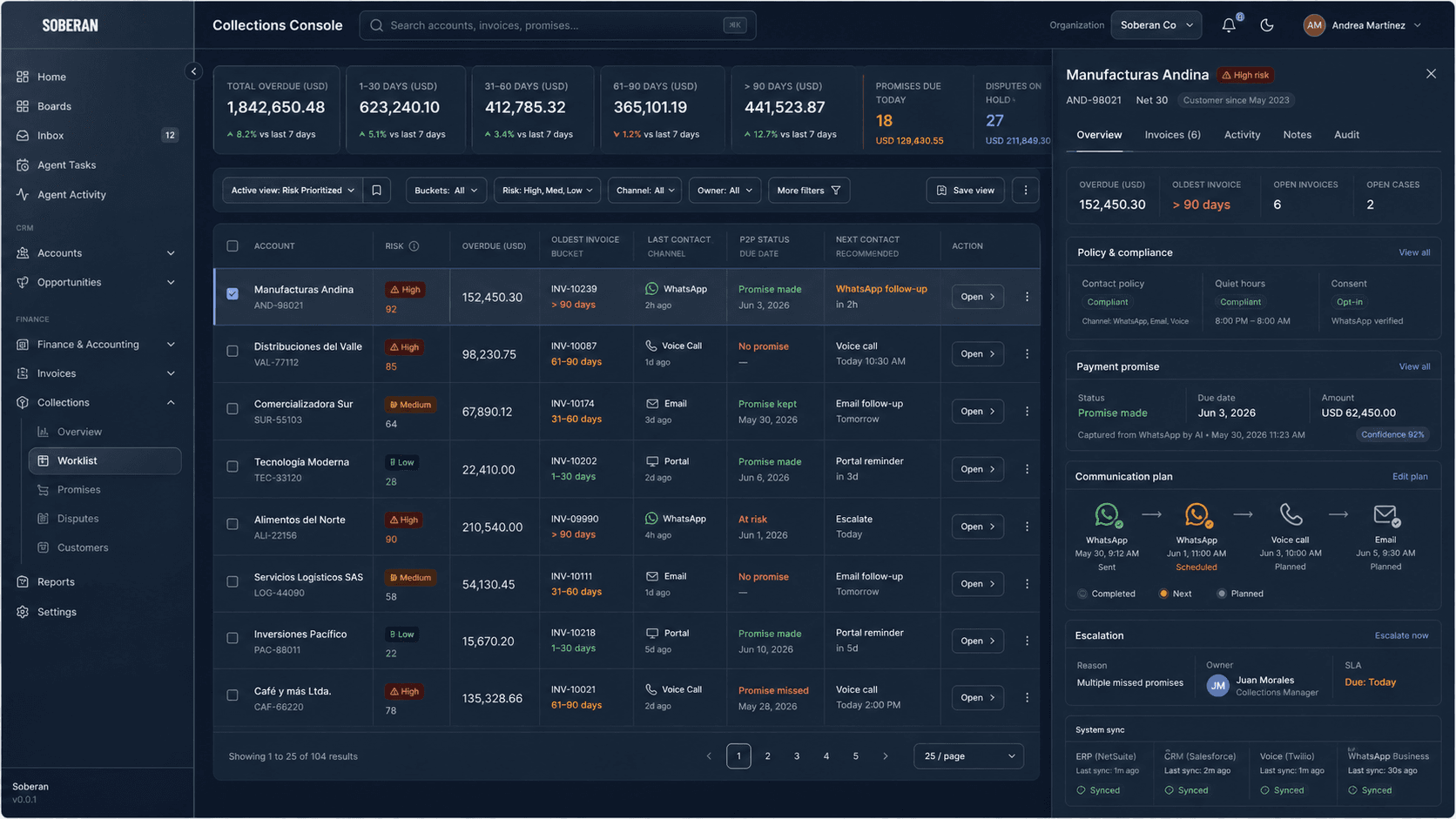
Collections prioritization with AI agents: promises, disputes, and escalation control
The strongest collections automation use case is prioritization with control: decide who to contact, through which channel, under which policy, and when to escalate.
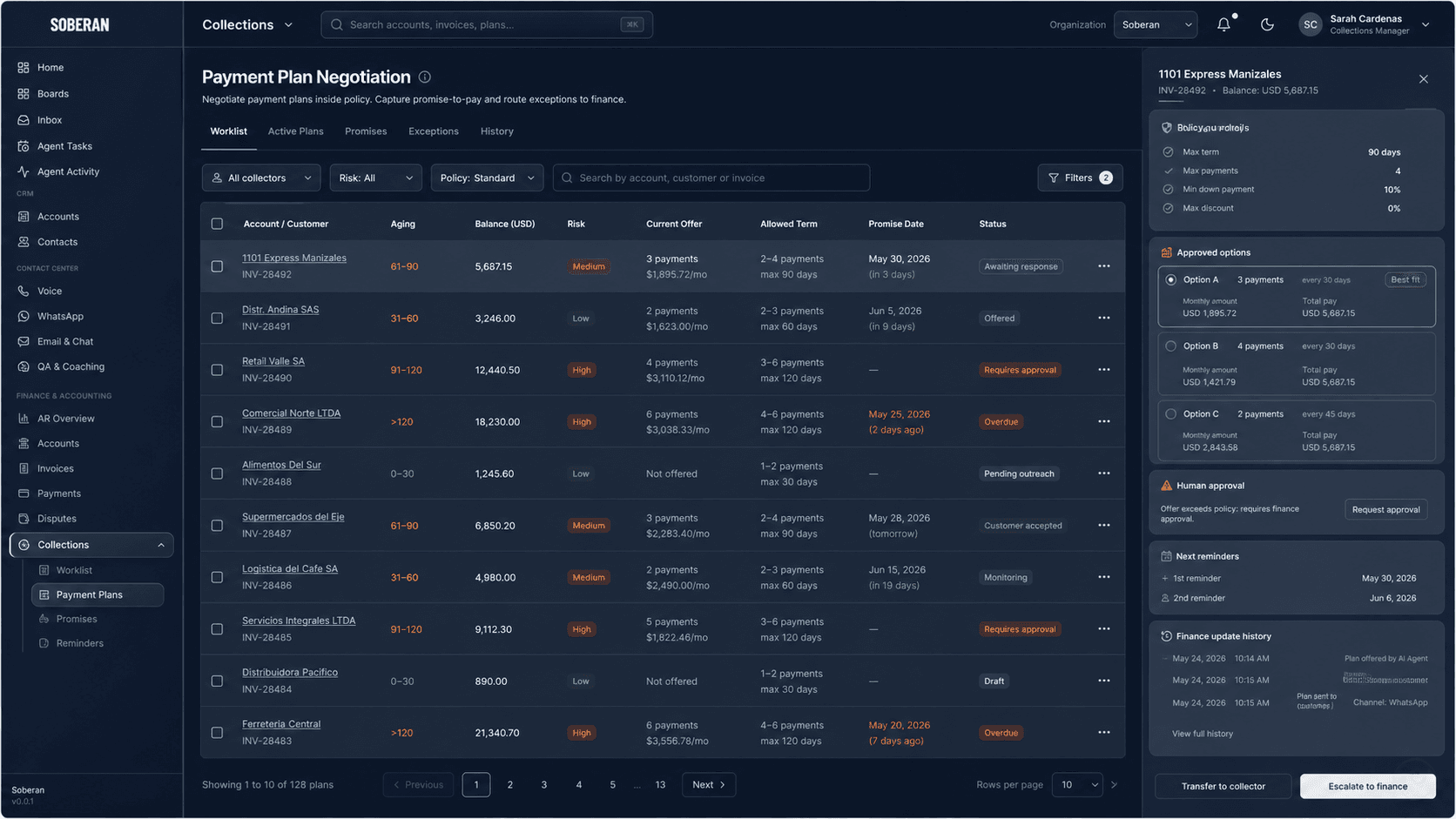
Payment plan negotiation with AI agents: policy, promise-to-pay, AR writeback
AI payment plan negotiation is not a better script. It is a governed collections loop that offers only approved terms and updates finance with every promise.
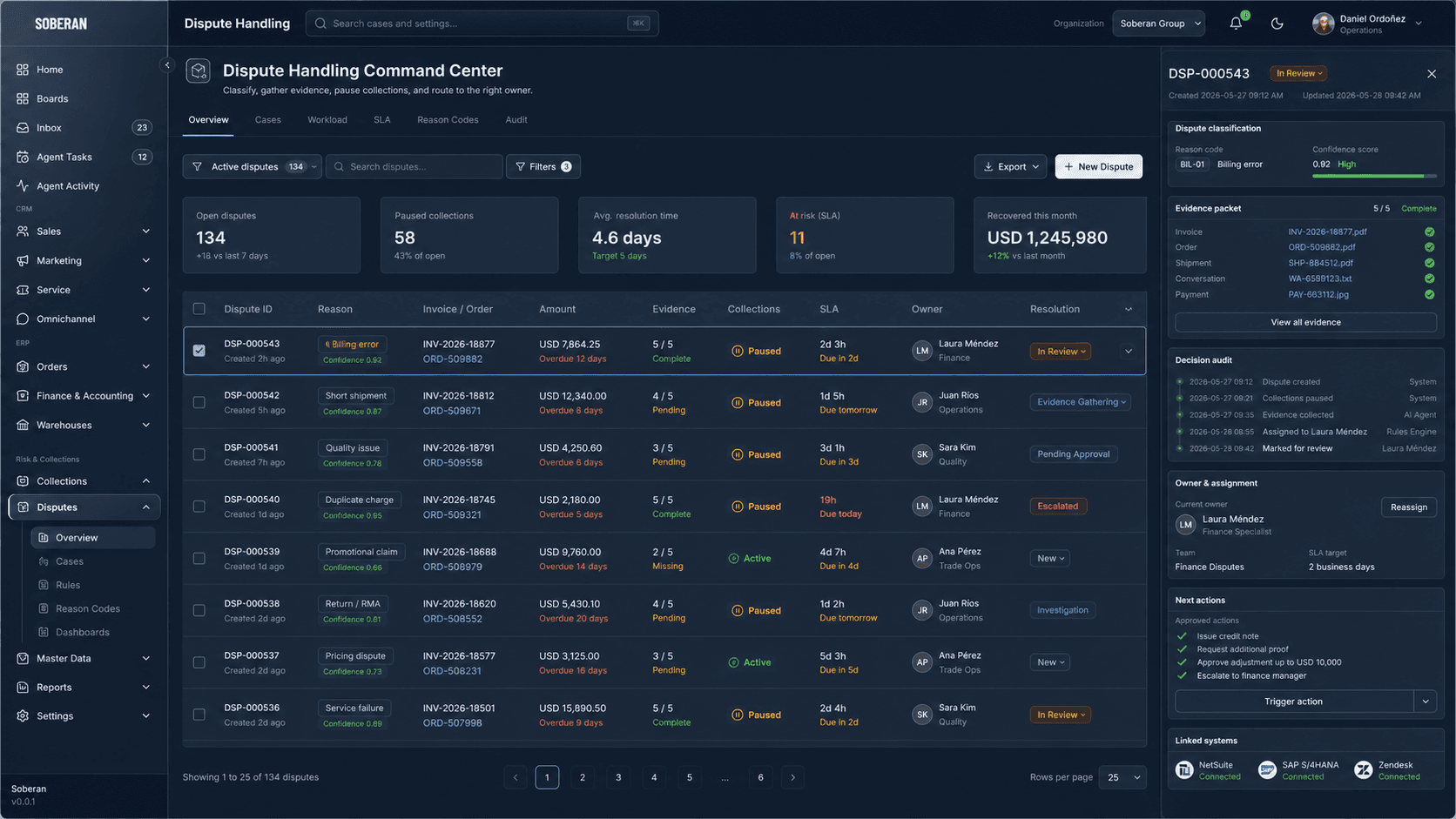
Dispute handling with AI agents: billing, service, evidence, and collections pause
The best dispute handling automation does not just create a ticket. It changes collections status, gathers evidence, and routes accountable resolution work.

Debt collections AI best practices: WhatsApp, voice agents, and governance
Debt collections AI should optimize compliant cash recovery, not raw message volume. The playbook is segmentation, consent, policy, channel choice, and writeback.
AI collections operating model: WhatsApp and voice agent best practices
Debt collections AI works best when WhatsApp and voice agents are managed as one operating model with policy, writeback, and human escalation.

Debt collections best practices with AI: WhatsApp and voice agents
AI improves collections when WhatsApp and voice agents run one governed receivables workflow, not disconnected message and call campaigns.
Debt collection AI agents: where they help and where humans stay in control
Debt collection AI agents are strongest when they run bounded receivables work: reminders, commitments, dispute routing, and follow-up under human policy.

AI debt collection software vs. predictive dialers: what changes
A dialer helps collectors reach more people. AI debt collection software should decide the next compliant action and write the outcome back to the receivables workflow.
WhatsApp collections automation: start with the workflow, not the bot
The message is not the workflow. WhatsApp collections works when reminders, invoices, commitments, disputes, and handoffs all move together.
Voice AI for collections calls: automate reminders without losing control
Collections calls are repetitive, sensitive, and easy to mishandle. Voice AI works best when it is bounded by policy and built for escalation.
WhatsApp or voice AI for collections? Choose by urgency, context, and risk
WhatsApp is better for async follow-up. Voice is better for urgency and ambiguity. The best collections operation usually needs both.
First-party debt collection automation: the workflow behind the AI agent
The best first-party collections automation starts before the first reminder. It starts with account rules, risk segments, approved channels, and clear human handoff.
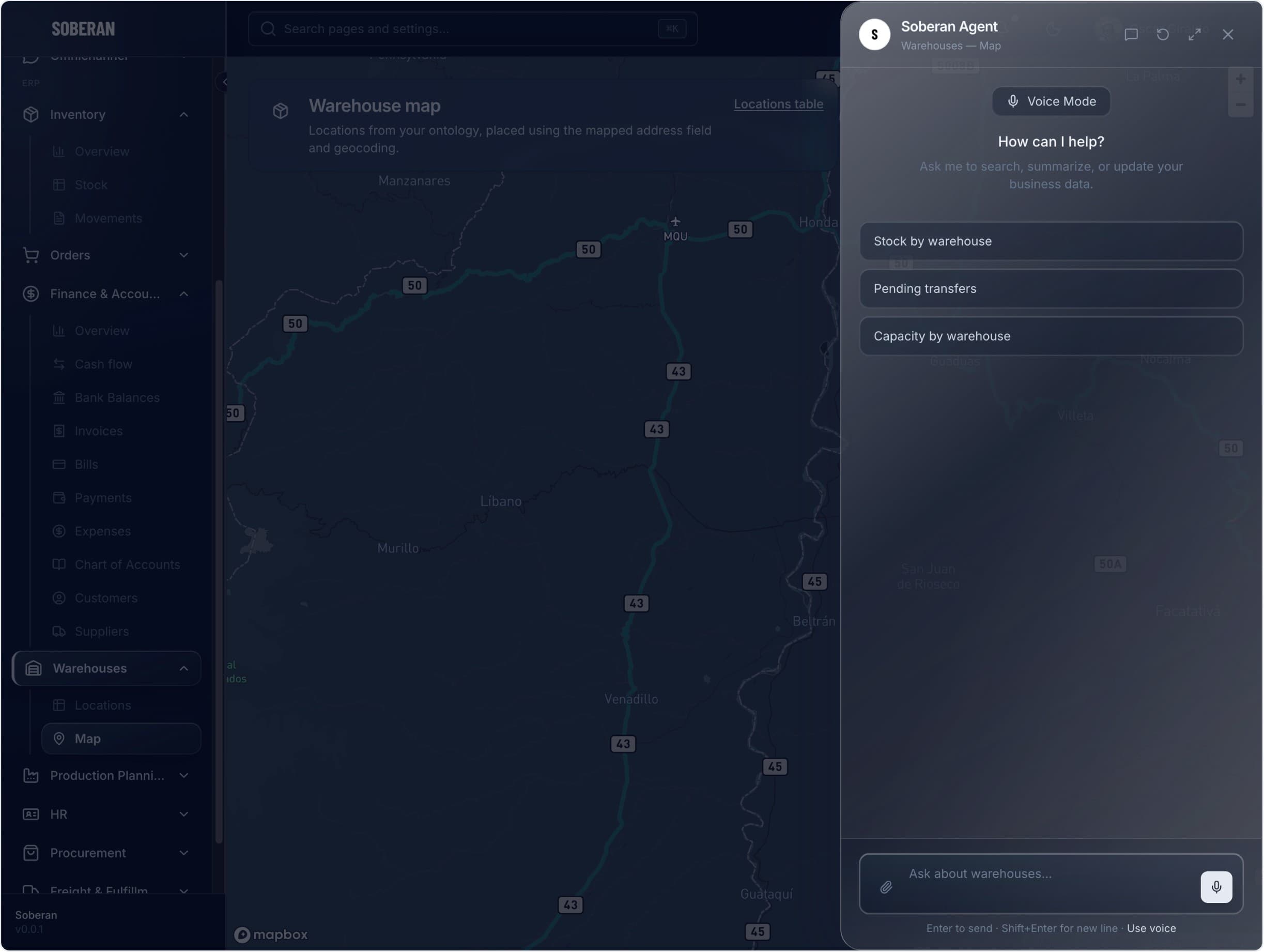
Debt collection AI compliance guardrails: policies before automation
Collections automation touches sensitive customer moments. The safest AI agents start with policy, auditability, and escalation rules before increasing outreach.
AI collections automation: the end-to-end operating loop
Collections needs consistent follow-up and policy discipline. AI agents work when they segment accounts, run approved touches, and write the result back to AR systems.
WhatsApp collections with AI agents: policy, payment, and writeback
Most WhatsApp collections happens informally. AI agents turn it into a controlled workflow with approved messages, structured promises, and AR writeback.
Voice collections automation: governed AI calls, structured outcomes
Collections calls need consistency, documentation, and controls. Voice AI works when scripts are approved, identity is verified, and outcomes write back to AR.
Payment plan negotiation automation: within policy, with a record
Manual payment plan negotiations are inconsistent and undocumented. AI applies approved terms, captures the commitment, and routes exceptions to finance.

Dispute handling automation for billing and service issues
Disputes get mishandled when finance, service, and collections work from different records. AI dispute handling classifies, gathers evidence, and pauses the wrong motion.