La respuesta: ponga las acciones de sistema en una mesa de control
Las señales recientes de software empresarial apuntan a la misma dirección. Oracle está empaquetando agentes de IA para finanzas, cadena de suministro, compras, recursos humanos y experiencia de cliente. SAP posiciona Joule Agents alrededor de operaciones de negocio con contexto en sistemas SAP y no SAP. Al mismo tiempo, la cobertura de IA empresarial advierte que agentes que actúan por rutas internas pueden saltarse verificaciones, permisos y aprobaciones visibles que normalmente siguen los empleados.
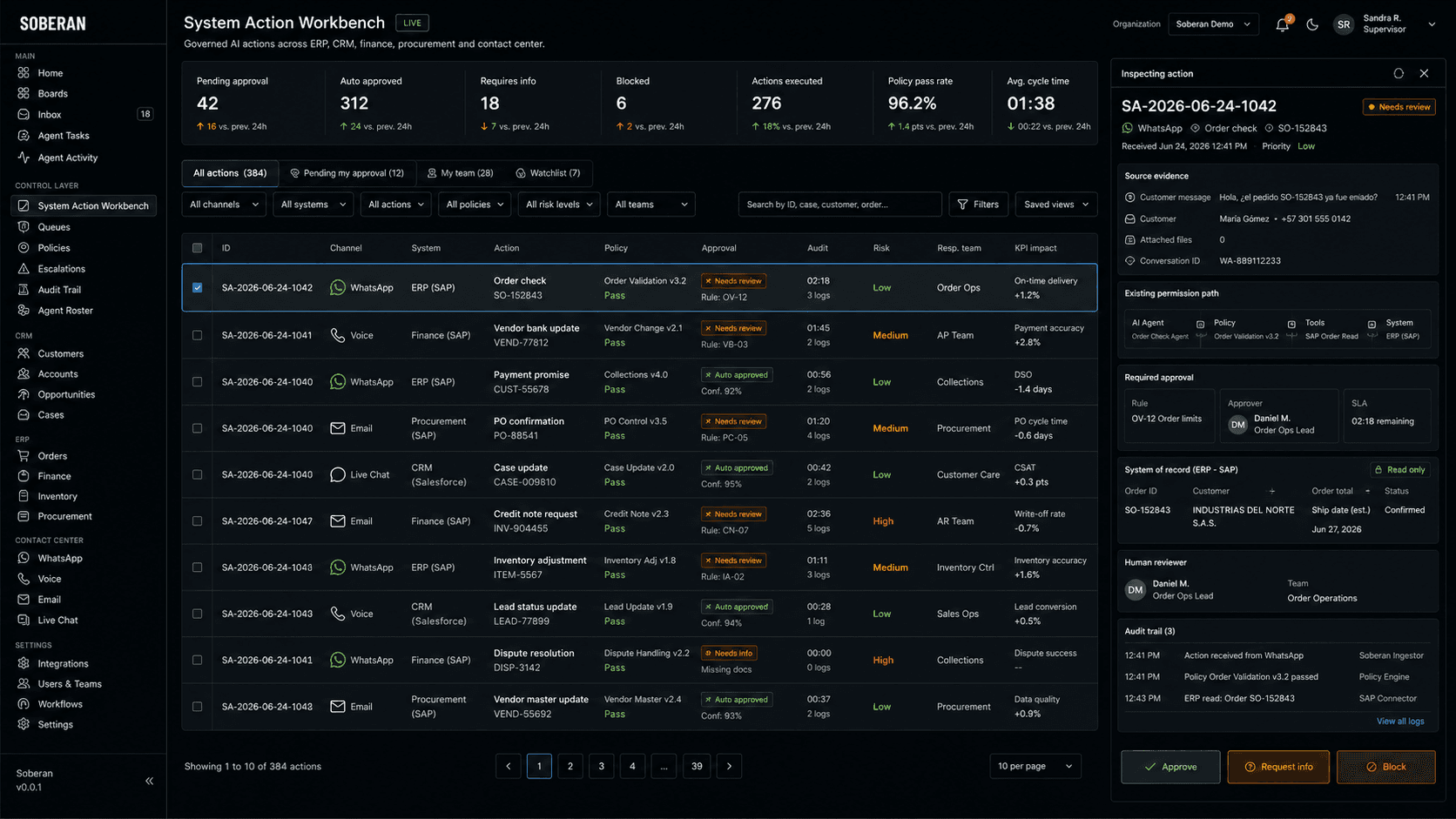
Para compradores de SOBERAN, la respuesta práctica es una mesa de acciones de sistema. Antes de que un agente de IA actualice un cliente, pedido, factura, proveedor, promesa de pago, caso o registro de inventario, la mesa debe mostrar la acción propuesta, evidencia fuente, resultado de política, aprobación requerida, estado del sistema maestro, equipo responsable, impacto en indicadores y auditoría.
Qué deben hacer distinto los operadores
No otorgue acceso amplio al agente solo porque el modelo puede leer el contexto correcto. Separe contexto de acción. El agente puede preparar un cambio de pedido, actualización de proveedor, nota de acuerdo de pago, corrección en CRM o seguimiento de compras, pero la superficie operativa debe decidir si la acción queda solo para consulta, se aprueba automáticamente, se bloquea o pasa a revisión.
Esa diferencia importa en operaciones medianas de LatAm porque los equipos suelen trabajar con una mezcla de ERP, CRM, WhatsApp, voz, hojas de cálculo, herramientas de pago y reglas por país. Una ruta oculta de automatización puede parecer eficiente hasta que crea una promesa incorrecta, un cliente duplicado, una excepción crediticia insegura, un cambio de proveedor sin aprobación o una brecha de auditoría.
Flujos que deben entrar primero a la mesa
- Excepciones de pedidos donde el agente revisa estado en ERP, evidencia de despacho, disponibilidad de inventario, exposición crediticia y política de servicio antes de recomendar una actualización al cliente.
- Seguimiento a proveedores y compras donde el agente verifica estado de orden de compra, confirmación de entrega, datos tributarios, datos bancarios, diferencias de recibo y aprobación del comprador antes de cambiar un proveedor o registro de compra.
- Excepciones de factura y finanzas donde el agente compara órdenes de compra, recibos, facturas, notas crédito, condiciones de pago y límites de aprobación antes de preparar una acción financiera.
- Cobranza y promesas de pago donde el agente valida saldo, antigüedad, consentimiento, historial del cliente, fecha prometida y rango permitido de negociación antes de actualizar finanzas o CRM.
- Higiene de CRM donde el agente propone unión de duplicados, campos faltantes, actualización de motivo de caso, cambio de responsable comercial y siguientes acciones con evidencia por campo.
- Escalamientos de centro de contacto donde el agente resume contexto de WhatsApp o voz, adjunta evidencia, recomienda la acción de sistema y mantiene al revisor dentro de la misma auditoría.
Intención de compra: pida ver la ruta de acción
Un CFO, COO, líder de experiencia de cliente, responsable de compras, líder de cadena de suministro, dueño de ERP, dueño de CRM o director de centro de contacto debe pedir a los proveedores que demuestren la ruta de acción, no solo la experiencia de chat. La prueba es si la plataforma puede mostrar qué leyó el agente, qué propuso, qué política aplicó, qué registro cambiaría, quién lo aprobó y cómo el resultado afectó la operación.
Este también es el lugar correcto para comparar promesas de plataformas nativas en IA. Una capa operativa real debe soportar modo de solo consulta, umbrales de aprobación, colas de excepción, conectores de sistema, notas de revisión, exportes de auditoría y reportes por flujo. Sin esos controles, la autonomía de agentes se convierte en otra fuente de retrabajo operativo.
Modelo operativo
- Clasifique cada acción del agente por riesgo: solo consulta, sugerida, aprobada automáticamente, requiere aprobación, bloqueada o escalada.
- Defina políticas para cada flujo: cambios de pedido, actualizaciones de proveedor, notas crédito, promesas de pago, cambios de campos en CRM, ajustes de inventario y comunicaciones con clientes.
- Asigne un revisor de negocio para cada cola de alto impacto: operaciones financieras, operaciones de pedidos, compras, servicio al cliente, cobranza, operaciones comerciales y ejecución de cadena de suministro.
- Exija paquetes de evidencia para acciones que cambian dinero, crédito, compromisos con clientes, datos de proveedores, inventario o registros regulados.
- Revise cada semana acciones rechazadas, corregidas, escaladas y revertidas para mejorar reglas, integraciones, calidad de datos e instrucciones del agente.
Indicadores que prueban que la mesa funciona
- Acciones aprobadas por flujo, tasa de aprobación automática, tiempo de ciclo de aprobación y antigüedad de la cola de revisión.
- Acciones completadas correctamente en ERP y CRM, acciones fallidas por causa y correcciones de datos evitadas.
- Tiempo de ciclo de excepciones de pedido, antigüedad de excepciones de factura, tiempo de confirmación de órdenes de compra y captura de promesas de pago.
- Tasa de cumplimiento de política, tasa de acciones bloqueadas, auditoría completa y cobertura de evidencia.
- Reducción de costo de atención, retrabajo de supervisores, contacto repetido del cliente, desempeño de SLA y pérdida operativa evitada.
Riesgos que se deben gobernar
El riesgo no es solo que un agente de IA diga algo incorrecto. El riesgo operativo mayor es que cambie un estado equivocado del sistema, use datos vencidos, omita una aprobación requerida, sobrescriba una decisión humana o esconda la evidencia necesaria para explicar la acción después.
El gobierno debe cubrir límites de permiso, vigencia de datos, evidencia fuente, límites de aprobación, responsabilidad del revisor, conectores de sistema, consentimiento del cliente, cumplimiento por país, reversión y exportes de auditoría. Para WhatsApp y voz, también debe cubrir tono, aviso, idioma, momento de escalamiento y calidad de las promesas al cliente.
Cómo encaja SOBERAN
SOBERAN está diseñado para convertir recomendaciones de agentes en trabajo gobernado entre ERP, CRM, centro de contacto, finanzas, compras y ejecución de cadena de suministro. En lugar de esconder la acción detrás de una capa conversacional, SOBERAN entrega una superficie operativa donde los supervisores pueden revisar evidencia, aprobar o bloquear cambios y medir el resultado.
Eso importa para operadores en LatAm porque el trabajo de alto volumen suele empezar en WhatsApp o voz y terminar en sistemas que controlan pedidos, facturas, inventario, efectivo, registros de cliente y compromisos con proveedores. SOBERAN ayuda a pasar de conversación a acción de sistema controlada sin perder política, responsabilidad ni auditoría.
Rutas operativas relacionadas en SOBERAN
- ERP SOBERANUse esta ruta para pedidos, facturas, inventario, compras, evidencia financiera y acciones en el sistema maestro.
- CRM SOBERANUse esta ruta para contexto de clientes, casos, cuentas, historial de servicio y actualizaciones gobernadas en CRM.
- Centro de contacto SOBERANUse esta ruta para WhatsApp, voz, colas activas, escalamiento, supervisión y acciones de servicio al cliente.
- Automatización de pedidosUse esta ruta para excepciones de pedido, consultas de estado, promesas de inventario y actualizaciones a clientes.
- Automatización de comprasUse esta ruta para seguimiento a proveedores, estado de órdenes de compra, aprobaciones, diferencias de recibo y acciones del comprador.
- Verificación de facturasUse esta ruta para revisar orden de compra, recibo, factura y aprobación antes de una acción financiera.
- Automatización de cobranza con IAUse esta ruta para saldos, promesas, acuerdos de pago, consentimiento, escalamiento y registros financieros.
Fuentes y señales de tendencia
- Oracle: nueva generación de Oracle Fusion Cloud ApplicationsUsado como señal de suite: Oracle describe agentes de IA para finanzas, cadena de suministro, compras, recursos humanos y experiencia de cliente, con estudio de agentes, agentes incorporados, inteligencia de contenido y reportes ejecutivos.
- SAP: Joule Agents and Joule AssistantsUsado como señal de proceso empresarial: SAP presenta Joule Agents alrededor de trabajo con contexto, datos empresariales confiables, gobierno y acciones entre sistemas SAP y no SAP.
- TechRadar Pro: IA segura y comportamiento humano emuladoUsado como señal de riesgo: agentes que operan por rutas internas invisibles pueden saltarse controles y aprobaciones que normalmente siguen los empleados.
- McKinsey: The state of AI in 2025Usado como señal de adopción: la adopción de IA es amplia, mientras rediseño de flujos, gobierno y cambio de modelo operativo siguen siendo restricciones para escalar.
- Sequoia: Context for Agents at ScaleUsado como señal de contexto: los agentes en producción necesitan memoria de proceso, tickets, registros, chats y conocimiento editable de cada compañía antes de actuar con confiabilidad.