La respuesta: evaluar el ciclo operativo, no solo la respuesta
La señal más fresca viene de soporte al cliente en producción, no de demostraciones genéricas de agentes. El paper de Nubank de junio de 2026 sobre agentes de IA para atención al cliente a escala de más de 100 millones de usuarios sostiene que la calidad en producción depende de metodología de evaluación, diseño de contexto, entrenamiento y medición en producción trabajando juntos. El estudio reporta cinco dominios desplegados, incluyendo entrega de tarjetas, gestión de deuda, soporte de límite de crédito, administración de tarjetas y explicación de producto, y conecta la calidad de evaluación previa con velocidad de iteración e impacto real.
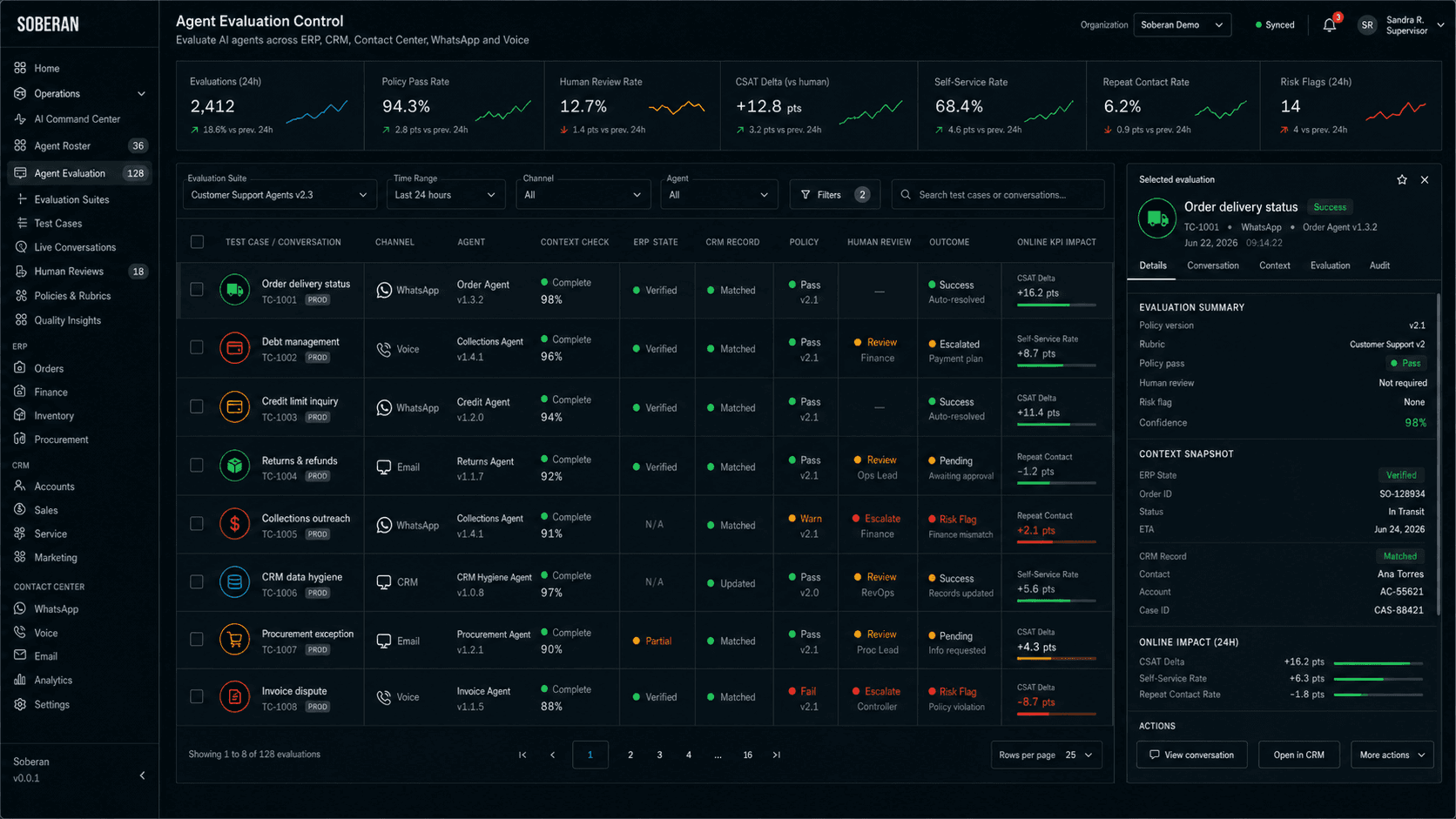
Eso importa para compradores de SOBERAN porque la automatización de ERP, CRM y centro de contacto suele fallar en el mismo punto: el agente puede sonar correcto mientras el estado del negocio sigue equivocado. Un banco de evaluación obliga al equipo a probar el ciclo completo: solicitud del cliente, evidencia ERP, historial CRM, política, acción permitida, revisión humana, mensaje al cliente, actualización del sistema e indicador posterior.
Qué deben hacer distinto los operadores
Deje de aprobar agentes después de unas pocas conversaciones bien presentadas. Una demostración puede ocultar contexto débil, estado ERP desactualizado, campos CRM incompletos, escalamiento tardío o una excepción de política que solo aparece cuando el agente toca clientes reales. El banco de evaluación debe contener casos realistas, excepciones conocidas, trampas de política y restricciones de canal parecidas a producción para WhatsApp, voz, chat, correo, finanzas, compras y operaciones comerciales.
El banco también necesita dos tipos de evidencia. Las pruebas previas muestran si el agente se comporta correctamente antes del lanzamiento. Los indicadores en producción muestran si la versión publicada mejora el negocio sin dañar satisfacción, recurrencia de contacto, retrabajo o cumplimiento. Si esas dos miradas no coinciden, el agente no está listo para más autonomía.
Flujos que conviene evaluar primero
- Estado de pedidos y entregas por WhatsApp, donde el agente debe comparar estado ERP, evidencia de despacho, historial CRM, datos de dirección y política de escalamiento antes de responder.
- Soporte por voz, donde el agente debe detectar frustración, resumir el contexto para una persona y ceder el control antes de deteriorar la experiencia del cliente.
- Cobranza y gestión de deuda, donde el agente debe validar saldo, antigüedad, política de acuerdo de pago, consentimiento, fecha prometida, lenguaje de disputa y actualización financiera.
- Límite de crédito y cambios de cuenta, donde el agente debe distinguir solicitudes informativas de acciones que requieren aprobación, evidencia o una respuesta bloqueada.
- Devoluciones, reembolsos, garantía y excepciones de servicio, donde el agente debe alinear mensajes al cliente con política, inventario, entrega y registros del caso.
- Higiene de datos CRM y seguimiento comercial, donde el agente propone actualizaciones de campos, asignaciones de responsables y próximas acciones sin reemplazar el criterio comercial.
- Excepciones de compras y facturas, donde el agente revisa orden de compra, recibo, confirmación del proveedor, política de tolerancia, datos tributarios y estado de pago antes de recomendar una acción.
Intención de compra: pida ver el banco de evaluación
Un COO, CFO, líder de experiencia de cliente, director de centro de contacto, responsable de CRM, responsable de ERP, líder de operaciones comerciales o gerente de cobranza debe pedir a los proveedores que muestren el banco de evaluación, no solo el asistente. El banco debe incluir biblioteca de casos, rúbrica de evaluación, regla de revisión humana, versiones de política, campos de sistema probados, umbrales de escalamiento, criterios de lanzamiento e indicadores de producción vinculados al mismo flujo.
Para un agente de servicio por WhatsApp, el comprador debe ver casos con datos parciales de entrega, clientes duplicados, registros CRM desactualizados, excepciones de política, clientes molestos y estado de pedido ambiguo. Para un agente de cobranza, debe ver saldos disputados, condiciones de pago prohibidas, consentimiento faltante, promesas incumplidas y paso a finanzas. Para higiene de datos CRM, debe ver duplicados, fuentes contradictorias, actualizaciones rechazadas y cambios aceptados.
Modelo operativo y gobierno
- Biblioteca de casos: cada flujo objetivo tiene ejemplos aprobados para casos normales, excepciones, política, límites de canal y escenarios de riesgo para el cliente.
- Contrato de contexto: el banco especifica qué registros de ERP, CRM, centro de contacto, finanzas, compras, inventario y comunicación debe revisar el agente antes de actuar.
- Rúbrica disciplinada: los evaluadores califican exactitud, cumplimiento de política, tono, uso de evidencia, momento de escalamiento, calidad de actualización del sistema e impacto en cliente.
- Acuerdo humano: los evaluadores automáticos se calibran contra revisores humanos antes de confiar en sus juicios para decisiones de lanzamiento.
- Puertas de lanzamiento: ninguna versión de agente pasa de prueba a producción sin aprobar los casos requeridos y mostrar resultados aceptables en revisión humana.
- Monitoreo en producción: los indicadores reales vuelven a la biblioteca de casos para que conversaciones fallidas, reversas, quejas y contactos repetidos se conviertan en nuevas pruebas.
- Historial de versiones: cada lanzamiento registra instrucciones, fuentes de contexto, versión de política, resultados de prueba, aprobaciones y ruta de reversa.
Indicadores que prueban que el banco funciona
- Tasa de aprobación previa por flujo, política, canal y actualización de sistema.
- Nivel de acuerdo con revisión humana y motivos de desacuerdo.
- Momento de escalamiento ante fallas técnicas y riesgo emocional del cliente.
- Tasa de aceptación de actualizaciones ERP y CRM.
- Tasa de autoservicio por flujo sin pérdida de satisfacción.
- Recurrencia de contacto después de una resolución asistida por IA.
- Retrabajo, reversas, reembolsos, disputas y quejas.
- Tiempo desde un caso fallido en producción hasta una nueva prueba.
- Correlación entre indicadores de producción y resultados de evaluación previa.
Cómo encaja SOBERAN
SOBERAN encaja cuando el comprador quiere que el banco de evaluación refleje trabajo operativo real, no calidad abstracta de chat. La plataforma conecta ERP, CRM, centro de contacto, WhatsApp, voz, finanzas, compras, inventario, políticas, aprobaciones e historial de auditoría para que cada caso pruebe la misma evidencia que el agente usará en producción.
Para operadores medianos de LatAm, esto importa porque los canales de cliente son imperfectos. Los casos de WhatsApp llegan con identificadores incompletos, las llamadas de voz traen emoción, los datos de entrega pueden llegar tarde, los campos CRM pueden estar desactualizados y la política financiera cambia por segmento de cliente. SOBERAN da a los equipos una forma de probar esas condiciones antes de ampliar la autonomía y de seguir mejorando con evidencia de producción.
El punto de partida debe ser acotado: elija un flujo de cliente u operación, construya entre veinte y cincuenta casos representativos, defina el contrato de contexto, acuerde la rúbrica de lanzamiento y conecte el indicador de producción. Amplíe solo cuando el banco prediga el comportamiento real.
Páginas de SOBERAN para conectar este trabajo
- Centro de contactoUse esta página para agentes de WhatsApp, voz, servicio, cobranza y operaciones de cliente que necesitan evaluación antes de ampliar autonomía.
- Automatización de servicio al cliente por WhatsAppEvalúe estado de pedidos, entregas, devoluciones, garantía, facturación y escalamiento antes de lanzar a producción.
- Automatización de soporte telefónicoPruebe momento de escalamiento, resúmenes de llamada, actualizaciones CRM y revisiones de evidencia ERP.
- Automatización de cobranza con IAAplique el banco a saldos, promesas, disputas, política de acuerdo de pago, consentimiento y actualizaciones financieras.
- ERPBase los casos de evaluación en datos de pedidos, inventario, finanzas, compras, facturas y excepciones.
- CRMEvalúe registros de cliente, casos, contexto comercial, historial de actividad y actualizaciones aceptadas.
- Automatización con IAConecte ejecución de agentes, políticas, aprobaciones e historial de auditoría en una sola capa gobernada.
- Automatización de higiene de datos CRMPruebe manejo de duplicados, enriquecimiento de campos, prioridad de fuentes, asignación de responsables y aprobación de actualizaciones.
Fuentes y señales de tendencia
- arXiv: Building Customer Support AI Agents at 100M-User ScaleUsado para la señal de producción: los agentes de atención al cliente necesitan metodología de evaluación, diseño de contexto, revisión humana y medición en producción como un solo ciclo.
- Salesforce: definitive agreement to acquire FinUsado para la señal de mercado: los agentes de servicio al cliente se están moviendo entre chat, correo, WhatsApp, SMS, teléfono y Slack con resultados medibles y gobierno.
- SAP: Joule Agents and SAP AI Agent HubUsado para la señal empresarial alrededor de agentes con contexto, conocimiento de procesos, datos confiables, gobierno central e indicadores.
- arXiv: Agentic AI and Human-in-the-Loop Interventions at AlibabaUsado para la señal de riesgo: la IA de servicio puede reducir duración de atención y aun así perjudicar calificaciones si tipo de escalamiento, momento e intervención humana no están diseñados con cuidado.
- TechRadar Pro: How AI is exposing enterprise operating modelsUsado para la señal de modelo operativo: el valor de IA depende de integración en flujos, visibilidad, gobierno y diseño operativo, no solo de acceso a herramientas.