Define el modelo operativo B2C antes del proveedor
La cobranza B2C parte de la cuenta del consumidor, no de una factura corporativa. El modelo debe manejar prestatarios o suscriptores en mora, identidad y contacto con la persona correcta, consentimiento por canal, revelaciones obligatorias, dificultad y vulnerabilidad, disputas, acuerdos, autoservicio, quejas y recuperación temprana o tardía.
Las diez empresas de este ranking atienden ese contexto, pero no son intercambiables. Algunas proveen el sistema central de cobranza, otras orquestan engagement temprano, otras automatizan conversaciones y otras operan recorridos de primera parte, recuperación autorizada de terceros o ambos. La geografía y la etapa de mora determinan qué modelos están disponibles.
Antes de calificar producto, documenta quién es dueño de la cuenta, qué entidad contacta al consumidor, qué acciones puede ejecutar la tecnología, dónde debe intervenir una persona y qué sistema de servicing o cobranza conserva la autoridad. Ese modelo operativo importa más que contar funciones genéricas de IA.
Qué debe hacer la IA en cobranza
El software de cobranza con IA debe cambiar más que la redacción de mensajes. Debe analizar estado de cuenta, comportamiento de pago, vencimiento, disputas abiertas, promesas anteriores, valor del cliente, contactabilidad, permisos de canal y política aplicable para decidir qué trabajo merece atención. El resultado puede ser una cola priorizada, un recordatorio permitido, una conversación de voz, una opción de acuerdo, un caso de disputa o una escalación humana.
Los sistemas más fuertes cierran el ciclo. Capturan lo que dijo el consumidor, distinguen una promesa de una disputa o señal de dificultad, programan el seguimiento correcto, detienen mensajes contradictorios y actualizan servicing, facturación, CRM o el sistema de cobranza. También permiten al supervisor inspeccionar evidencia fuente, política, acción, aprobación y resultado.
Más autonomía no siempre es mejor. Las conversaciones financieras y de deuda de consumo requieren controles explícitos. El comprador debe distinguir sugerencias, borradores para aprobación, acciones automáticas acotadas y comunicación totalmente autónoma. El nivel correcto depende de jurisdicción, tipo de cuenta, vulnerabilidad, riesgo de marca y capacidad de monitorear excepciones.
Cómo evaluamos el mercado de 2026
Buscamos evidencia pública en seis dimensiones: IA específica para cobranza, priorización de cartera, ejecución por canal, manejo de promesas y disputas, integración o escritura, y gobierno. También consideramos evidencia de clientes, escala, afirmaciones de seguridad, disponibilidad regional y si el proveedor ofrece software, servicio administrado o ambos.
Las métricas publicadas por proveedores son señales, no resultados garantizados. Recuperación, DSO, liquidación, cura, costo y productividad dependen de la calidad de la cartera, proceso inicial, geografía, datos de contacto, consentimiento, política, implementación y diseño de medición. Pide definiciones de cohortes, línea base, período y referencias verificables antes de usar una cifra en el caso de negocio.
La categoría cambia rápido. Usa este ranking para crear una lista y confirma disponibilidad, precios, integraciones, seguridad, idiomas, licencias y ajuste legal directamente con cada proveedor. Las reglas cambian por país y cartera; esta guía es investigación de producto, no asesoría legal.
Las diez plataformas seleccionadas
El orden equilibra amplitud B2C, evidencia pública, profundidad de IA y utilidad para un comprador serio. Un sistema central, una capa de engagement, un agente conversacional y un aliado autorizado de recuperación resuelven partes distintas; el ajuste depende de cartera, país, etapa y modelo operativo.
- 01
C&R Software
Sistema B2C de cobranza nativo en IAC&R posiciona Debt Manager como plataforma de cobranza y recuperación nativa en IA para estrategia, workflows, operación de agentes, autoservicio, analítica y recuperación. Su familia incluye Cara para autoservicio, Zelas para asistencia al gestor y FitLogic para decisiones.
- Mejor para
- Bancos, prestamistas, gobiernos, utilities, telecomunicaciones y agencias que necesitan un sistema amplio de cobranza, no un solo canal.
- Nota
- La amplitud exige implementación y gobierno. Valida cumplimiento por país, integraciones, migración de estrategias, controles de modelos y qué capacidades de IA están disponibles para tu despliegue.
- 02
InDebted
Infraestructura de cobranza de consumo nativa en IAInDebted ofrece Receive para primera parte, Collect para recuperación de terceros y Release para transferencia de cartera tardía en mercados soportados. Sus materiales enfatizan recorridos personalizados, manejo de mensajes con IA, autoservicio, escala global y seguridad.
- Mejor para
- Organizaciones grandes de crédito de consumo que buscan un modelo moderno de primera parte o administrado en varios mercados y con alto volumen.
- Nota
- Disponibilidad y licencias cambian por país y producto. Confirma cobertura, responsabilidades, reglas de canal, tratamiento de dificultad y retorno de datos al sistema central.
- 03
Symend
Engagement conductual para mora de consumoSymend combina scoring, arquetipos conductuales, recorridos personalizados, optimización continua, opciones de autocura y entrega por correo, texto, IVR y carta. Posiciona la plataforma para preservar relaciones en telecomunicaciones, finanzas, utilities, cooperativas y auto.
- Mejor para
- Empresas de consumo con gran volumen que quieren engagement temprano basado en ciencia conductual, segmentación y valor de vida del cliente.
- Nota
- Symend es una plataforma de engagement y cura, no un sistema universal. Confirma pagos, escritorio humano, disputas, etapa legal y responsabilidades del sistema central.
- 04
TrueAccord
Cobranza digital de consumo en Estados UnidosTrueAccord usa HeartBeat, su plataforma de machine learning, para personalizar recorridos digitales, siguientes contactos, autoservicio, planes de pago y seguimiento. Ofrece modelos de primera parte y cobranza autorizada de terceros para carteras de consumo en Estados Unidos.
- Mejor para
- Acreedores y prestamistas en Estados Unidos que buscan cobranza digital con autoservicio, personalización y recuperación administrada.
- Nota
- Es una opción geográfica y regulatoriamente específica. Confirma elegibilidad, licencias, colocación, canales, control, retorno de datos y tratamiento legal o de dificultad.
- 05
Skit.ai
IA conversacional para cobranza de consumoSkit.ai se enfoca en agentes de voz y multicanal para contacto con la persona correcta, negociación, disputas, cumplimiento de promesas, pago, recordatorios, propensión y auditoría. Sus materiales describen voz, SMS, correo, chat, varios idiomas y controles para Estados Unidos.
- Mejor para
- Agencias, prestamistas, salud, utilities y auto que necesitan conversaciones de alto volumen con traspaso humano.
- Nota
- La conversación no reemplaza un sistema autoritativo para saldo, política y servicing. Confirma integración, consentimiento, grabación, jurisdicción y supervisión.
- 06
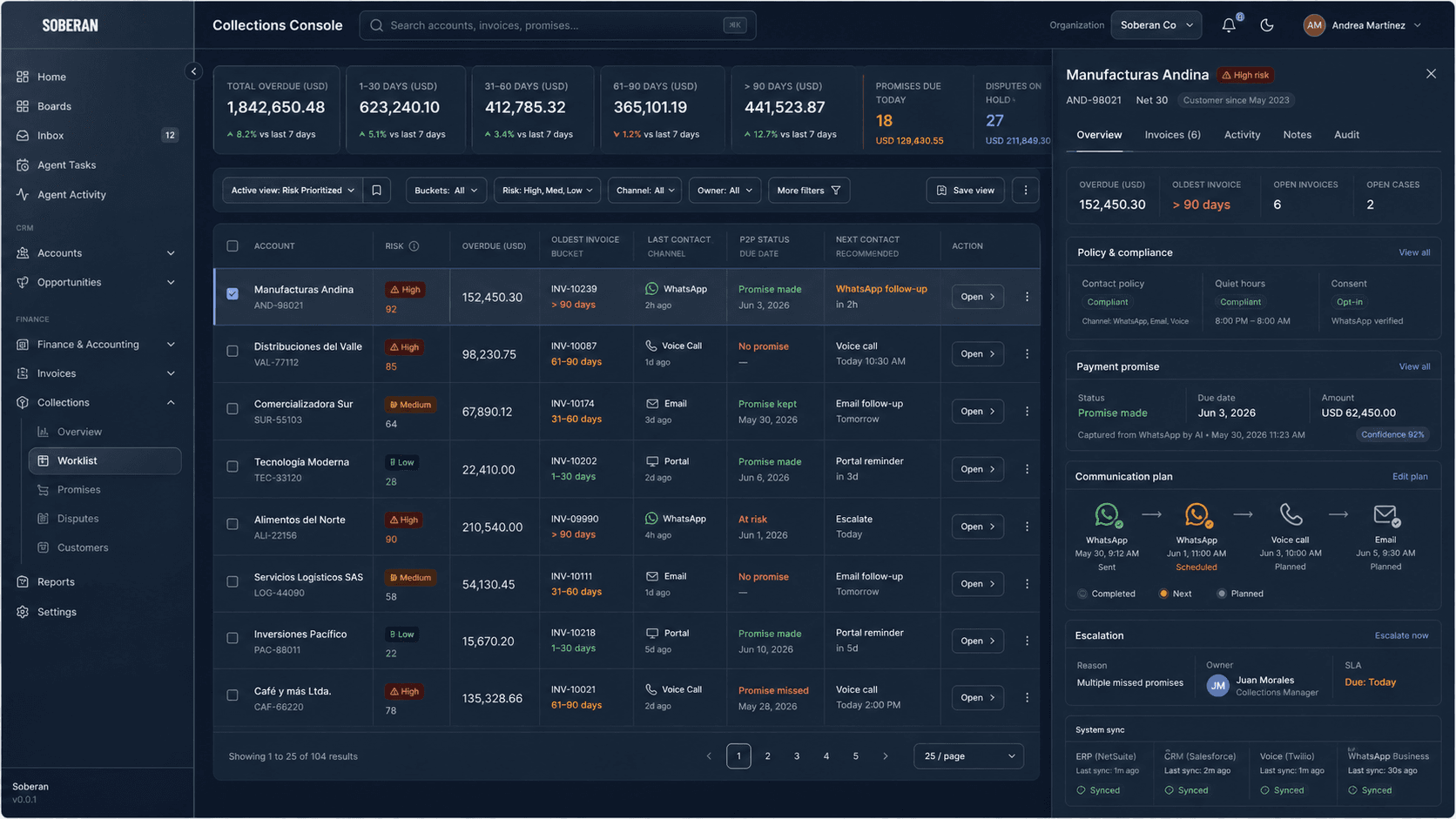
SOBERAN
Cobranza B2C entre servicing, WhatsApp y vozSOBERAN conecta contexto de cuentas de consumo con WhatsApp, voz, correo, enlaces de pago, promesas, disputas, controles de política, escalación humana y escritura en servicing, ERP y CRM. Su arquitectura prioriza ejecución gobernada entre sistemas y canales fragmentados.
- Mejor para
- Prestamistas, fintechs, telecomunicaciones, utilities, aseguradoras, salud y suscripciones en LATAM que necesitan canales locales ligados al estado y la política de la cuenta.
- Nota
- SOBERAN es más fuerte cuando el problema son sistemas y canales mixtos. Un banco global que busca una red de recuperación autorizada en muchas jurisdicciones puede necesitar otro proveedor complementario.
- 07
PAIR Finance
Cobranza digital AI-first en EuropaPAIR Finance combina IA, data science, psicología conductual, engagement digital y opciones de pago en una presencia europea creciente. Sus materiales describen optimización de canal, mensaje, momento, frecuencia, estilo y opciones de pago.
- Mejor para
- Empresas de consumo que buscan un aliado digital en países europeos soportados, con operación localizada.
- Nota
- La cobertura geográfica es el primer filtro. Confirma país, licencias, control del acreedor, integración, tipos de deuda y división entre software y servicio administrado.
- 08
collect.AI
Recorridos digitales de pago y autoserviciocollect.AI ofrece recorridos digitales de pago y cobranza por correo, SMS, WhatsApp, cartas y autoservicio de marca blanca. Su documentación cubre reclamaciones, disputas, cuotas, opciones de pago y orquestación automatizada.
- Mejor para
- Empresas de consumo e instituciones financieras europeas que quieren outreach digital, pagos y autoservicio conectados a sus sistemas.
- Nota
- Confirma países, modelo regulado, consentimiento, idiomas, medios de pago y responsabilidad sobre agentes, etapa legal y recuperación tardía.
- 09
EXUS
Decisiones empresariales de cobranza para bancosEXUS Financial Suite soporta estrategia de cobranza de consumo, segmentación, tratamiento omnicanal, workflows de agentes, analítica y ejecución de políticas para bancos e instituciones financieras. Sus materiales describen orquestación apoyada por IA y decisiones explicables.
- Mejor para
- Bancos, prestamistas y servicers con carteras complejas que necesitan estrategias centralizadas, operación de agentes e integración con sistemas centrales.
- Nota
- Pide una demo de las capacidades exactas de IA, explicabilidad, propiedad de configuración, modelo de despliegue, referencias locales y tiempo para cambiar una estrategia.
- 10
Domu
Conversaciones omnicanal reguladas para cobranza B2CDomu ofrece conversaciones continuas por voz, SMS y correo para prestamistas, desde el primer contacto hasta el pago. Sus materiales enfatizan monitoreo en tiempo real, negociación de acuerdos, contacto correcto, seguimiento de promesas, guardrails, auditoría posterior y evidencia ligada a cada decisión.
- Mejor para
- Prestamistas e instituciones financieras de Estados Unidos que quieren escalar conversaciones con cumplimiento y visibilidad de supervisores dentro del producto.
- Nota
- Su ajuste público más fuerte es servicing y cobranza regulada en Estados Unidos. Valida escritura al sistema central, carteras, políticas estatales, pagos, escalación humana y resultados en una cohorte controlada.
Cómo escoger entre las diez plataformas
- Para un sistema central amplio de cobranza de consumo, empieza con C&R Software y EXUS. Compara configuración de estrategias, casos, escritorio, etapa legal, analítica, integración e implementación.
- Para engagement digital de primera parte o recuperación administrada, compara InDebted, Symend, TrueAccord, PAIR Finance y collect.AI por jurisdicción, licencias, etapa, autoservicio, dificultad, acuerdos y trato al cliente.
- Para conversaciones automatizadas de alto volumen, compara Domu y Skit.ai. Prueba identidad, revelaciones, consentimiento, idiomas, límites de negociación, pago, grabación, calidad, evidencia y traspaso humano.
- Para LATAM, donde WhatsApp, voz, ERP, CRM, servicio y aprobaciones deben compartir historial, incluye SOBERAN y usa el ranking regional para comparar alternativas locales.
- No califiques solo promesas de recuperación. Califica control: datos fuente, política, identidad, consentimiento, elegibilidad de canal, contenido aprobado, excepciones, reversibilidad, escritura, auditoría, quejas y supervisión.
- Decide si compras software, cobranza administrada, una relación con agencia autorizada o un híbrido. Modelo comercial, propiedad operativa, responsabilidad legal y experiencia del cliente cambian de manera material.
La demo: una cuenta desde elegibilidad hasta resolución
Lleva una cuenta real anonimizada. El prestatario o suscriptor tiene dos obligaciones en mora, un cargo disputado, una promesa que vence mañana, una señal de dificultad y permisos distintos por canal. Pide mostrar qué registros lee la plataforma, si la cuenta es elegible, cómo escoge la siguiente acción y qué evita que el monto disputado reciba el recordatorio equivocado.
Durante la interacción, haz que el cliente proponga un pago parcial, cuestione un cargo, pida otra fecha o use lenguaje de dificultad. El sistema debe identificar el resultado, aplicar el límite de política, evitar términos no autorizados, pausar o continuar el flujo correcto y escalar con contexto suficiente. Una conversación fluida sin gestión correcta del estado no es un flujo seguro.
Termina en el sistema de registro. Verifica monto y fecha prometidos, cargo disputado, tratamiento de dificultad, enlace de pago, siguiente tarea, transcripción o resumen, resultado de canal, decisión de política, aprobador y auditoría. Pregunta cómo se muestrean conversaciones, se reversan errores, se monitorean modelos y se comparan resultados con un grupo de control.
Gobierno y cumplimiento son requisitos de producto
Las reglas cambian por jurisdicción, cartera, canal y modelo de primera o tercera parte. El comprador necesita revisión legal y de cumplimiento calificada para horarios, frecuencia, consentimiento, opt-out, revelaciones, grabación, identidad, procesamiento de pagos, clientes vulnerables, disputas, retención de datos y decisiones automatizadas.
El software debe convertir esos controles en operación. Busca políticas versionadas, acceso por rol, separación de acciones automáticas y aprobables, listas de supresión, horarios, permisos de canal, controles de lenguaje, límites de acuerdos, pausa por disputa, escalación por dificultad y auditoría inmutable. Pregunta quién puede cambiar una regla y cómo se prueba cuál versión gobernó un contacto.
Mide calidad además de caja. Las métricas útiles incluyen efectivo por contacto elegible, captura y cumplimiento de promesas, cura y roll rate, exactitud de pausas por disputa, contacto correcto, autoservicio, tiempo de escalación, quejas, opt-out, completitud de escritura, productividad y retención después de la resolución.
Fuentes y evidencia pública
- Cobranza nativa en IA de C&R SoftwarePágina oficial del sistema central de cobranza, autoservicio, asistencia a gestores, decisiones y recuperación.
- Cobranza digital de collect.AIPágina oficial sobre recorridos de pago, comunicación omnicanal, autoservicio, disputas y planes de cuotas.
- EXUS Financial SuiteSitio oficial sobre estrategia para bancos y prestamistas, orquestación, agentes, analítica y decisiones apoyadas por IA.
- Receive de InDebtedPágina oficial de cobranza de primera parte nativa en IA y recorridos digitales personalizados.
- Cobranza empresarial de SymendPágina oficial sobre scoring conductual, arquetipos, engagement personalizado y resultados empresariales.
- Cobranza con IA de SOBERAN para LATAMComparación regional de voz, WhatsApp, ERP, CRM, promesas y controles operativos.
- Plataforma de cobranza de Skit.aiPágina oficial sobre agentes conversacionales, multicanal, negociación, promesas, auditoría y controles.
- Cobranza tardía de TrueAccordPágina oficial sobre recuperación digital en Estados Unidos, machine learning, autoservicio y cobranza administrada.
- Cobranza moderna de DomuPágina oficial sobre conversaciones reguladas por voz, SMS y correo, monitoreo, guardrails, auditoría, pagos y evidencia de decisiones.
- Cobranza digital de PAIR FinancePágina oficial de cobranza AI-first en mercados europeos soportados.