La respuesta: gobernar la actualización antes de automatizar la limpieza
Los agentes de IA para datos maestros no deben empezar con ediciones masivas en ERP. El patron seguro es gobierno por campo: detectar el problema, mostrar evidencia, estimar impacto aguas abajo, recomendar el cambio, aplicar arreglos de bajo riesgo y pedir aprobación para actualizaciones sensibles.
La intención de compra suele ser urgente pero cuidadosa. Operaciones, finanzas, ERP, comercio electrónico y datos quieren menos errores de factura, menos proveedores duplicados, catálogos más limpios, mejores insumos de planeación y ejecución IA confiable. Tambien quieren reversión, propiedad y prueba por cada actualización automatizada.
Flujo concreto para implementar primero
- Monitorear registros principales: SKU, proveedor, cliente, ubicación, unidad de medida, tamaño de empaque, impuesto, precio, términos de pago, plazo de entrega y estado.
- Detectar problemas: duplicados, campos requeridos faltantes, impuestos inválidos, nombres de proveedor inconsistentes, unidades distintas, oportunidad times viejos y atributos comercio electrónico en conflicto.
- Armar evidencia: comparar ERP, PIM, comercio electrónico, factura AP, hoja de proveedor, registro de bodega e historial reciente de pedidos.
- Puntuar riesgo: clasificar campos como seguros, requieren aprobación o bloqueados según impacto financiero, cumplimiento operativo, reporting y cliente.
- Gobernar actualización: aplicar enriquecimiento de bajo riesgo, pedir aprobación para campos sensibles y mantener metadata de reversión.
- Cerrar el ciclo: notificar equipos afectados cuando un cambio altera compras, reabastecimiento, facturación o cumplimiento operativo.
Panorama competitivo
- 01
Informatica MDM and 360 Applications
MDM empresarial y gestión de datos con IAInformatica posiciona MDM alrededor de vistas 360, match and fusión con IA, automatización inteligente e interaccion CLAIRE GPT con datos MDM.
- Mejor para
- Organizaciones de datos grandes que consolidan programas multi-dominio entre unidades de negocio.
- Nota
- Los operadores deben probar cómo cambios por campo llegan al trabajo diario en ERP, no solo a golden records y analítica.
- 02
SAP Master Data Governance
Gobierno de datos maestros centrado en SAPSAP describe MDG como hub central con modelos preconstruidos, reglas, flujos e integración SAP y de terceros.
- Mejor para
- Empresas SAP que necesitan datos maestros gobernados entre S/4HANA y paisajes hibridos.
- Nota
- Operadores fuera de SAP deben validar integración, flujos de responsable y velocidad para que arreglos de SKU o proveedor lleguen a usuarios.
- 03
Reltio
Unificacion de datos y MDM multidominioReltio describe resolución de entidades, MDM multidominio, survivorship dinamico, relaciones, calidad de datos, integración y datos de referencia.
- Mejor para
- Empresas enfocadas en resolución de entidades, vistas 360 y unificacion de muchas fuentes.
- Nota
- La pregunta de implementación es si el programa MDM cambia compras, inventario, pedidos y facturación con suficiente velocidad.
Modelo operativo, gobierno y métricas
- Modelo operativo: asignar responsables por dominio y campo, no solo por sistema. SKU, proveedor, impuesto, precio, cliente y ubicación tienen fronteras distintas.
- Gobierno: usar puntajes de confianza, citas de fuente, revisión de dependencias, duplicados y reversión antes de escribir en ERP o PIM.
- Métricas: reducción de duplicados, completitud de campos, ciclo de aprobación, reducción de errores de factura, reducción de errores de pedido, frescura de datos de pronóstico y frecuencia de reversión.
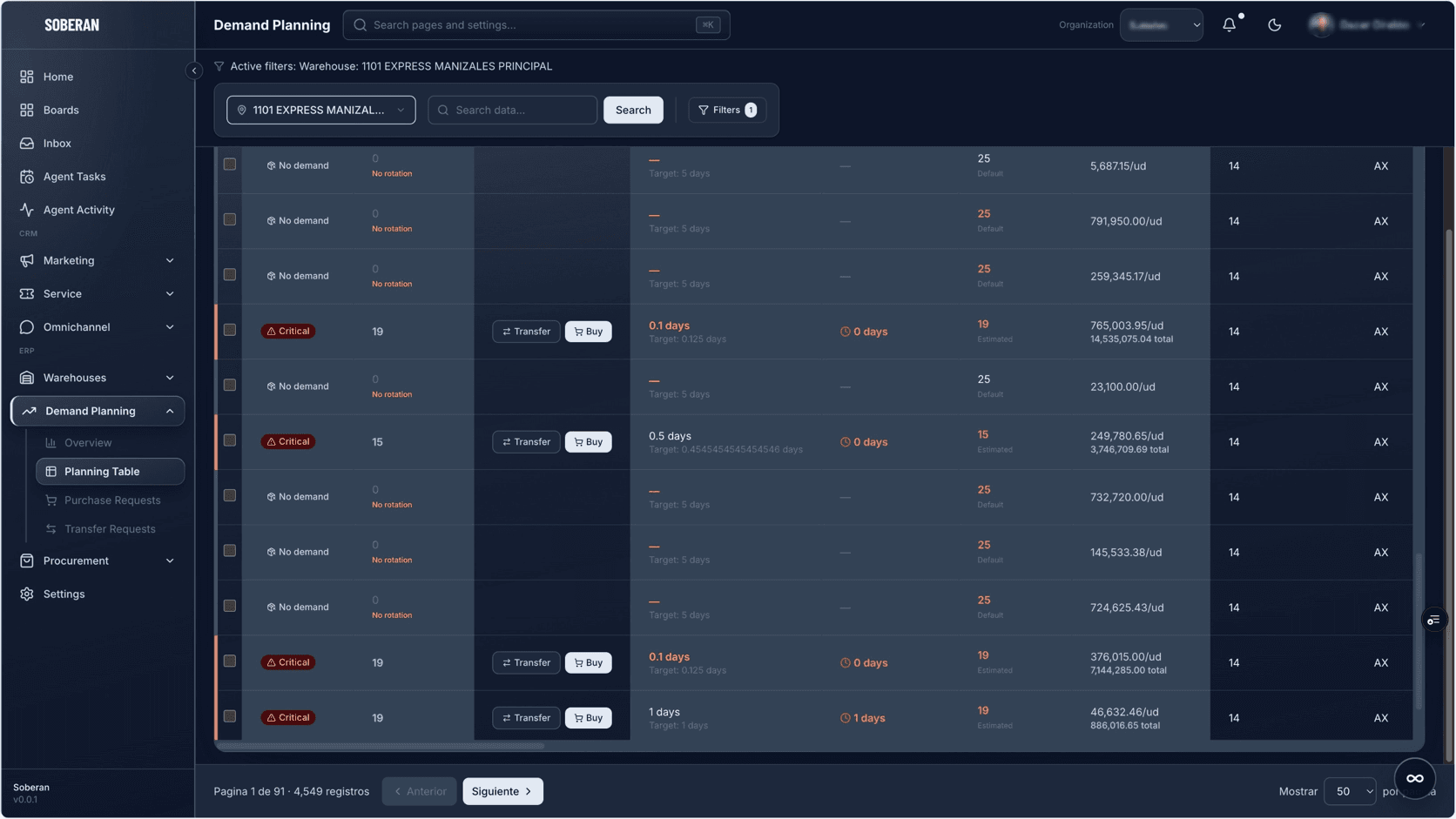
- Cómo encaja SOBERAN: SOBERAN convierte gobierno de datos maestros en flujo operativo entre ERP, PIM, Shopify, archivos de proveedor, AP, inventario y CRM.
- Enlaces internos prioritarios: /automate/master-data-management, /erp, /crm, /integrations y /how-it-works para entender el modelo de ejecución gobernada.
Fuentes y señales de tendencia
- Gartner Magic Quadrant for Master Data Management Solutions, 2026Gartner define MDM alrededor de uniformidad, exactitud, consistencia semantica y datos maestros compartidos confiables.
- McKinsey: master data management como palanca de valor de datosMcKinsey destaca objetivos de MDM como experiencia de cliente, crecimiento, productividad comercial, reporting y roles de gobierno.
- SAP Master Data GovernancePágina oficial usada para verificar gobierno central, flujos, reglas e integración SAP y terceros.
- Informatica Master Data ManagementPágina oficial usada para verificar MDM, match and fusión con IA y aplicaciones 360.
- automatización de datos maestros de SOBERANPágina interna de caso de uso para gobierno de SKU, proveedor, cliente, ubicación, unidad, impuesto y precio.