Los flujos de inventario y pedidos son donde un error de automatización se vuelve caro al instante: una OC equivocada, un envío mal enrutado o una promesa al cliente que el piso no puede honrar. Todo operador serio hace la misma pregunta: ¿qué puede correr sin mí — y qué sigue requiriendo mi sí?
La gobernanza no es burocracia por gusto. Es el contrato entre velocidad y seguridad: umbrales de autoaprobación, roles de escalamiento y registro de qué hizo el sistema bajo qué versión de política. Sin ese contrato, la "IA" se siente caja negra. Con él, la automatización se comporta como un miembro disciplinado del equipo.
Un patrón útil es separar ejecución rutinaria del criterio en excepciones. El agente propone, prepara y completa pasos de alto volumen — actualizaciones de estado, borradores de OC, sugerencias de reabastecimiento, seguimientos — mientras los humanos retienen control explícito sobre términos no estándar, montos grandes y situaciones sensibles con el cliente.
Los rastros de auditoría importan tanto como las aprobaciones. Cuando algo se ve mal el lunes por la mañana, necesitas responder: qué pasó, qué regla disparó y quién podía anularlo. Los sistemas que no pueden responder eso no escalan más allá de un gerente heroico.
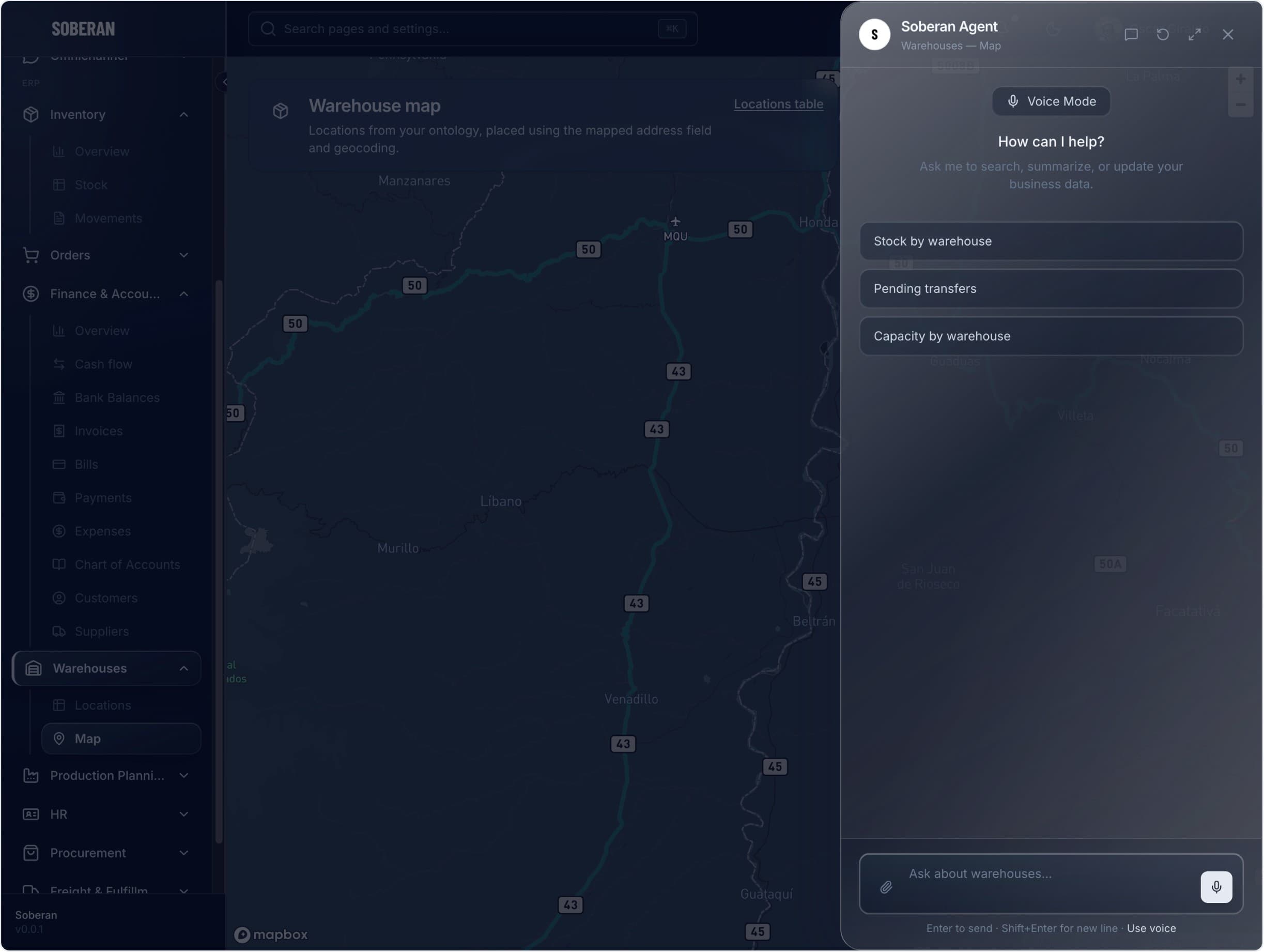
SOBERAN está construido con esa mentalidad de operador: el Agente SOBERAN ejecuta en módulos de ERP y CRM sobre datos en vivo, pero tus políticas, umbrales y puntos revisión humana definen los guardarraíles. El objetivo son menos conciliaciones el domingo por la noche — no menos adultos en la sala cuando las apuestas son altas.
Si evalúas agentes para operaciones físicas, salta la demo mágica. Pide gobernanza: muéstrame defaults, escalamiento y el log. Luego pregunta qué tan rápido podemos hacer un piloto acotado — porque la confianza se gana en semanas, no en diapositivas.
Cuando quieras recorrer gobernanza y ejecución con tus propias restricciones, solicita una demo. Mantendremos la conversación anclada en inventario, pedidos y cómo tu equipo aprueba el trabajo hoy.